







Termeh revealing unique beauty in skilled hand weaving
Termeh is a finely woven, precious cloth featuring traditional Iranian patterns and textures. It is handcrafted using two sets of warp and weft yarns made from pile, wool, and high-quality natural and synthetic silk with long fibers.
While some believe that Termeh originated in the heart of Central Asia and the Kashmir highlands, others argue that its weaving began in Iran before spreading to Kashmir. However, Termeh weaving was developed and gained popularity during the early Safavid period in Isfahan. Its most notable advancement occurred under the reign of Shah Abbas Safavid, when it became one of Iran’s prominent export products.
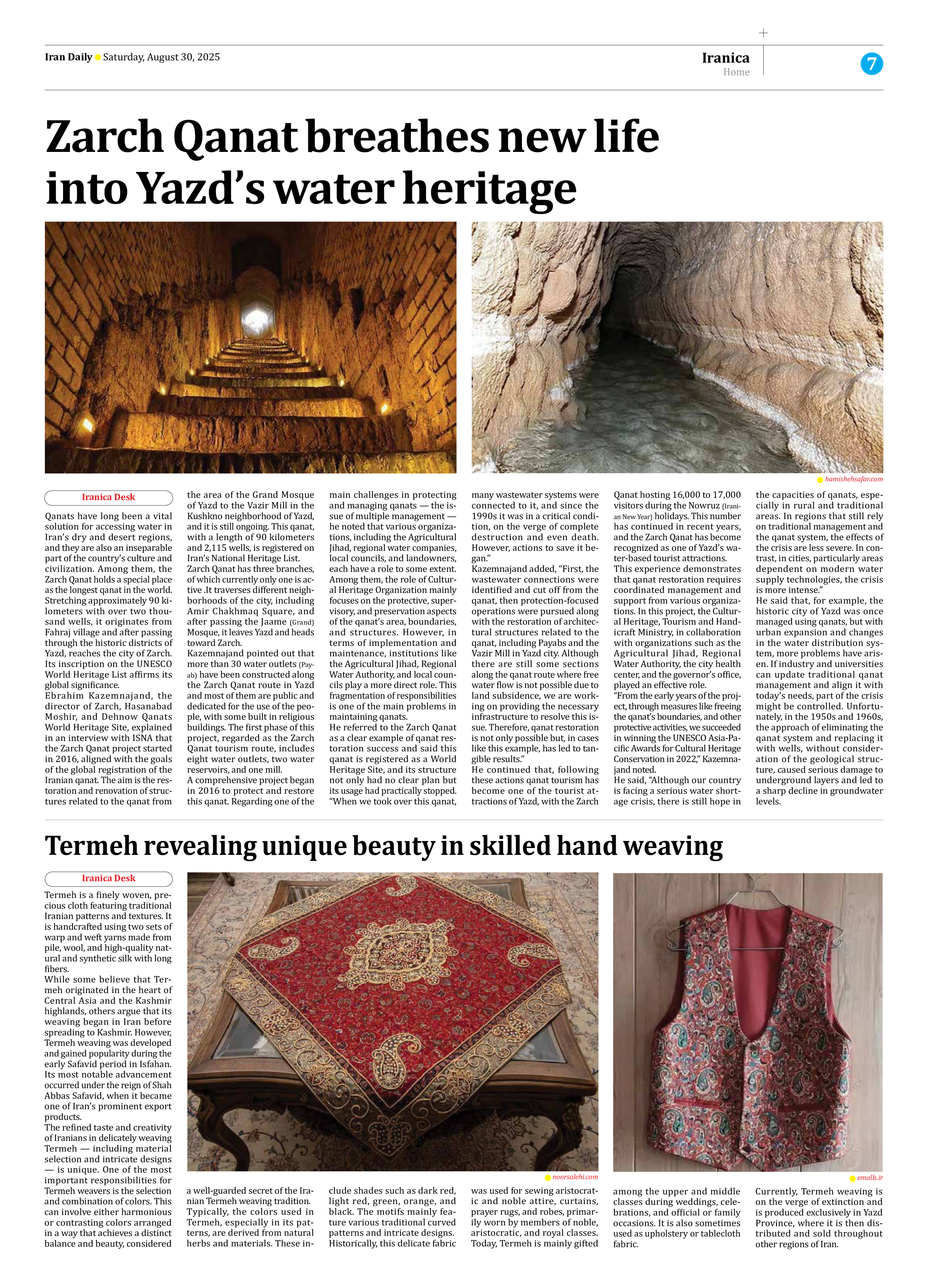
The refined taste and creativity of Iranians in delicately weaving Termeh — including material selection and intricate designs — is unique. One of the most important responsibilities for Termeh weavers is the selection and combination of colors. This can involve either harmonious or contrasting colors arranged in a way that achieves a distinct balance and beauty, considered a well-guarded secret of the Iranian Termeh weaving tradition.
Typically, the colors used in Termeh, especially in its patterns, are derived from natural herbs and materials. These include shades such as dark red, light red, green, orange, and black. The motifs mainly feature various traditional curved patterns and intricate designs.
Historically, this delicate fabric was used for sewing aristocratic and noble attire, curtains, prayer rugs, and robes, primarily worn by members of noble, aristocratic, and royal classes. Today, Termeh is mainly gifted among the upper and middle classes during weddings, celebrations, and official or family occasions. It is also sometimes used as upholstery or tablecloth fabric.
Currently, Termeh weaving is on the verge of extinction and is produced exclusively in Yazd Province, where it is then distributed and sold throughout other regions of Iran.