







Innovation, survival lessons from Qasabeh Qanat in Gonabad
The Qasabeh Qanat of Gonabad, Khorasan Razavi Province, has been less affected by drought due to its access to deep underground water sources, and recent dredging has increased its water flow from 130 to 151 liters per second, said the head of the Qasabeh Qanat World Heritage Site.
Referring to the qanat’s 2,500-year history and the mother well with a depth of more than 330 meters, Hamid Reza Mahmoudi described this qanat as one of the most astonishing water structures in the world — a legacy that has sustained over 2,500 years of life and prosperity in the heart of the desert. This qanat is not only a masterpiece of traditional Iranian engineering but also continues to play a vital role in supplying water and supporting urban and rural life in the region, ISNA wrote.
He added that the qanat is recognized as the leading case for the registration of Iran’s qanats on the World Heritage List, with the registration process beginning in 2014.
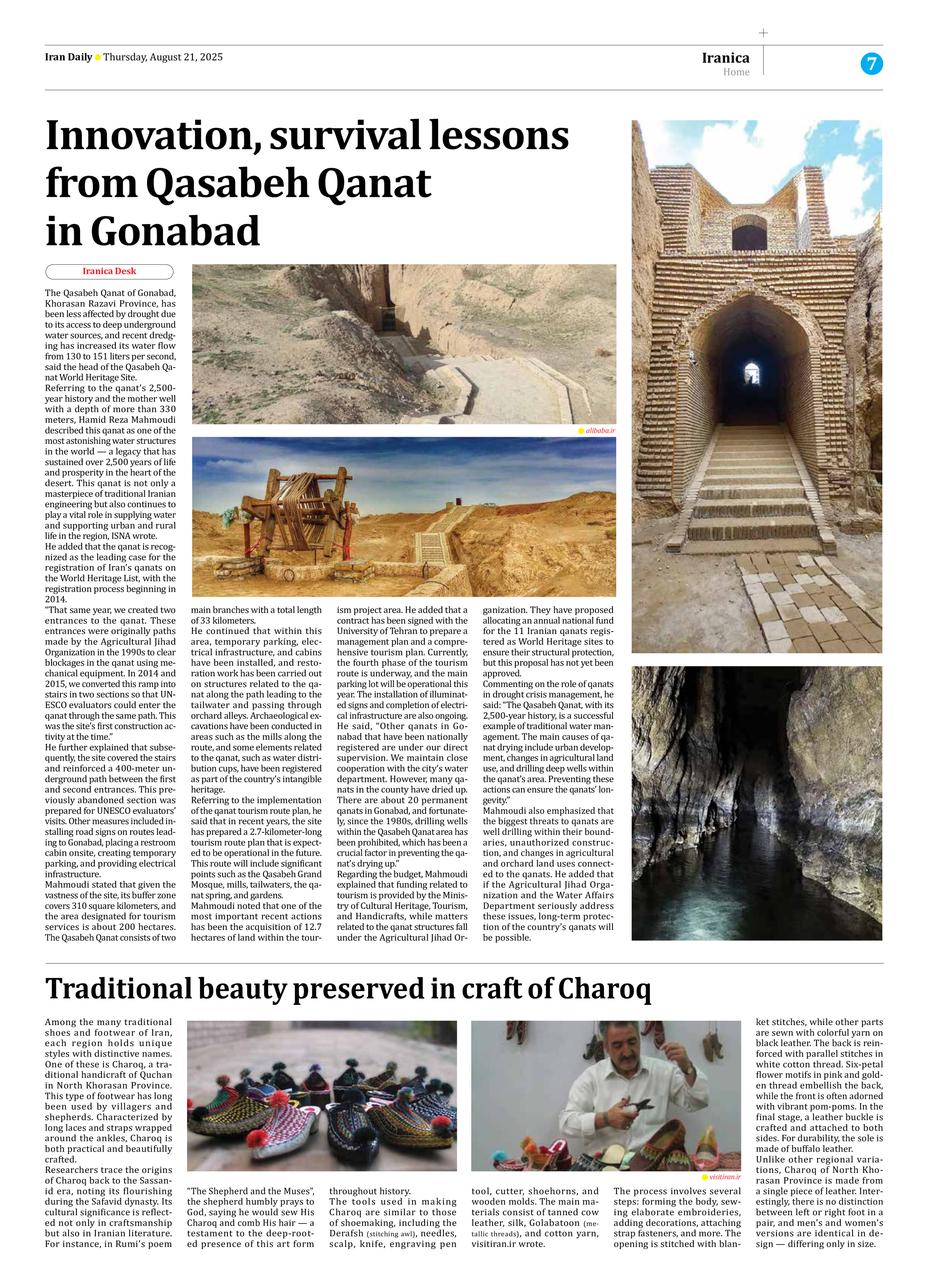
“That same year, we created two entrances to the qanat. These entrances were originally paths made by the Agricultural Jihad Organization in the 1990s to clear blockages in the qanat using mechanical equipment. In 2014 and 2015, we converted this ramp into stairs in two sections so that UNESCO evaluators could enter the qanat through the same path. This was the site’s first construction activity at the time.”
He further explained that subsequently, the site covered the stairs and reinforced a 400-meter underground path between the first and second entrances. This previously abandoned section was prepared for UNESCO evaluators’ visits. Other measures included installing road signs on routes leading to Gonabad, placing a restroom cabin onsite, creating temporary parking, and providing electrical infrastructure.
Mahmoudi stated that given the vastness of the site, its buffer zone covers 310 square kilometers, and the area designated for tourism services is about 200 hectares. The Qasabeh Qanat consists of two main branches with a total length of 33 kilometers.
He continued that within this area, temporary parking, electrical infrastructure, and cabins have been installed, and restoration work has been carried out on structures related to the qanat along the path leading to the tailwater and passing through orchard alleys. Archaeological excavations have been conducted in areas such as the mills along the route, and some elements related to the qanat, such as water distribution cups, have been registered as part of the country’s intangible heritage.
Referring to the implementation of the qanat tourism route plan, he said that in recent years, the site has prepared a 2.7-kilometer-long tourism route plan that is expected to be operational in the future. This route will include significant points such as the Qasabeh Grand Mosque, mills, tailwaters, the qanat spring, and gardens.
Mahmoudi noted that one of the most important recent actions has been the acquisition of 12.7 hectares of land within the tourism project area. He added that a contract has been signed with the University of Tehran to prepare a management plan and a comprehensive tourism plan. Currently, the fourth phase of the tourism route is underway, and the main parking lot will be operational this year. The installation of illuminated signs and completion of electrical infrastructure are also ongoing.
He said, “Other qanats in Gonabad that have been nationally registered are under our direct supervision. We maintain close cooperation with the city’s water department. However, many qanats in the county have dried up. There are about 20 permanent qanats in Gonabad, and fortunately, since the 1980s, drilling wells within the Qasabeh Qanat area has been prohibited, which has been a crucial factor in preventing the qanat’s drying up.”
Regarding the budget, Mahmoudi explained that funding related to tourism is provided by the Ministry of Cultural Heritage, Tourism, and Handicrafts, while matters related to the qanat structures fall under the Agricultural Jihad Organization. They have proposed allocating an annual national fund for the 11 Iranian qanats registered as World Heritage sites to ensure their structural protection, but this proposal has not yet been approved.
Commenting on the role of qanats in drought crisis management, he said: “The Qasabeh Qanat, with its 2,500-year history, is a successful example of traditional water management. The main causes of qanat drying include urban development, changes in agricultural land use, and drilling deep wells within the qanat’s area. Preventing these actions can ensure the qanats’ longevity.”
Mahmoudi also emphasized that the biggest threats to qanats are well drilling within their boundaries, unauthorized construction, and changes in agricultural and orchard land uses connected to the qanats. He added that if the Agricultural Jihad Organization and the Water Affairs Department seriously address these issues, long-term protection of the country’s qanats will be possible.