







Copy in clipboard...
Iran, IAEA to hold new round of talks in coming days: FM spox
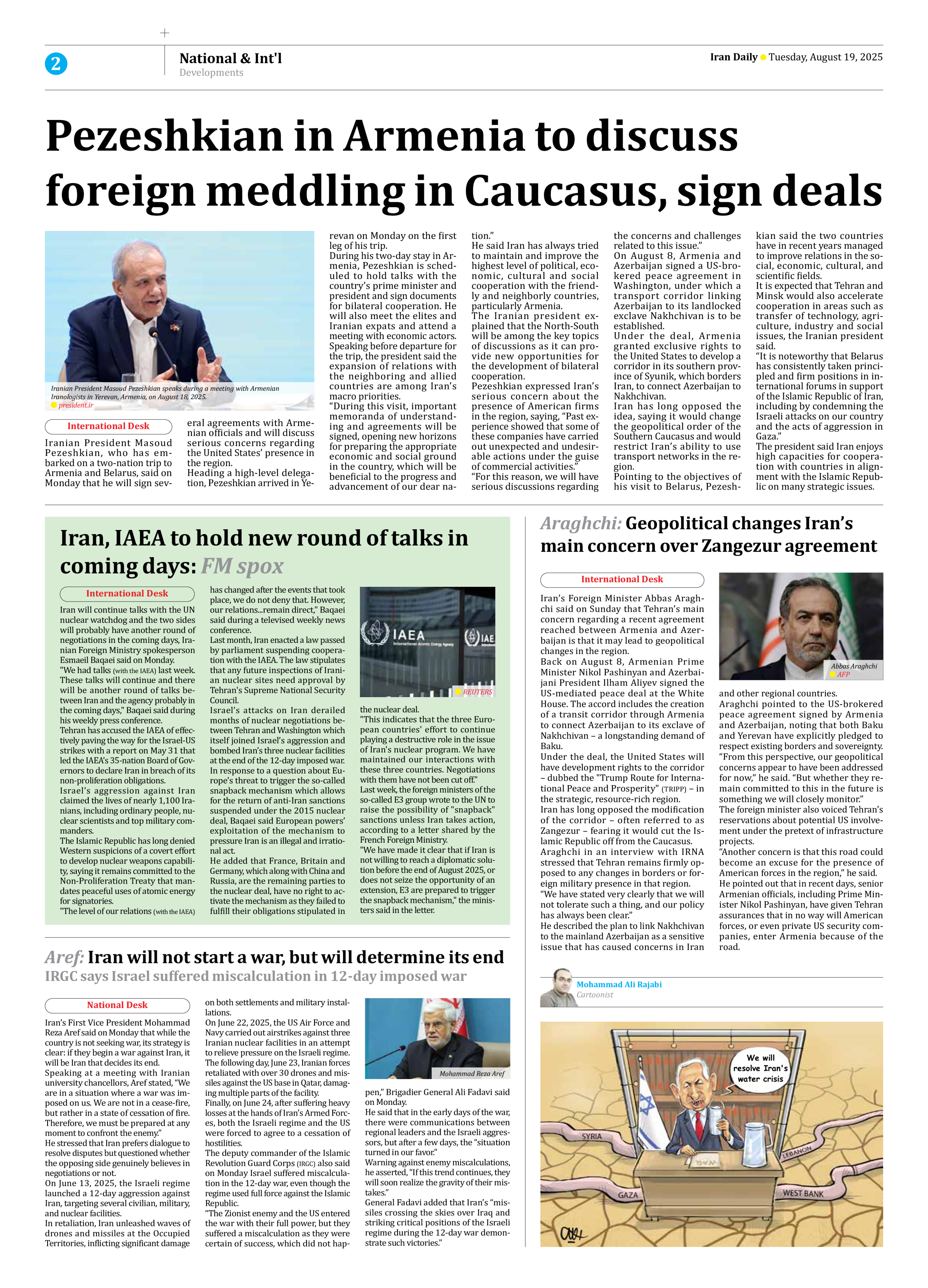
Iran will continue talks with the UN nuclear watchdog and the two sides will probably have another round of negotiations in the coming days, Iranian Foreign Ministry spokesperson Esmaeil Baqaei said on Monday.
"We had talks (with the IAEA) last week. These talks will continue and there will be another round of talks between Iran and the agency probably in the coming days," Baqaei said during his weekly press conference.
Tehran has accused the IAEA of effectively paving the way for the Israel-US strikes with a report on May 31 that led the IAEA's 35-nation Board of Governors to declare Iran in breach of its non-proliferation obligations.
Israel’s aggression against Iran claimed the lives of nearly 1,100 Iranians, including ordinary people, nuclear scientists and top military commanders.
The Islamic Republic has long denied Western suspicions of a covert effort to develop nuclear weapons capability, saying it remains committed to the Non-Proliferation Treaty that mandates peaceful uses of atomic energy for signatories.
"The level of our relations (with the IAEA) has changed after the events that took place, we do not deny that. However, our relations...remain direct," Baqaei said during a televised weekly news conference.
Last month, Iran enacted a law passed by parliament suspending cooperation with the IAEA. The law stipulates that any future inspections of Iranian nuclear sites need approval by Tehran's Supreme National Security Council.
Israel’s attacks on Iran derailed months of nuclear negotiations between Tehran and Washington which itself joined Israel’s aggression and bombed Iran’s three nuclear facilities at the end of the 12-day imposed war.
In response to a question about Europe's threat to trigger the so-called snapback mechanism which allows for the return of anti-Iran sanctions suspended under the 2015 nuclear deal, Baqaei said European powers’ exploitation of the mechanism to pressure Iran is an illegal and irrational act.
He added that France, Britain and Germany, which along with China and Russia, are the remaining parties to the nuclear deal, have no right to activate the mechanism as they failed to fulfill their obligations stipulated in the nuclear deal.
"This indicates that the three European countries' effort to continue playing a destructive role in the issue of Iran's nuclear program. We have maintained our interactions with these three countries. Negotiations with them have not been cut off."
Last week, the foreign ministers of the so-called E3 group wrote to the UN to raise the possibility of "snapback" sanctions unless Iran takes action, according to a letter shared by the French Foreign Ministry.
"We have made it clear that if Iran is not willing to reach a diplomatic solution before the end of August 2025, or does not seize the opportunity of an extension, E3 are prepared to trigger the snapback mechanism," the ministers said in the letter.