







Copy in clipboard...
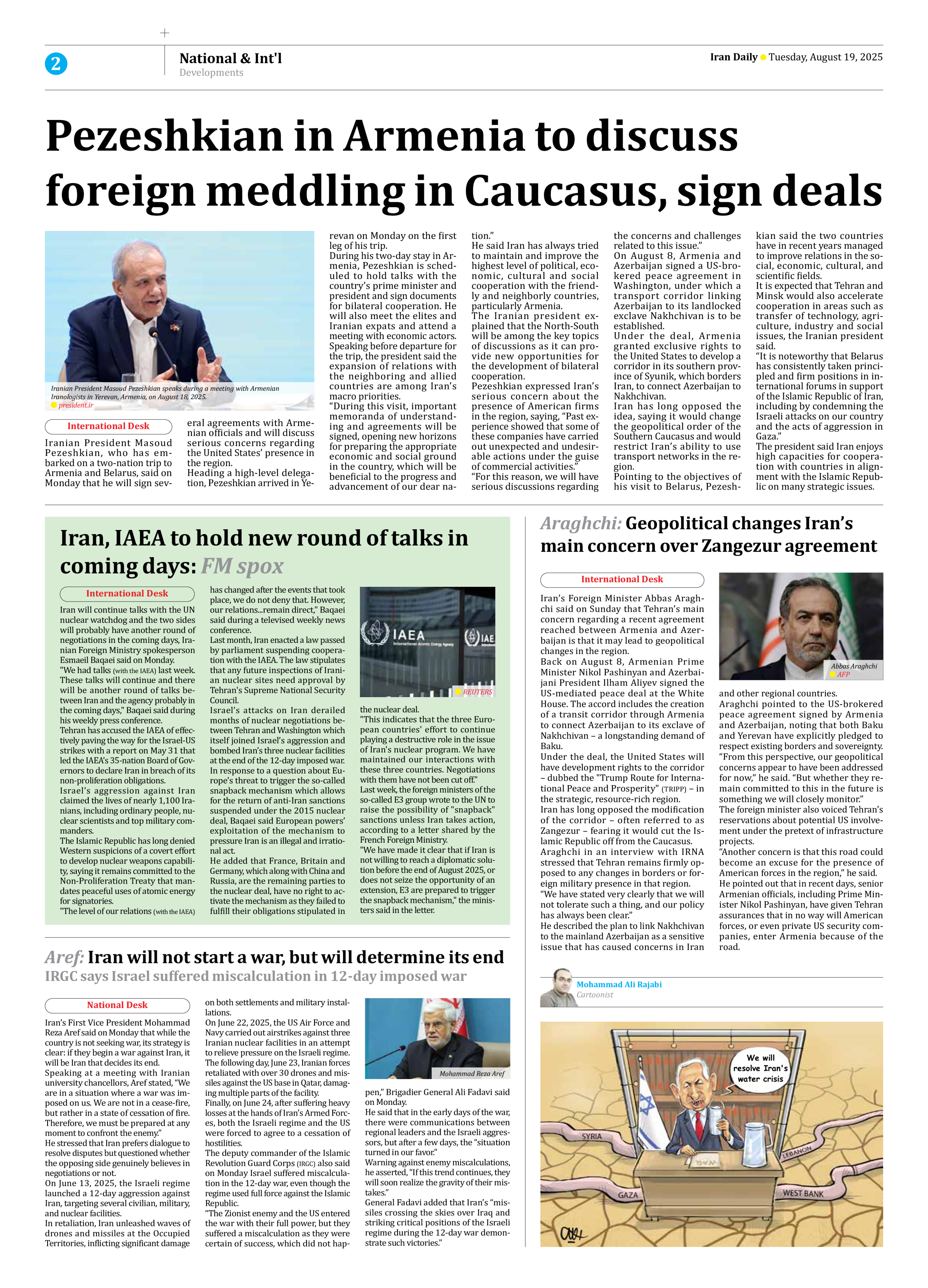
Araghchi: Geopolitical changes Iran’s main concern over Zangezur agreement
Back on August 8, Armenian Prime Minister Nikol Pashinyan and Azerbaijani President Ilham Aliyev signed the US-mediated peace deal at the White House. The accord includes the creation of a transit corridor through Armenia to connect Azerbaijan to its exclave of Nakhchivan – a longstanding demand of Baku.
Under the deal, the United States will have development rights to the corridor – dubbed the "Trump Route for International Peace and Prosperity" (TRIPP) – in the strategic, resource-rich region.
Iran has long opposed the modification of the corridor – often referred to as Zangezur – fearing it would cut the Islamic Republic off from the Caucasus.
Araghchi in an interview with IRNA stressed that Tehran remains firmly opposed to any changes in borders or foreign military presence in that region.
“We have stated very clearly that we will not tolerate such a thing, and our policy has always been clear.”
He described the plan to link Nakhchivan to the mainland Azerbaijan as a sensitive issue that has caused concerns in Iran and other regional countries.
Araghchi pointed to the US-brokered peace agreement signed by Armenia and Azerbaijan, noting that both Baku and Yerevan have explicitly pledged to respect existing borders and sovereignty.
“From this perspective, our geopolitical concerns appear to have been addressed for now,” he said. “But whether they remain committed to this in the future is something we will closely monitor.”
The foreign minister also voiced Tehran’s reservations about potential US involvement under the pretext of infrastructure projects.
“Another concern is that this road could become an excuse for the presence of American forces in the region,” he said.
He pointed out that in recent days, senior Armenian officials, including Prime Minister Nikol Pashinyan, have given Tehran assurances that in no way will American forces, or even private US security companies, enter Armenia because of the road.