







Building tourism bridges with cultural concept of neighboring provinces
These days, while tourism is facing significant challenges and is not in a favorable state, the concept of the “neighbor” has emerged as a promising opportunity within the realm of ecotourism. Fatemeh Rahbar, a journalist, has noted that the term “neighbor” has always held a distinct and meaningful place in Iranian culture and literature — not only within social interactions and literary expressions but also in political relationships and diplomatic contexts. In recent times, this term has progressively entered the tourism discourse and gained a fresh and expanded significance.
The impact of neighboring provinces on the growth of health tourism, ecotourism, handicraft exports, the organization of international exhibitions, and even their role in cultural and economic mediation highlights that “neighborliness” transcends a mere geographic concept. It embodies a broader, more dynamic relationship that fosters collaboration and mutual benefit, chtn.ir wrote.
From a domestic viewpoint, neighborliness within Iran itself has led to the creation of remarkable potentials; ranging from the celebrated tourism triangle of Yazd, Isfahan, and Shiraz, to the prominent corridors of the western region and central plateau, where neighboring provinces have synergized to establish diverse, rich, and appealing travel routes.
For the first time, Iran’s ecotourism community has transformed this longstanding cultural concept into a practical strategy for advancing tourism development: through “empowerment training courses grounded in the literature of neighborliness.”
This idea, though straightforward, carries profound impact: neighboring provinces engage in bilateral agreements to showcase their unique capacities, serve as hosts for one another’s ecotourism initiatives, and exchange experiences and knowledge within the framework of short, immersive tours. This approach is deeply rooted in the fabric of Iranian culture and belief systems — drawing from the moral guidance of the Holy Qur’an and the Bible that encourage kindness toward neighbors, as well as from ancient proverbs proclaiming that “a neighbor is more essential than daily bread.”
In the implementation of this plan, the short distances between provinces present a golden opportunity; during weekend breaks, without disrupting the regular workweek, tourism practitioners can visit neighboring provinces for one or two nights, engage in meaningful dialogue, learn from one another, and uncover new potentials for collaboration.
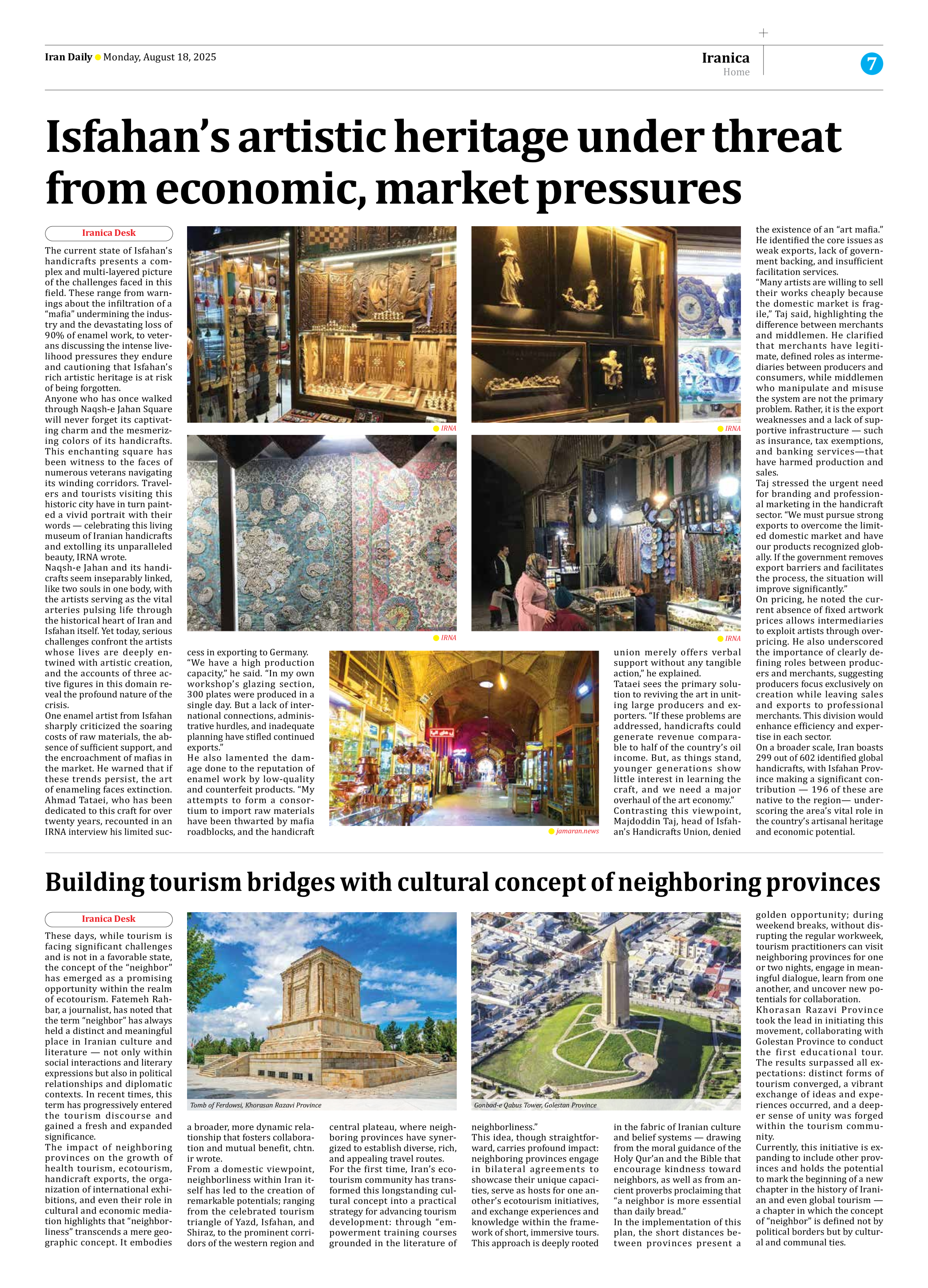
Khorasan Razavi Province took the lead in initiating this movement, collaborating with Golestan Province to conduct the first educational tour. The results surpassed all expectations: distinct forms of tourism converged, a vibrant exchange of ideas and experiences occurred, and a deeper sense of unity was forged within the tourism community.
Currently, this initiative is expanding to include other provinces and holds the potential to mark the beginning of a new chapter in the history of Iranian and even global tourism — a chapter in which the concept of “neighbor” is defined not by political borders but by cultural and communal ties.