







Isfahan’s artistic heritage under threat from economic, market pressures
The current state of Isfahan’s handicrafts presents a complex and multi-layered picture of the challenges faced in this field. These range from warnings about the infiltration of a “mafia” undermining the industry and the devastating loss of 90% of enamel work, to veterans discussing the intense livelihood pressures they endure and cautioning that Isfahan’s rich artistic heritage is at risk of being forgotten.
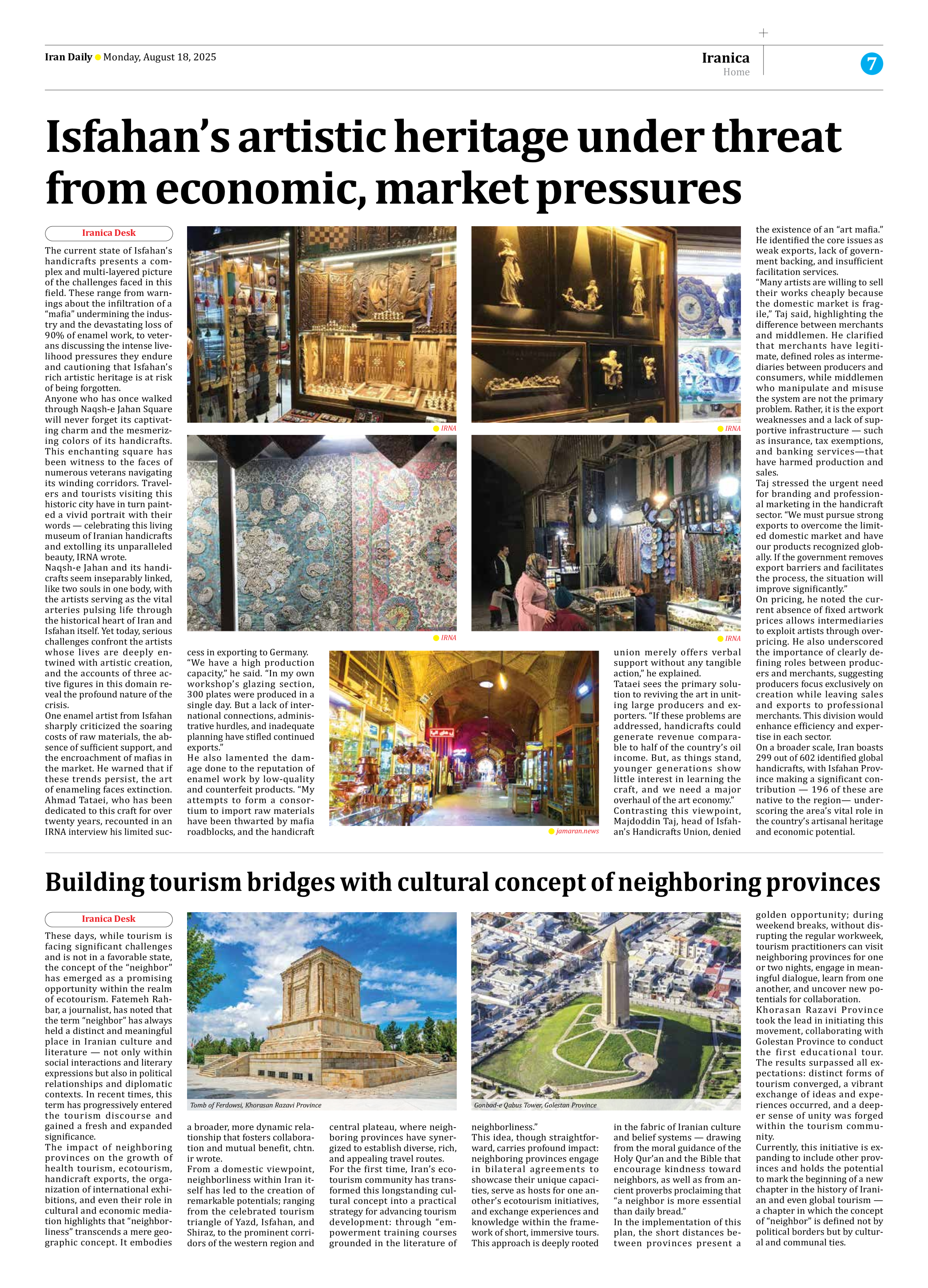
Anyone who has once walked through Naqsh-e Jahan Square will never forget its captivating charm and the mesmerizing colors of its handicrafts. This enchanting square has been witness to the faces of numerous veterans navigating its winding corridors. Travelers and tourists visiting this historic city have in turn painted a vivid portrait with their words — celebrating this living museum of Iranian handicrafts and extolling its unparalleled beauty, IRNA wrote.
Naqsh-e Jahan and its handicrafts seem inseparably linked, like two souls in one body, with the artists serving as the vital arteries pulsing life through the historical heart of Iran and Isfahan itself. Yet today, serious challenges confront the artists whose lives are deeply entwined with artistic creation, and the accounts of three active figures in this domain reveal the profound nature of the crisis.
One enamel artist from Isfahan sharply criticized the soaring costs of raw materials, the absence of sufficient support, and the encroachment of mafias in the market. He warned that if these trends persist, the art of enameling faces extinction. Ahmad Tataei, who has been dedicated to this craft for over twenty years, recounted in an IRNA interview his limited success in exporting to Germany.
“We have a high production capacity,” he said. “In my own workshop’s glazing section, 300 plates were produced in a single day. But a lack of international connections, administrative hurdles, and inadequate planning have stifled continued exports.”
He also lamented the damage done to the reputation of enamel work by low-quality and counterfeit products. “My attempts to form a consortium to import raw materials have been thwarted by mafia roadblocks, and the handicraft union merely offers verbal support without any tangible action,” he explained.
Tataei sees the primary solution to reviving the art in uniting large producers and exporters. “If these problems are addressed, handicrafts could generate revenue comparable to half of the country’s oil income. But, as things stand, younger generations show little interest in learning the craft, and we need a major overhaul of the art economy.”
Contrasting this viewpoint, Majdoddin Taj, head of Isfahan’s Handicrafts Union, denied the existence of an “art mafia.” He identified the core issues as weak exports, lack of government backing, and insufficient facilitation services.
“Many artists are willing to sell their works cheaply because the domestic market is fragile,” Taj said, highlighting the difference between merchants and middlemen. He clarified that merchants have legitimate, defined roles as intermediaries between producers and consumers, while middlemen who manipulate and misuse the system are not the primary problem. Rather, it is the export weaknesses and a lack of supportive infrastructure — such as insurance, tax exemptions, and banking services—that have harmed production and sales.
Taj stressed the urgent need for branding and professional marketing in the handicraft sector. “We must pursue strong exports to overcome the limited domestic market and have our products recognized globally. If the government removes export barriers and facilitates the process, the situation will improve significantly.”
On pricing, he noted the current absence of fixed artwork prices allows intermediaries to exploit artists through overpricing. He also underscored the importance of clearly defining roles between producers and merchants, suggesting producers focus exclusively on creation while leaving sales and exports to professional merchants. This division would enhance efficiency and expertise in each sector.
On a broader scale, Iran boasts 299 out of 602 identified global handicrafts, with Isfahan Province making a significant contribution — 196 of these are native to the region— underscoring the area’s vital role in the country’s artisanal heritage and economic potential.