







Archaeologists unearth royal Ilkhanid cemetery in northwestern Iran
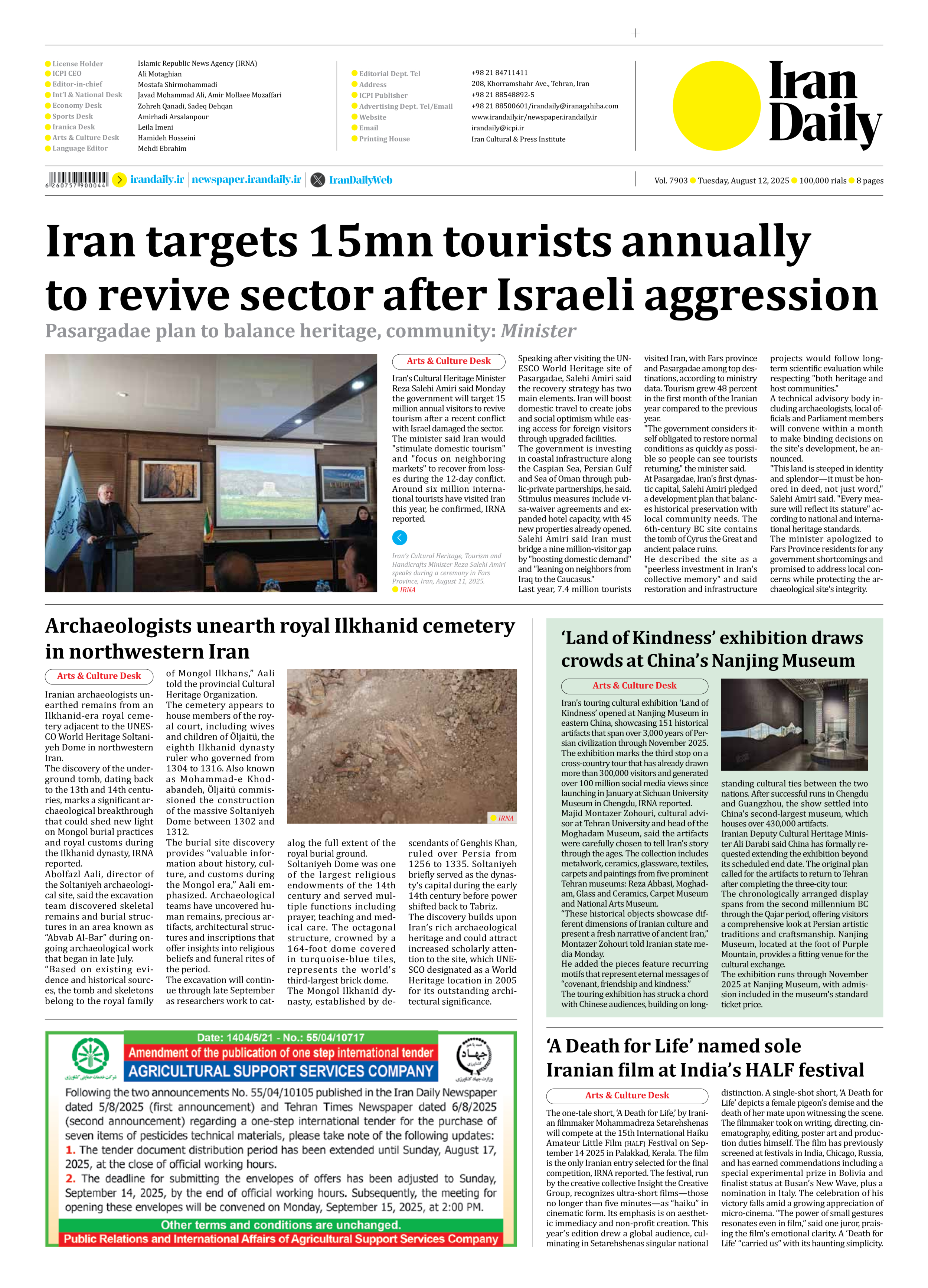
Iranian archaeologists unearthed remains from an Ilkhanid-era royal cemetery adjacent to the UNESCO World Heritage Soltaniyeh Dome in northwestern Iran.
The discovery of the underground tomb, dating back to the 13th and 14th centuries, marks a significant archaeological breakthrough that could shed new light on Mongol burial practices and royal customs during the Ilkhanid dynasty, IRNA reported.
Abolfazl Aali, director of the Soltaniyeh archaeological site, said the excavation team discovered skeletal remains and burial structures in an area known as “Abvab Al-Bar” during ongoing archaeological work that began in late July.
“Based on existing evidence and historical sources, the tomb and skeletons belong to the royal family of Mongol Ilkhans,” Aali told the provincial Cultural Heritage Organization.
The cemetery appears to house members of the royal court, including wives and children of Öljaitü, the eighth Ilkhanid dynasty ruler who governed from 1304 to 1316. Also known as Mohammad-e Khodabandeh, Öljaitü commissioned the construction of the massive Soltaniyeh Dome between 1302 and 1312.
The burial site discovery provides “valuable information about history, culture, and customs during the Mongol era,” Aali emphasized. Archaeological teams have uncovered human remains, precious artifacts, architectural structures and inscriptions that offer insights into religious beliefs and funeral rites of the period.
The excavation will continue through late September as researchers work to catalog the full extent of the royal burial ground.
Soltaniyeh Dome was one of the largest religious endowments of the 14th century and served multiple functions including prayer, teaching and medical care. The octagonal structure, crowned by a 164-foot dome covered in turquoise-blue tiles, represents the world's third-largest brick dome.
The Mongol Ilkhanid dynasty, established by descendants of Genghis Khan, ruled over Persia from 1256 to 1335. Soltaniyeh briefly served as the dynasty's capital during the early 14th century before power shifted back to Tabriz.
The discovery builds upon Iran’s rich archaeological heritage and could attract increased scholarly attention to the site, which UNESCO designated as a World Heritage location in 2005 for its outstanding architectural significance.