







CBI kick-starts specialized banking system to boost efficiency, transparency
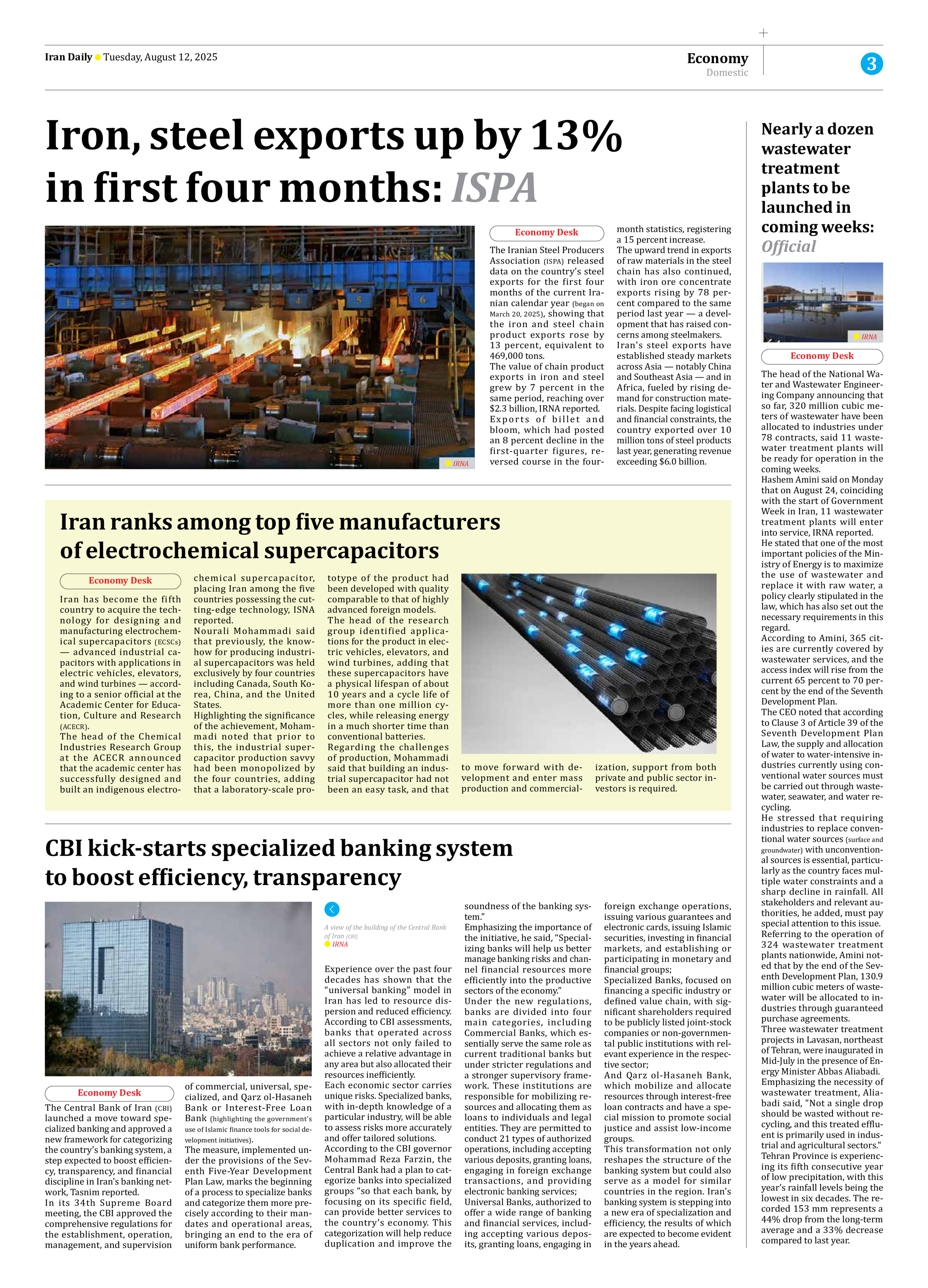
The Central Bank of Iran (CBI) launched a move toward specialized banking and approved a new framework for categorizing the country’s banking system, a step expected to boost efficiency, transparency, and financial discipline in Iran’s banking network, Tasnim reported.
In its 34th Supreme Board meeting, the CBI approved the comprehensive regulations for the establishment, operation, management, and supervision of commercial, universal, specialized, and Qarz ol-Hasaneh Bank or Interest-Free Loan Bank (highlighting the government's use of Islamic finance tools for social development initiatives).
The measure, implemented under the provisions of the Seventh Five-Year Development Plan Law, marks the beginning of a process to specialize banks and categorize them more precisely according to their mandates and operational areas, bringing an end to the era of uniform bank performance.
Experience over the past four decades has shown that the “universal banking” model in Iran has led to resource dispersion and reduced efficiency. According to CBI assessments, banks that operated across all sectors not only failed to achieve a relative advantage in any area but also allocated their resources inefficiently.
Each economic sector carries unique risks. Specialized banks, with in-depth knowledge of a particular industry, will be able to assess risks more accurately and offer tailored solutions.
According to the CBI governor Mohammad Reza Farzin, the Central Bank had a plan to categorize banks into specialized groups “so that each bank, by focusing on its specific field, can provide better services to the country’s economy. This categorization will help reduce duplication and improve the soundness of the banking system.”
Emphasizing the importance of the initiative, he said, “Specializing banks will help us better manage banking risks and channel financial resources more efficiently into the productive sectors of the economy.”
Under the new regulations, banks are divided into four main categories, including Commercial Banks, which essentially serve the same role as current traditional banks but under stricter regulations and a stronger supervisory framework. These institutions are responsible for mobilizing resources and allocating them as loans to individuals and legal entities. They are permitted to conduct 21 types of authorized operations, including accepting various deposits, granting loans, engaging in foreign exchange transactions, and providing electronic banking services;
Universal Banks, authorized to offer a wide range of banking and financial services, including accepting various deposits, granting loans, engaging in foreign exchange operations, issuing various guarantees and electronic cards, issuing Islamic securities, investing in financial markets, and establishing or participating in monetary and financial groups;
Specialized Banks, focused on financing a specific industry or defined value chain, with significant shareholders required to be publicly listed joint-stock companies or non-governmental public institutions with relevant experience in the respective sector;
And Qarz ol-Hasaneh Bank, which mobilize and allocate resources through interest-free loan contracts and have a special mission to promote social justice and assist low-income groups.
This transformation not only reshapes the structure of the banking system but could also serve as a model for similar countries in the region. Iran’s banking system is stepping into a new era of specialization and efficiency, the results of which are expected to become evident in the years ahead.