







Archaeologists launch sixth dig at Qaleh Kurd Cave, Iran’s oldest human settlement
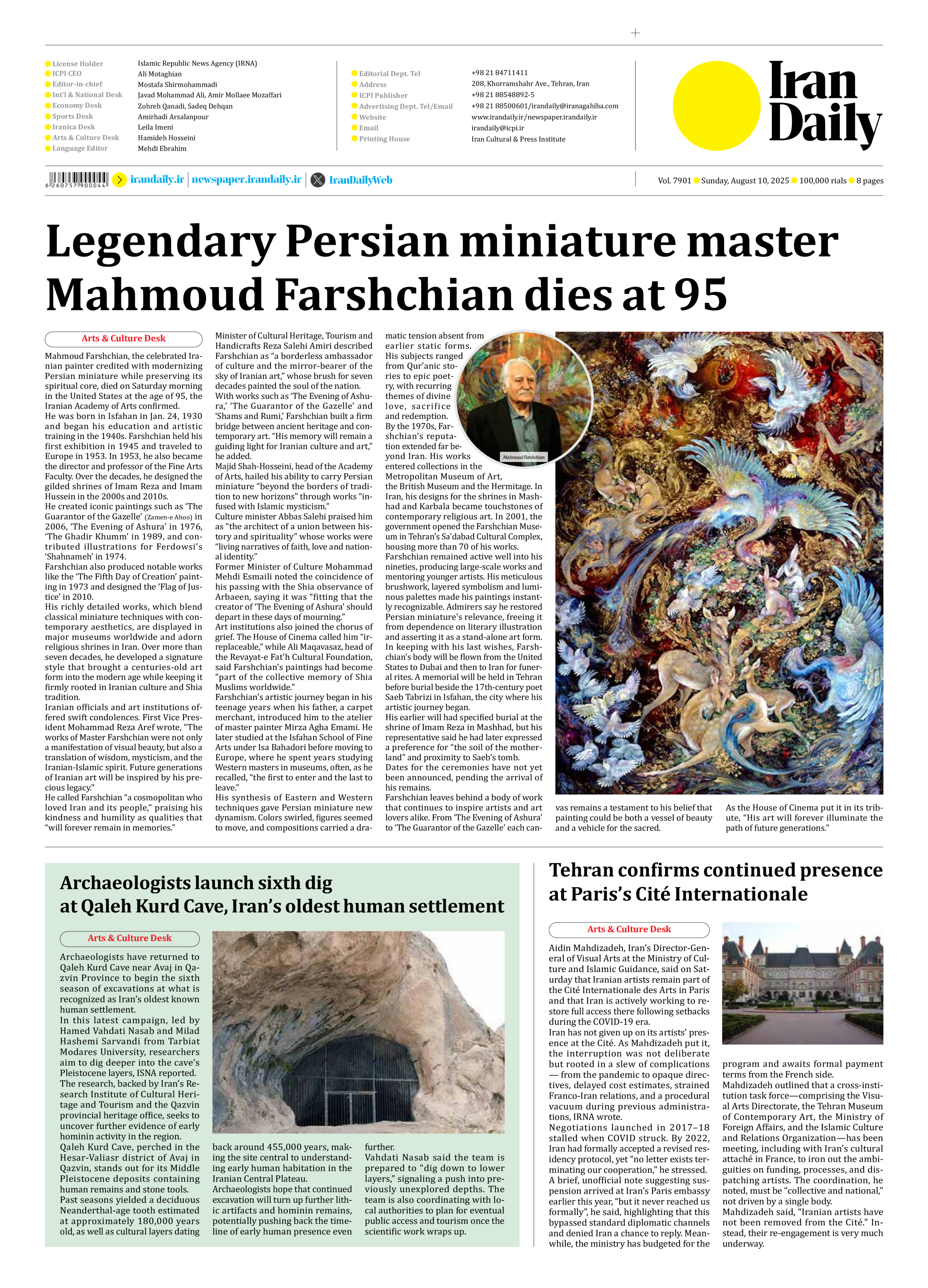
Archaeologists have returned to Qaleh Kurd Cave near Avaj in Qazvin Province to begin the sixth season of excavations at what is recognized as Iran’s oldest known human settlement.
In this latest campaign, led by Hamed Vahdati Nasab and Milad Hashemi Sarvandi from Tarbiat Modares University, researchers aim to dig deeper into the cave’s Pleistocene layers, ISNA reported.
The research, backed by Iran’s Research Institute of Cultural Heritage and Tourism and the Qazvin provincial heritage office, seeks to uncover further evidence of early hominin activity in the region.
Qaleh Kurd Cave, perched in the Hesar-Valiasr district of Avaj in Qazvin, stands out for its Middle Pleistocene deposits containing human remains and stone tools.
Past seasons yielded a deciduous Neanderthal‐age tooth estimated at approximately 180,000 years old, as well as cultural layers dating back around 455,000 years, making the site central to understanding early human habitation in the Iranian Central Plateau.
Archaeologists hope that continued excavation will turn up further lithic artifacts and hominin remains, potentially pushing back the timeline of early human presence even further.
Vahdati Nasab said the team is prepared to “dig down to lower layers,” signaling a push into previously unexplored depths. The team is also coordinating with local authorities to plan for eventual public access and tourism once the scientific work wraps up.