







Tehran welcomes Baku-Yerevan peace deal; warns of ’foreign intervention’
Iran's Foreign Ministry in a statement on Saturday welcomed the Armenia–Azerbaijan peace deal but warned against any foreign intervention as the US-brokered agreement grants Washington development rights to a strategic transit route across the Caucasus region.
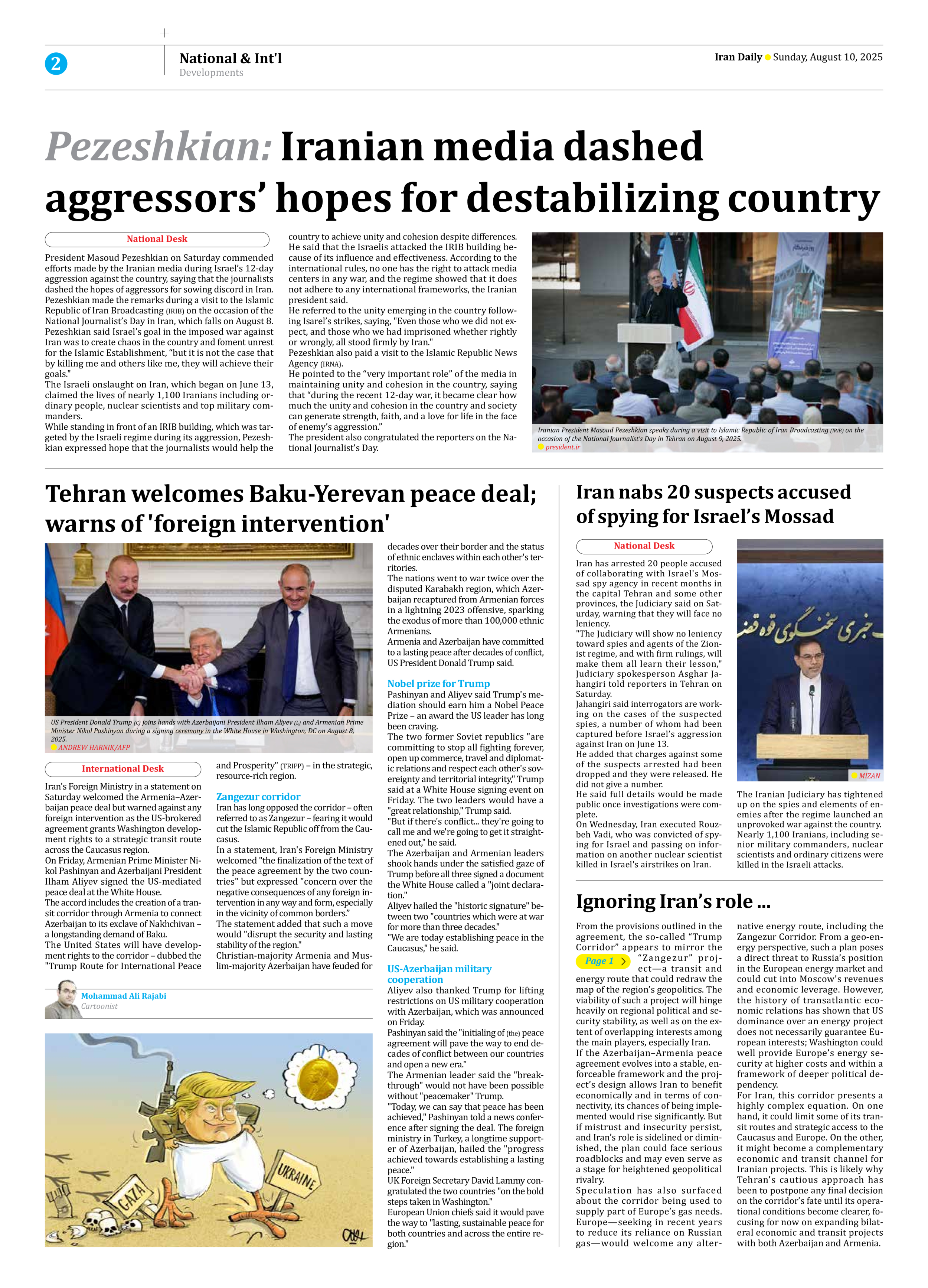
On Friday, Armenian Prime Minister Nikol Pashinyan and Azerbaijani President Ilham Aliyev signed the US-mediated peace deal at the White House.
The accord includes the creation of a transit corridor through Armenia to connect Azerbaijan to its exclave of Nakhchivan – a longstanding demand of Baku.
The United States will have development rights to the corridor – dubbed the "Trump Route for International Peace and Prosperity" (TRIPP) – in the strategic, resource-rich region.
Zangezur corridor
Iran has long opposed the corridor – often referred to as Zangezur – fearing it would cut the Islamic Republic off from the Caucasus.
In a statement, Iran's Foreign Ministry welcomed "the finalization of the text of the peace agreement by the two countries" but expressed "concern over the negative consequences of any foreign intervention in any way and form, especially in the vicinity of common borders.”
The statement added that such a move would "disrupt the security and lasting stability of the region."
Christian-majority Armenia and Muslim-majority Azerbaijan have feuded for decades over their border and the status of ethnic enclaves within each other's territories.
The nations went to war twice over the disputed Karabakh region, which Azerbaijan recaptured from Armenian forces in a lightning 2023 offensive, sparking the exodus of more than 100,000 ethnic Armenians.
Armenia and Azerbaijan have committed to a lasting peace after decades of conflict, US President Donald Trump said.
Nobel prize for Trump
Pashinyan and Aliyev said Trump's mediation should earn him a Nobel Peace Prize – an award the US leader has long been craving.
The two former Soviet republics "are committing to stop all fighting forever, open up commerce, travel and diplomatic relations and respect each other's sovereignty and territorial integrity," Trump said at a White House signing event on Friday. The two leaders would have a "great relationship," Trump said.
"But if there's conflict... they're going to call me and we're going to get it straightened out," he said.
The Azerbaijan and Armenian leaders shook hands under the satisfied gaze of Trump before all three signed a document the White House called a "joint declaration."
Aliyev hailed the "historic signature" between two "countries which were at war for more than three decades."
"We are today establishing peace in the Caucasus," he said.
US-Azerbaijan military cooperation
Aliyev also thanked Trump for lifting restrictions on US military cooperation with Azerbaijan, which was announced on Friday.
Pashinyan said the "initialing of (the) peace agreement will pave the way to end decades of conflict between our countries and open a new era."
The Armenian leader said the "breakthrough" would not have been possible without "peacemaker" Trump.
"Today, we can say that peace has been achieved," Pashinyan told a news conference after signing the deal. The foreign ministry in Turkey, a longtime supporter of Azerbaijan, hailed the "progress achieved towards establishing a lasting peace."
UK Foreign Secretary David Lammy congratulated the two countries "on the bold steps taken in Washington."
European Union chiefs said it would pave the way to "lasting, sustainable peace for both countries and across the entire region."