







Tea and tradition in Iran’s lush north
When most travelers think of Iran, images of ancient ruins, UNESCO heritage sites, deserts, and vibrant bazaars come to mind. But nestled in the lush northern provinces lies a hidden gem that few outsiders have experienced — Iran’s tea plantations. With a deep-rooted culture and breathtaking green landscapes, the tea-growing regions of Iran offer a refreshing and authentic experience for adventurous travelers.
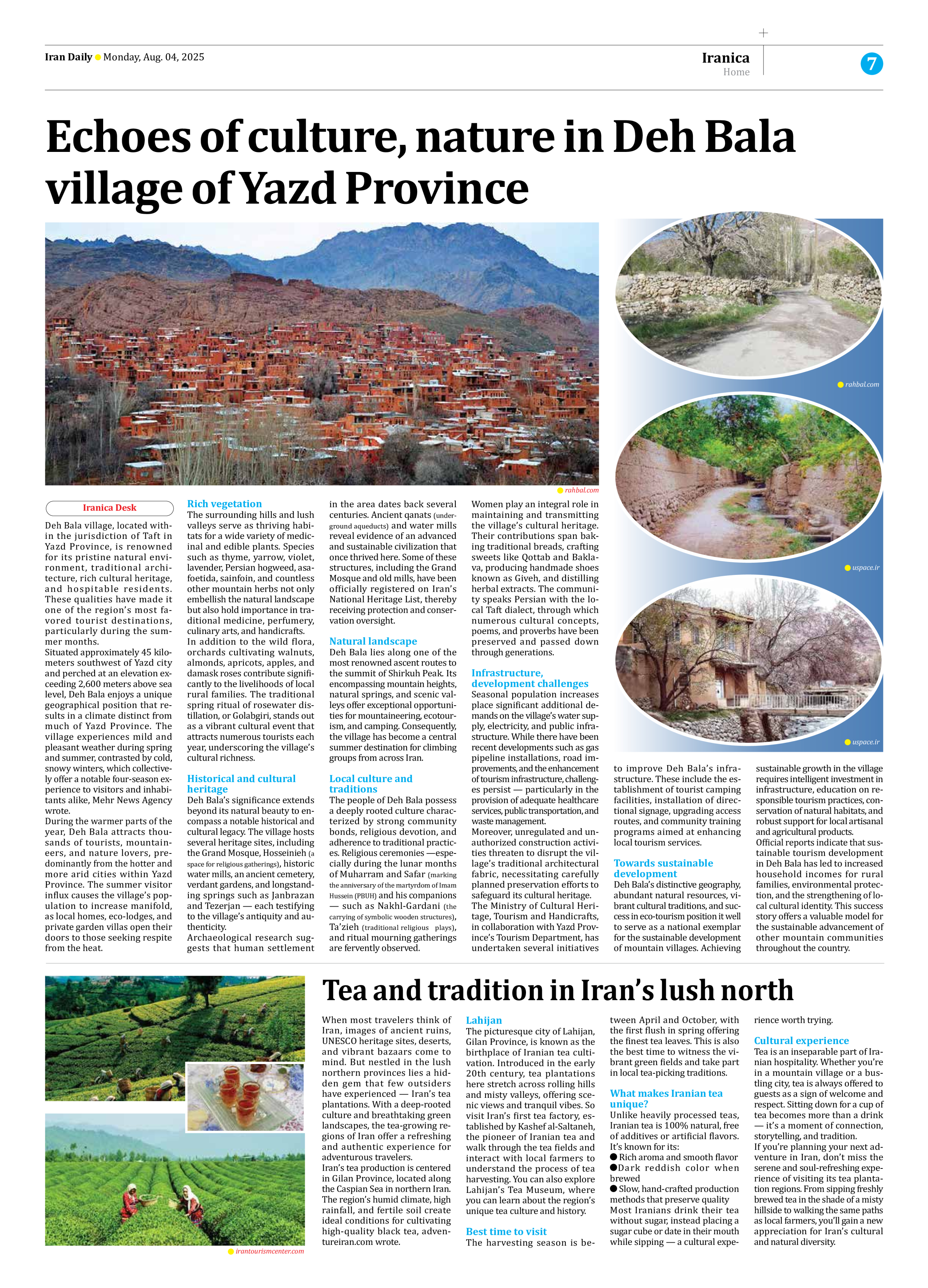
Iran’s tea production is centered in Gilan Province, located along the Caspian Sea in northern Iran. The region’s humid climate, high rainfall, and fertile soil create ideal conditions for cultivating high-quality black tea, adventureiran.com wrote.
Lahijan
The picturesque city of Lahijan, Gilan Province, is known as the birthplace of Iranian tea cultivation. Introduced in the early 20th century, tea plantations here stretch across rolling hills and misty valleys, offering scenic views and tranquil vibes. So visit Iran’s first tea factory, established by Kashef al-Saltaneh, the pioneer of Iranian tea and walk through the tea fields and interact with local farmers to understand the process of tea harvesting. You can also explore Lahijan’s Tea Museum, where you can learn about the region’s unique tea culture and history.
Best time to visit
The harvesting season is between April and October, with the first flush in spring offering the finest tea leaves. This is also the best time to witness the vibrant green fields and take part in local tea-picking traditions.
What makes Iranian tea unique?
Unlike heavily processed teas, Iranian tea is 100% natural, free of additives or artificial flavors. It’s known for its:
Rich aroma and smooth flavor
Dark reddish color when brewed
Slow, hand-crafted production methods that preserve quality
Most Iranians drink their tea without sugar, instead placing a sugar cube or date in their mouth while sipping — a cultural experience worth trying.
Cultural experience
Tea is an inseparable part of Iranian hospitality. Whether you’re in a mountain village or a bustling city, tea is always offered to guests as a sign of welcome and respect. Sitting down for a cup of tea becomes more than a drink — it’s a moment of connection, storytelling, and tradition.
If you’re planning your next adventure in Iran, don’t miss the serene and soul-refreshing experience of visiting its tea plantation regions. From sipping freshly brewed tea in the shade of a misty hillside to walking the same paths as local farmers, you’ll gain a new appreciation for Iran’s cultural and natural diversity.