







Money Museum showcases monetary heritage from ancient to modern times
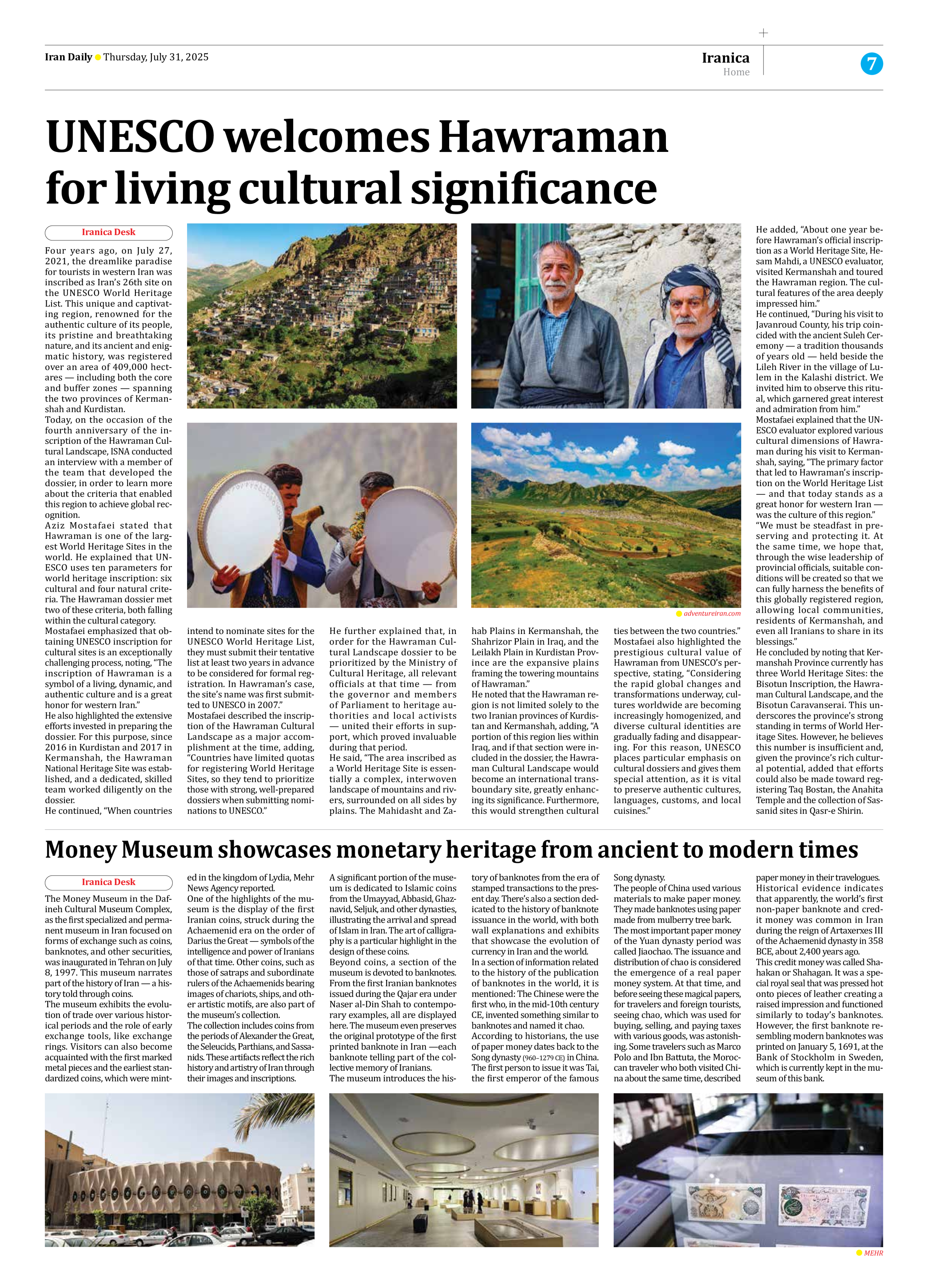
The Money Museum in the Dafineh Cultural Museum Complex, as the first specialized and permanent museum in Iran focused on forms of exchange such as coins, banknotes, and other securities, was inaugurated in Tehran on July 8, 1997. This museum narrates part of the history of Iran — a history told through coins.
The museum exhibits the evolution of trade over various historical periods and the role of early exchange tools, like exchange rings. Visitors can also become acquainted with the first marked metal pieces and the earliest standardized coins, which were minted in the kingdom of Lydia, Mehr News Agency reported.
One of the highlights of the museum is the display of the first Iranian coins, struck during the Achaemenid era on the order of Darius the Great — symbols of the intelligence and power of Iranians of that time. Other coins, such as those of satraps and subordinate rulers of the Achaemenids bearing images of chariots, ships, and other artistic motifs, are also part of the museum’s collection.
The collection includes coins from the periods of Alexander the Great, the Seleucids, Parthians, and Sassanids. These artifacts reflect the rich history and artistry of Iran through their images and inscriptions.
A significant portion of the museum is dedicated to Islamic coins from the Umayyad, Abbasid, Ghaznavid, Seljuk, and other dynasties, illustrating the arrival and spread of Islam in Iran. The art of calligraphy is a particular highlight in the design of these coins.
Beyond coins, a section of the museum is devoted to banknotes. From the first Iranian banknotes issued during the Qajar era under Naser al-Din Shah to contemporary examples, all are displayed here. The museum even preserves the original prototype of the first printed banknote in Iran —each banknote telling part of the collective memory of Iranians.
The museum introduces the history of banknotes from the era of stamped transactions to the present day. There’s also a section dedicated to the history of banknote issuance in the world, with both wall explanations and exhibits that showcase the evolution of currency in Iran and the world.
In a section of information related to the history of the publication of banknotes in the world, it is mentioned: The Chinese were the first who, in the mid-10th century CE, invented something similar to banknotes and named it chao.
According to historians, the use of paper money dates back to the Song dynasty (960–1279 CE) in China. The first person to issue it was Tai, the first emperor of the famous Song dynasty.
The people of China used various materials to make paper money. They made banknotes using paper made from mulberry tree bark.
The most important paper money of the Yuan dynasty period was called Jiaochao. The issuance and distribution of chao is considered the emergence of a real paper money system. At that time, and before seeing these magical papers, for travelers and foreign tourists, seeing chao, which was used for buying, selling, and paying taxes with various goods, was astonishing. Some travelers such as Marco Polo and Ibn Battuta, the Moroccan traveler who both visited China about the same time, described paper money in their travelogues.
Historical evidence indicates that apparently, the world’s first non-paper banknote and credit money was common in Iran during the reign of Artaxerxes III of the Achaemenid dynasty in 358 BCE, about 2,400 years ago.
This credit money was called Shahakan or Shahagan. It was a special royal seal that was pressed hot onto pieces of leather creating a raised impression and functioned similarly to today’s banknotes. However, the first banknote resembling modern banknotes was printed on January 5, 1691, at the Bank of Stockholm in Sweden, which is currently kept in the museum of this bank.