







Copy in clipboard...
Uzbek archaeologists push to re-date Samarkand’s origins to 3,000 years
The regional kengash (council) of people’s deputies took up the matter at its July 23 session, following fresh excavations and expert assessments.
The findings stem from a multi-year archaeological effort to revisit the city’s origins using modern tools and interdisciplinary methods.
Samarkand’s officially recognized age has shifted over time—from 1,500 to 2,000, then to 2,500 years, and most recently to 2,750 in the early 2000s. Now, scientists argue that the city’s roots may stretch back even further, citing evidence uncovered at nearby Kuktepa and Afrasiab.
“This hypothesis rests on robust data,” said Muminhon Saidov, director of the Samarkand Archaeological Institute. He noted that Kuktepa, a site located about 25 kilometers from present-day Samarkand, may have hosted a large urban center in the early first millennium BC.
Archaeologists, including M. Isomiddinov, Claude Rapin and M. Khasanov, point to a ruler’s residence and a temple complex unearthed there—features they say match descriptions in the ancient Zoroastrian text, the Avesta. They believe the urban nucleus later shifted to Afrasiab by the 7th or 6th century BC.
Excavations carried out earlier this year uncovered a 22-meter section of a defensive wall near the former Amir Timur Ark in Kuksaray Square. Made of sun-dried bricks and built directly on a natural loess base, the wall dates from the 7th to 6th century BC and helps piece together the city’s fortification layout.
Dig sites within the Afrasiab citadel revealed layers of habitation stretching from the 7th-6th centuries BC to the 12th century. Lower strata produced pottery shards, animal remains and organic samples—some buried more than seven meters deep—belonging to what is believed to be a complex defensive system. Botanical and zoological materials from the digs were dispatched to laboratories in France, Germany and Japan. Final analyses are still underway. However, preliminary reviews submitted to Uzbekistan’s Academy of Sciences and the Agency for Cultural Heritage’s Scientific Council have drawn positive responses.
The research has been guided by a public council on history and archaeology formed this year at the governor’s initiative. The group includes historians, scientists and cultural figures working under the region’s administration.
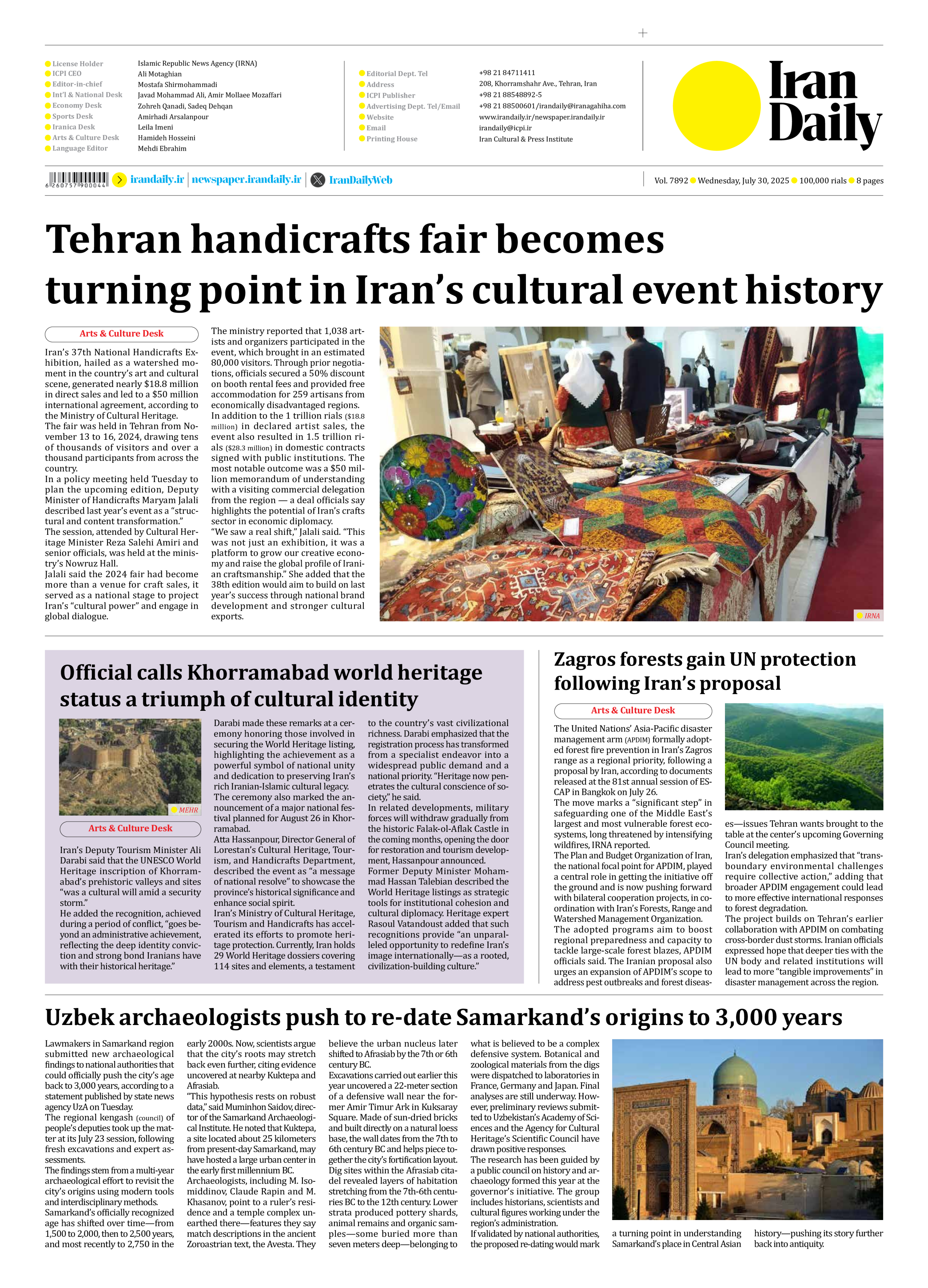
If validated by national authorities, the proposed re-dating would mark a turning point in understanding Samarkand’s place in Central Asian history—pushing its story further back into antiquity.