







Official calls Khorramabad world heritage status a triumph of cultural identity
Iran’s Deputy Tourism Minister Ali Darabi said that the UNESCO World Heritage inscription of Khorramabad’s prehistoric valleys and sites “was a cultural will amid a security storm.”
He added the recognition, achieved during a period of conflict, “goes beyond an administrative achievement, reflecting the deep identity conviction and strong bond Iranians have with their historical heritage.”
Darabi made these remarks at a ceremony honoring those involved in securing the World Heritage listing, highlighting the achievement as a powerful symbol of national unity and dedication to preserving Iran’s rich Iranian-Islamic cultural legacy.
The ceremony also marked the announcement of a major national festival planned for August 26 in Khorramabad.
Atta Hassanpour, Director General of Lorestan’s Cultural Heritage, Tourism, and Handicrafts Department, described the event as “a message of national resolve” to showcase the province’s historical significance and enhance social spirit.
Iran’s Ministry of Cultural Heritage, Tourism and Handicrafts has accelerated its efforts to promote heritage protection. Currently, Iran holds 29 World Heritage dossiers covering 114 sites and elements, a testament to the country’s vast civilizational richness. Darabi emphasized that the registration process has transformed from a specialist endeavor into a widespread public demand and a national priority. “Heritage now penetrates the cultural conscience of society,” he said.
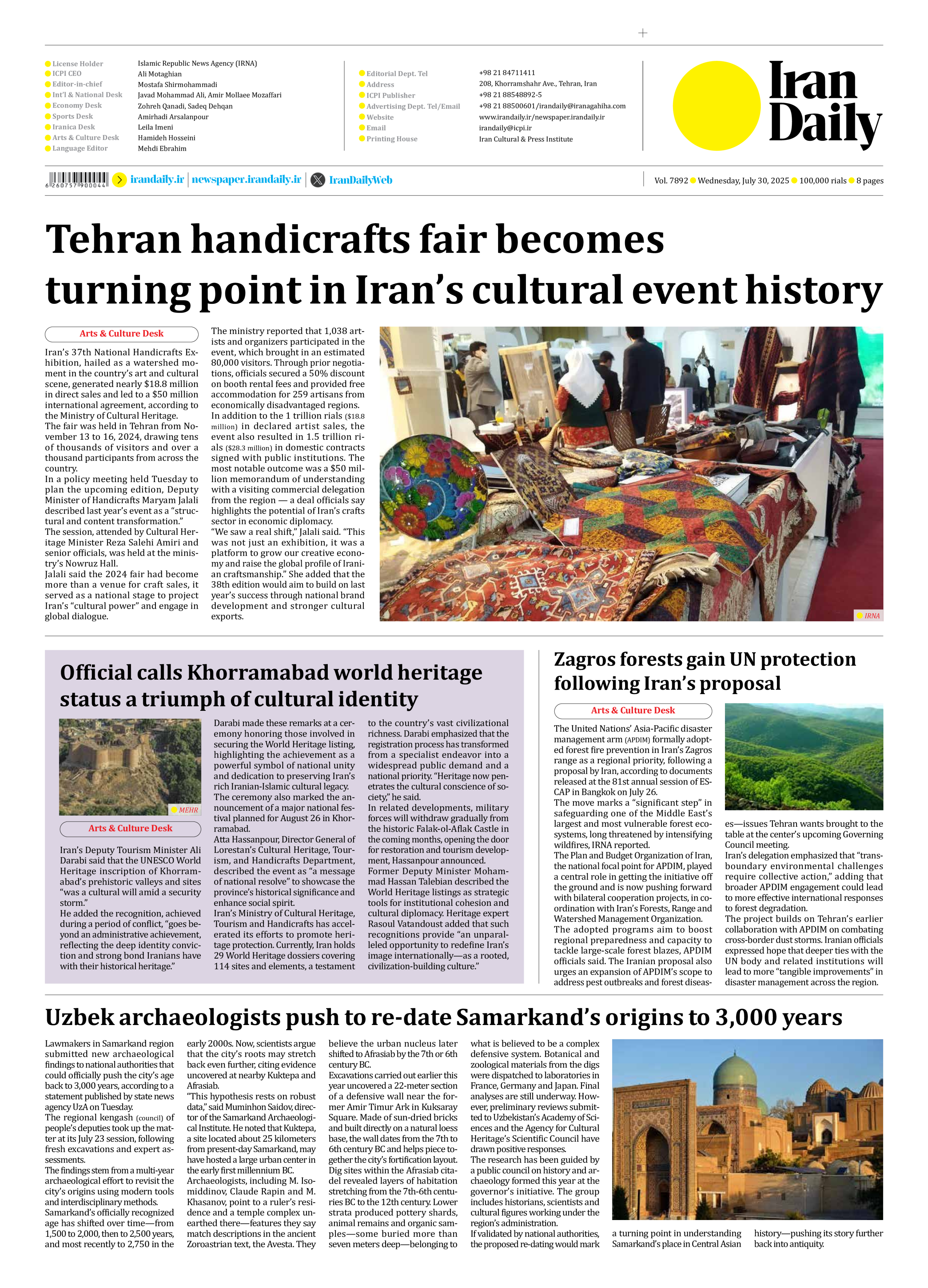
In related developments, military forces will withdraw gradually from the historic Falak-ol-Aflak Castle in the coming months, opening the door for restoration and tourism development, Hassanpour announced.
Former Deputy Minister Mohammad Hassan Talebian described the World Heritage listings as strategic tools for institutional cohesion and cultural diplomacy. Heritage expert Rasoul Vatandoust added that such recognitions provide “an unparalleled opportunity to redefine Iran’s image internationally—as a rooted, civilization-building culture.”