







A look into historic Jaame Mosque of Marand
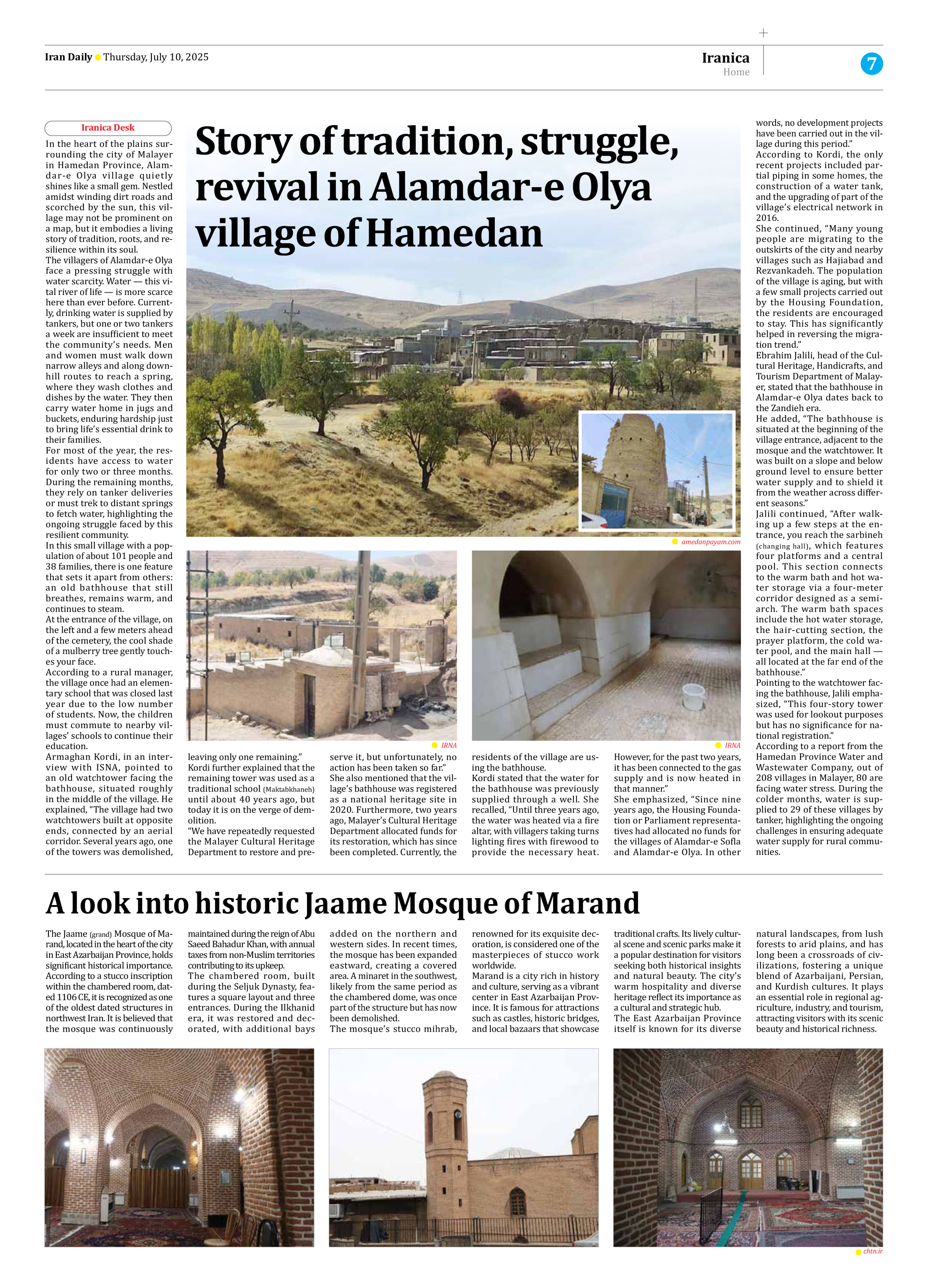
The Jaame (grand) Mosque of Marand, located in the heart of the city in East Azarbaijan Province, holds significant historical importance. According to a stucco inscription within the chambered room, dated 1106 CE, it is recognized as one of the oldest dated structures in northwest Iran. It is believed that the mosque was continuously maintained during the reign of Abu Saeed Bahadur Khan, with annual taxes from non-Muslim territories contributing to its upkeep.
The chambered room, built during the Seljuk Dynasty, features a square layout and three entrances. During the Ilkhanid era, it was restored and decorated, with additional bays added on the northern and western sides. In recent times, the mosque has been expanded eastward, creating a covered area. A minaret in the southwest, likely from the same period as the chambered dome, was once part of the structure but has now been demolished.
The mosque’s stucco mihrab, renowned for its exquisite decoration, is considered one of the masterpieces of stucco work worldwide.
Marand is a city rich in history and culture, serving as a vibrant center in East Azarbaijan Province. It is famous for attractions such as castles, historic bridges, and local bazaars that showcase traditional crafts. Its lively cultural scene and scenic parks make it a popular destination for visitors seeking both historical insights and natural beauty. The city’s warm hospitality and diverse heritage reflect its importance as a cultural and strategic hub.
The East Azarbaijan Province itself is known for its diverse natural landscapes, from lush forests to arid plains, and has long been a crossroads of civilizations, fostering a unique blend of Azarbaijani, Persian, and Kurdish cultures. It plays an essential role in regional agriculture, industry, and tourism, attracting visitors with its scenic beauty and historical richness.