







Copy in clipboard...
Islamic carpets show Silk Road ties at Hong Kong Palace Museum
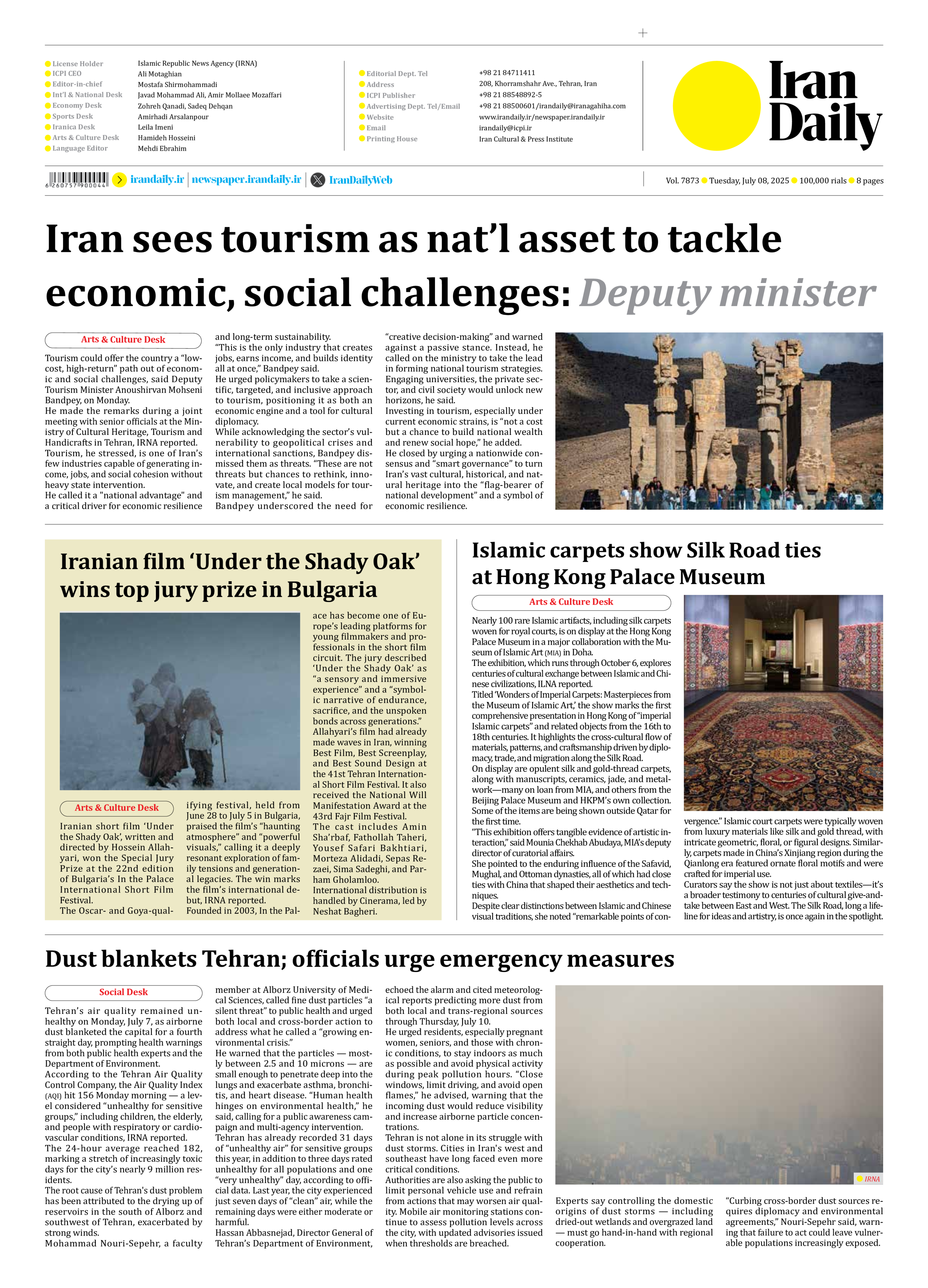
Nearly 100 rare Islamic artifacts, including silk carpets woven for royal courts, is on display at the Hong Kong Palace Museum in a major collaboration with the Museum of Islamic Art (MIA) in Doha.
The exhibition, which runs through October 6, explores centuries of cultural exchange between Islamic and Chinese civilizations, ILNA reported.
Titled ‘Wonders of Imperial Carpets: Masterpieces from the Museum of Islamic Art,’ the show marks the first comprehensive presentation in Hong Kong of “imperial Islamic carpets” and related objects from the 16th to 18th centuries. It highlights the cross-cultural flow of materials, patterns, and craftsmanship driven by diplomacy, trade, and migration along the Silk Road.
On display are opulent silk and gold-thread carpets, along with manuscripts, ceramics, jade, and metalwork—many on loan from MIA, and others from the Beijing Palace Museum and HKPM’s own collection. Some of the items are being shown outside Qatar for the first time.
“This exhibition offers tangible evidence of artistic interaction,” said Mounia Chekhab Abudaya, MIA’s deputy director of curatorial affairs.
She pointed to the enduring influence of the Safavid, Mughal, and Ottoman dynasties, all of which had close ties with China that shaped their aesthetics and techniques.
Despite clear distinctions between Islamic and Chinese visual traditions, she noted “remarkable points of convergence.” Islamic court carpets were typically woven from luxury materials like silk and gold thread, with intricate geometric, floral, or figural designs. Similarly, carpets made in China’s Xinjiang region during the Qianlong era featured ornate floral motifs and were crafted for imperial use.
Curators say the show is not just about textiles—it’s a broader testimony to centuries of cultural give-and-take between East and West. The Silk Road, long a lifeline for ideas and artistry, is once again in the spotlight.