







Improving infrastructure in Kalat to boost tourism
Kalat is considered one of Iran’s border cities, situated in the northeastern part of Khorasan Razavi Province. The name Kalat translates to fortress, rampart, or citadel. Its historical significance dates back to the Afsharid era and the reign of Nader Shah, which is why it is also renowned as Kalat Naderi. In history, Kalat was known as a storage place for valuable jewels and spoils. Notably, the city was attacked 14 times by Timur Lang, yet he was never able to conquer it.
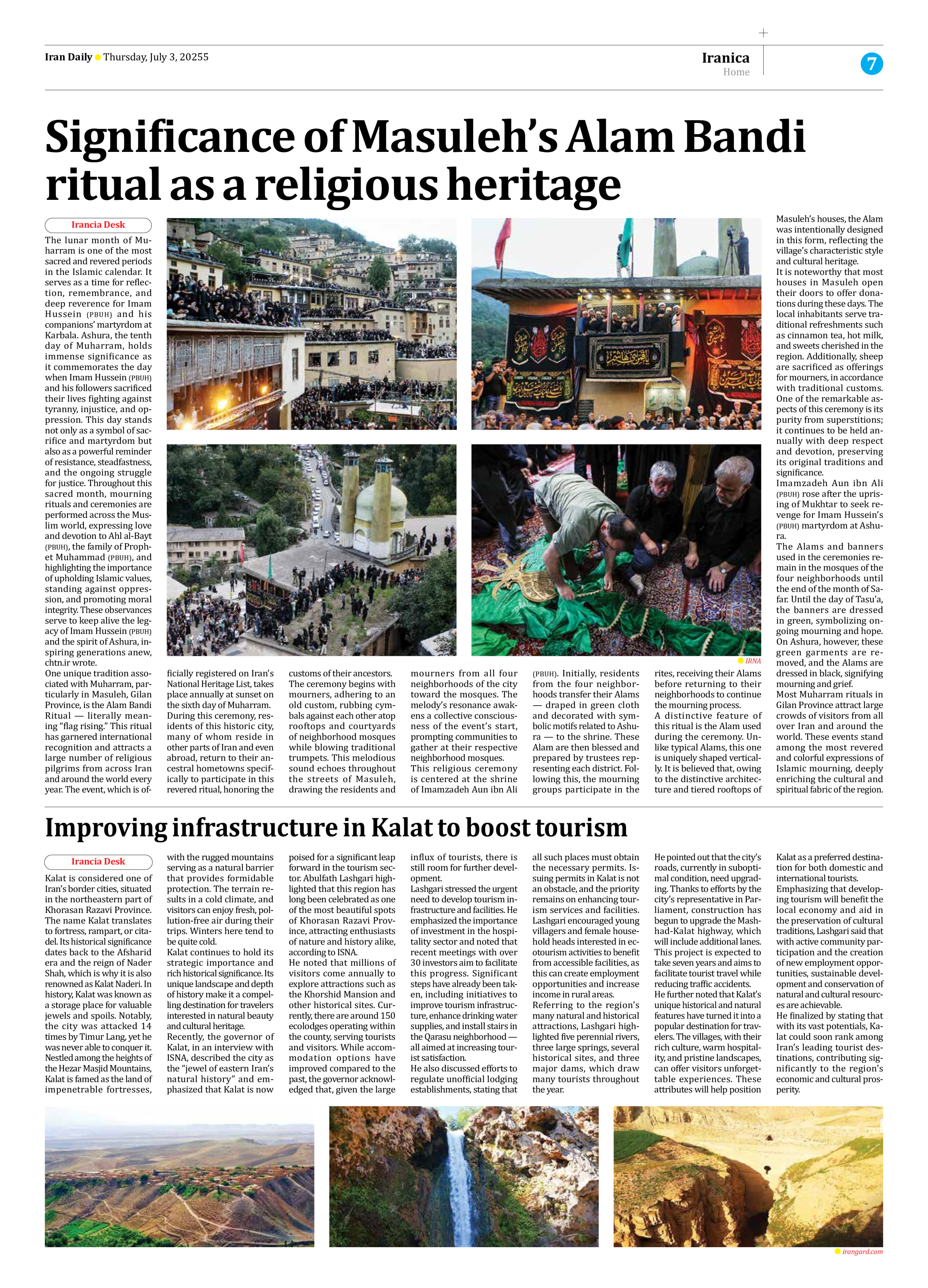
Nestled among the heights of the Hezar Masjid Mountains, Kalat is famed as the land of impenetrable fortresses, with the rugged mountains serving as a natural barrier that provides formidable protection. The terrain results in a cold climate, and visitors can enjoy fresh, pollution-free air during their trips. Winters here tend to be quite cold.
Kalat continues to hold its strategic importance and rich historical significance. Its unique landscape and depth of history make it a compelling destination for travelers interested in natural beauty and cultural heritage.
Recently, the governor of Kalat, in an interview with ISNA, described the city as the “jewel of eastern Iran’s natural history” and emphasized that Kalat is now poised for a significant leap forward in the tourism sector. Abulfath Lashgari highlighted that this region has long been celebrated as one of the most beautiful spots of Khorasan Razavi Province, attracting enthusiasts of nature and history alike, according to ISNA.
He noted that millions of visitors come annually to explore attractions such as the Khorshid Mansion and other historical sites. Currently, there are around 150 ecolodges operating within the county, serving tourists and visitors. While accommodation options have improved compared to the past, the governor acknowledged that, given the large influx of tourists, there is still room for further development.
Lashgari stressed the urgent need to develop tourism infrastructure and facilities. He emphasized the importance of investment in the hospitality sector and noted that recent meetings with over 30 investors aim to facilitate this progress. Significant steps have already been taken, including initiatives to improve tourism infrastructure, enhance drinking water supplies, and install stairs in the Qarasu neighborhood — all aimed at increasing tourist satisfaction.
He also discussed efforts to regulate unofficial lodging establishments, stating that all such places must obtain the necessary permits. Issuing permits in Kalat is not an obstacle, and the priority remains on enhancing tourism services and facilities. Lashgari encouraged young villagers and female household heads interested in ecotourism activities to benefit from accessible facilities, as this can create employment opportunities and increase income in rural areas.
Referring to the region’s many natural and historical attractions, Lashgari highlighted five perennial rivers, three large springs, several historical sites, and three major dams, which draw many tourists throughout the year.
He pointed out that the city’s roads, currently in suboptimal condition, need upgrading. Thanks to efforts by the city’s representative in Parliament, construction has begun to upgrade the Mashhad-Kalat highway, which will include additional lanes. This project is expected to take seven years and aims to facilitate tourist travel while reducing traffic accidents.
He further noted that Kalat’s unique historical and natural features have turned it into a popular destination for travelers. The villages, with their rich culture, warm hospitality, and pristine landscapes, can offer visitors unforgettable experiences. These attributes will help position Kalat as a preferred destination for both domestic and international tourists.
Emphasizing that developing tourism will benefit the local economy and aid in the preservation of cultural traditions, Lashgari said that with active community participation and the creation of new employment opportunities, sustainable development and conservation of natural and cultural resources are achievable.
He finalized by stating that with its vast potentials, Kalat could soon rank among Iran’s leading tourist destinations, contributing significantly to the region’s economic and cultural prosperity.