







Muharram in Bushehr; a confluence of devotion, tradition, social solidarity
The lunar month of Muharram, marking the anniversary of the martyrdom of Imam Hussein (PBUH) and his companions, is not merely a religious occasion in Bushehr, the capital city of the southern province of Bushehr; it is a powerful reflection of the cultural identity and social solidarity of the people of southern Iran. Celebrated annually with profound fervor and grandeur, Muharram embodies both spiritual devotion and communal unity.
From the earliest nights of Muharram, the atmosphere of the city undergoes a dramatic transformation. Alleys and streets are draped in black, and mourning banners are hung on homes, shops, and Husseiniehs — religious places dedicated to commemorating the martyrdom of Imam Hussein (PBUH). Husseiniehs and mosques are among the first to host mourners, with mourning groups beginning their activities promptly. People participate passionately in these ceremonies, ensuring that age-old traditions are handed down through generations, preserving the cultural fabric of the community, chtn.ir wrote.
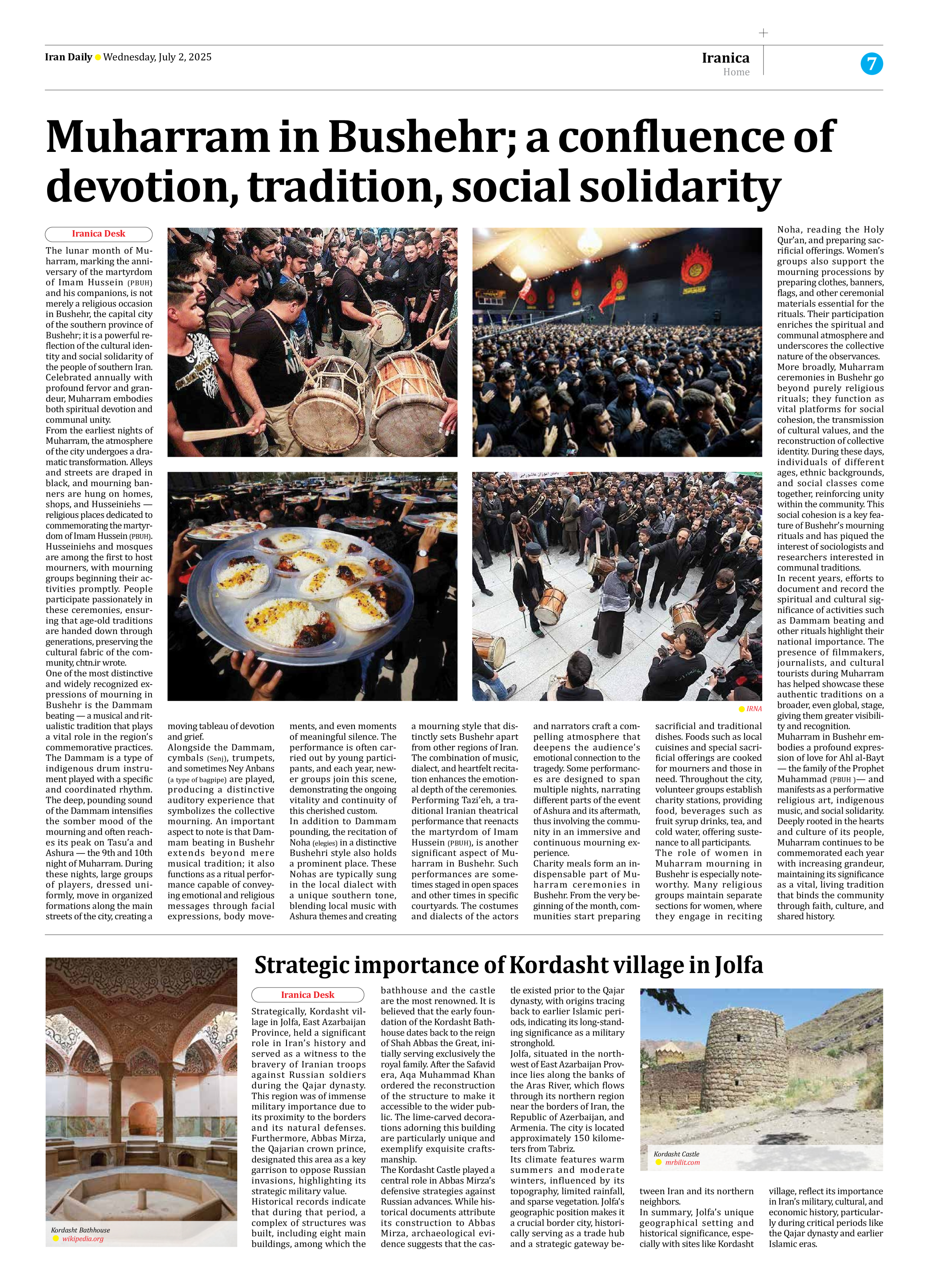
One of the most distinctive and widely recognized expressions of mourning in Bushehr is the Dammam beating — a musical and ritualistic tradition that plays a vital role in the region’s commemorative practices. The Dammam is a type of indigenous drum instrument played with a specific and coordinated rhythm. The deep, pounding sound of the Dammam intensifies the somber mood of the mourning and often reaches its peak on Tasu’a and Ashura — the 9th and 10th night of Muharram. During these nights, large groups of players, dressed uniformly, move in organized formations along the main streets of the city, creating a moving tableau of devotion and grief.
Alongside the Dammam, cymbals (Senj), trumpets, and sometimes Ney Anbans (a type of bagpipe) are played, producing a distinctive auditory experience that symbolizes the collective mourning. An important aspect to note is that Dammam beating in Bushehr extends beyond mere musical tradition; it also functions as a ritual performance capable of conveying emotional and religious messages through facial expressions, body movements, and even moments of meaningful silence. The performance is often carried out by young participants, and each year, newer groups join this scene, demonstrating the ongoing vitality and continuity of this cherished custom.
In addition to Dammam pounding, the recitation of Noha (elegies) in a distinctive Bushehri style also holds a prominent place. These Nohas are typically sung in the local dialect with a unique southern tone, blending local music with Ashura themes and creating a mourning style that distinctly sets Bushehr apart from other regions of Iran. The combination of music, dialect, and heartfelt recitation enhances the emotional depth of the ceremonies.
Performing Tazi’eh, a traditional Iranian theatrical performance that reenacts the martyrdom of Imam Hussein (PBUH), is another significant aspect of Muharram in Bushehr. Such performances are sometimes staged in open spaces and other times in specific courtyards. The costumes and dialects of the actors and narrators craft a compelling atmosphere that deepens the audience’s emotional connection to the tragedy. Some performances are designed to span multiple nights, narrating different parts of the event of Ashura and its aftermath, thus involving the community in an immersive and continuous mourning experience.
Charity meals form an indispensable part of Muharram ceremonies in Bushehr. From the very beginning of the month, communities start preparing sacrificial and traditional dishes. Foods such as local cuisines and special sacrificial offerings are cooked for mourners and those in need. Throughout the city, volunteer groups establish charity stations, providing food, beverages such as fruit syrup drinks, tea, and cold water, offering sustenance to all participants.
The role of women in Muharram mourning in Bushehr is especially noteworthy. Many religious groups maintain separate sections for women, where they engage in reciting Noha, reading the Holy Qur’an, and preparing sacrificial offerings. Women’s groups also support the mourning processions by preparing clothes, banners, flags, and other ceremonial materials essential for the rituals. Their participation enriches the spiritual and communal atmosphere and underscores the collective nature of the observances.
More broadly, Muharram ceremonies in Bushehr go beyond purely religious rituals; they function as vital platforms for social cohesion, the transmission of cultural values, and the reconstruction of collective identity. During these days, individuals of different ages, ethnic backgrounds, and social classes come together, reinforcing unity within the community. This social cohesion is a key feature of Bushehr’s mourning rituals and has piqued the interest of sociologists and researchers interested in communal traditions.
In recent years, efforts to document and record the spiritual and cultural significance of activities such as Dammam beating and other rituals highlight their national importance. The presence of filmmakers, journalists, and cultural tourists during Muharram has helped showcase these authentic traditions on a broader, even global, stage, giving them greater visibility and recognition.
Muharram in Bushehr embodies a profound expression of love for Ahl al-Bayt — the family of the Prophet Muhammad (PBUH )— and manifests as a performative religious art, indigenous music, and social solidarity. Deeply rooted in the hearts and culture of its people, Muharram continues to be commemorated each year with increasing grandeur, maintaining its significance as a vital, living tradition that binds the community through faith, culture, and shared history.