







Copy in clipboard...
Iran’s civilizational treasures stand tall against Western media fear: Minister
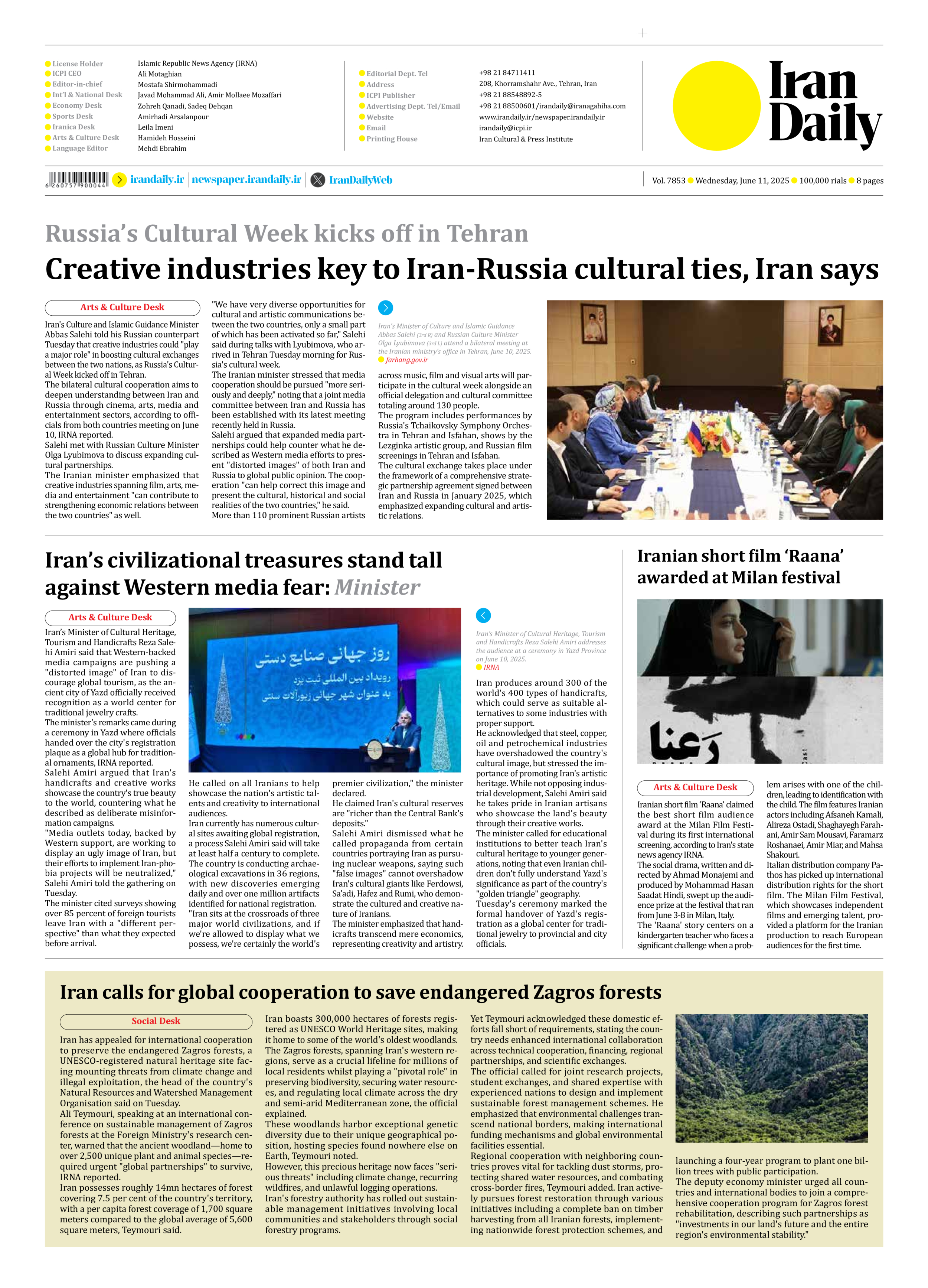
Iran’s Minister of Cultural Heritage, Tourism and Handicrafts Reza Salehi Amiri said that Western-backed media campaigns are pushing a "distorted image" of Iran to discourage global tourism, as the ancient city of Yazd officially received recognition as a world center for traditional jewelry crafts.
The minister's remarks came during a ceremony in Yazd where officials handed over the city's registration plaque as a global hub for traditional ornaments, IRNA reported.
Salehi Amiri argued that Iran's handicrafts and creative works showcase the country's true beauty to the world, countering what he described as deliberate misinformation campaigns.
"Media outlets today, backed by Western support, are working to display an ugly image of Iran, but their efforts to implement Iran-phobia projects will be neutralized," Salehi Amiri told the gathering on Tuesday.
The minister cited surveys showing over 85 percent of foreign tourists leave Iran with a "different perspective" than what they expected before arrival.
He called on all Iranians to help showcase the nation's artistic talents and creativity to international audiences.
Iran currently has numerous cultural sites awaiting global registration, a process Salehi Amiri said will take at least half a century to complete. The country is conducting archaeological excavations in 36 regions, with new discoveries emerging daily and over one million artifacts identified for national registration.
"Iran sits at the crossroads of three major world civilizations, and if we're allowed to display what we possess, we're certainly the world's premier civilization," the minister declared.
He claimed Iran's cultural reserves are "richer than the Central Bank's deposits."
Salehi Amiri dismissed what he called propaganda from certain countries portraying Iran as pursuing nuclear weapons, saying such "false images" cannot overshadow Iran's cultural giants like Ferdowsi, Sa’adi, Hafez and Rumi, who demonstrate the cultured and creative nature of Iranians.
The minister emphasized that handicrafts transcend mere economics, representing creativity and artistry. Iran produces around 300 of the world's 400 types of handicrafts, which could serve as suitable alternatives to some industries with proper support.
He acknowledged that steel, copper, oil and petrochemical industries have overshadowed the country's cultural image, but stressed the importance of promoting Iran's artistic heritage. While not opposing industrial development, Salehi Amiri said he takes pride in Iranian artisans who showcase the land's beauty through their creative works.
The minister called for educational institutions to better teach Iran's cultural heritage to younger generations, noting that even Iranian children don't fully understand Yazd's significance as part of the country's "golden triangle" geography.
Tuesday's ceremony marked the formal handover of Yazd's registration as a global center for traditional jewelry to provincial and city officials.