





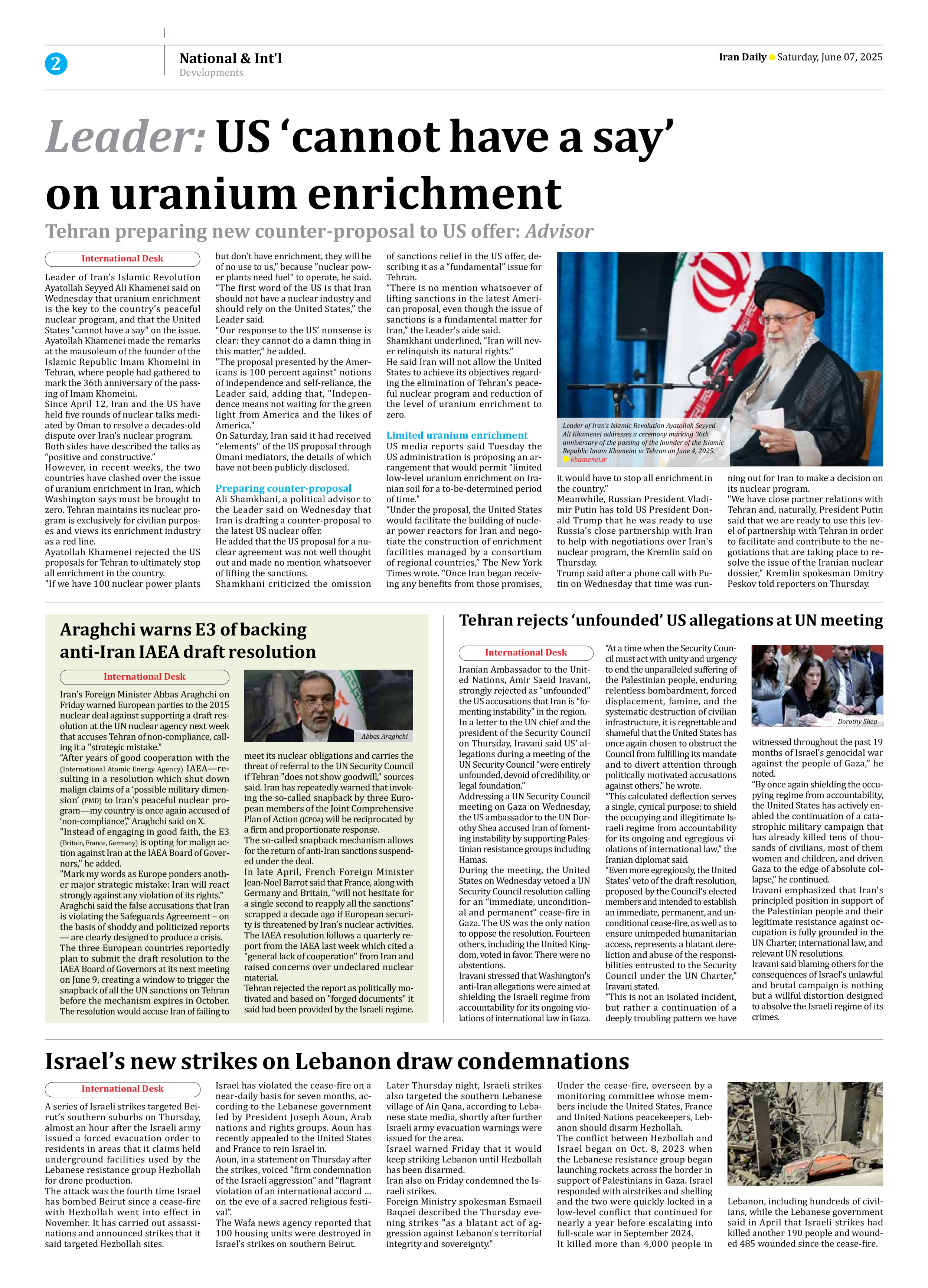


Araghchi warns E3 of backing anti-Iran IAEA draft resolution
Iran’s Foreign Minister Abbas Araghchi on Friday warned European parties to the 2015 nuclear deal against supporting a draft resolution at the UN nuclear agency next week that accuses Tehran of non-compliance, calling it a "strategic mistake."
“After years of good cooperation with the (International Atomic Energy Agency) IAEA—resulting in a resolution which shut down malign claims of a ‘possible military dimension’ (PMD) to Iran's peaceful nuclear program—my country is once again accused of ‘non-compliance’,” Araghchi said on X.
"Instead of engaging in good faith, the E3 (Britain, France, Germany) is opting for malign action against Iran at the IAEA Board of Governors," he added.
"Mark my words as Europe ponders another major strategic mistake: Iran will react strongly against any violation of its rights."
Araghchi said the false accusations that Iran is violating the Safeguards Agreement – on the basis of shoddy and politicized reports — are clearly designed to produce a crisis.
The three European countries reportedly plan to submit the draft resolution to the IAEA Board of Governors at its next meeting on June 9, creating a window to trigger the snapback of all the UN sanctions on Tehran before the mechanism expires in October. The resolution would accuse Iran of failing to meet its nuclear obligations and carries the threat of referral to the UN Security Council if Tehran "does not show goodwill,” sources said. Iran has repeatedly warned that invoking the so-called snapback by three European members of the Joint Comprehensive Plan of Action (JCPOA) will be reciprocated by a firm and proportionate response.
The so-called snapback mechanism allows for the return of anti-Iran sanctions suspended under the deal.
In late April, French Foreign Minister Jean-Noel Barrot said that France, along with Germany and Britain, “will not hesitate for a single second to reapply all the sanctions” scrapped a decade ago if European security is threatened by Iran’s nuclear activities. The IAEA resolution follows a quarterly report from the IAEA last week which cited a "general lack of cooperation" from Iran and raised concerns over undeclared nuclear material.
Tehran rejected the report as politically motivated and based on "forged documents" it said had been provided by the Israeli regime.