







Minister calls for responsive cultural research amid social change
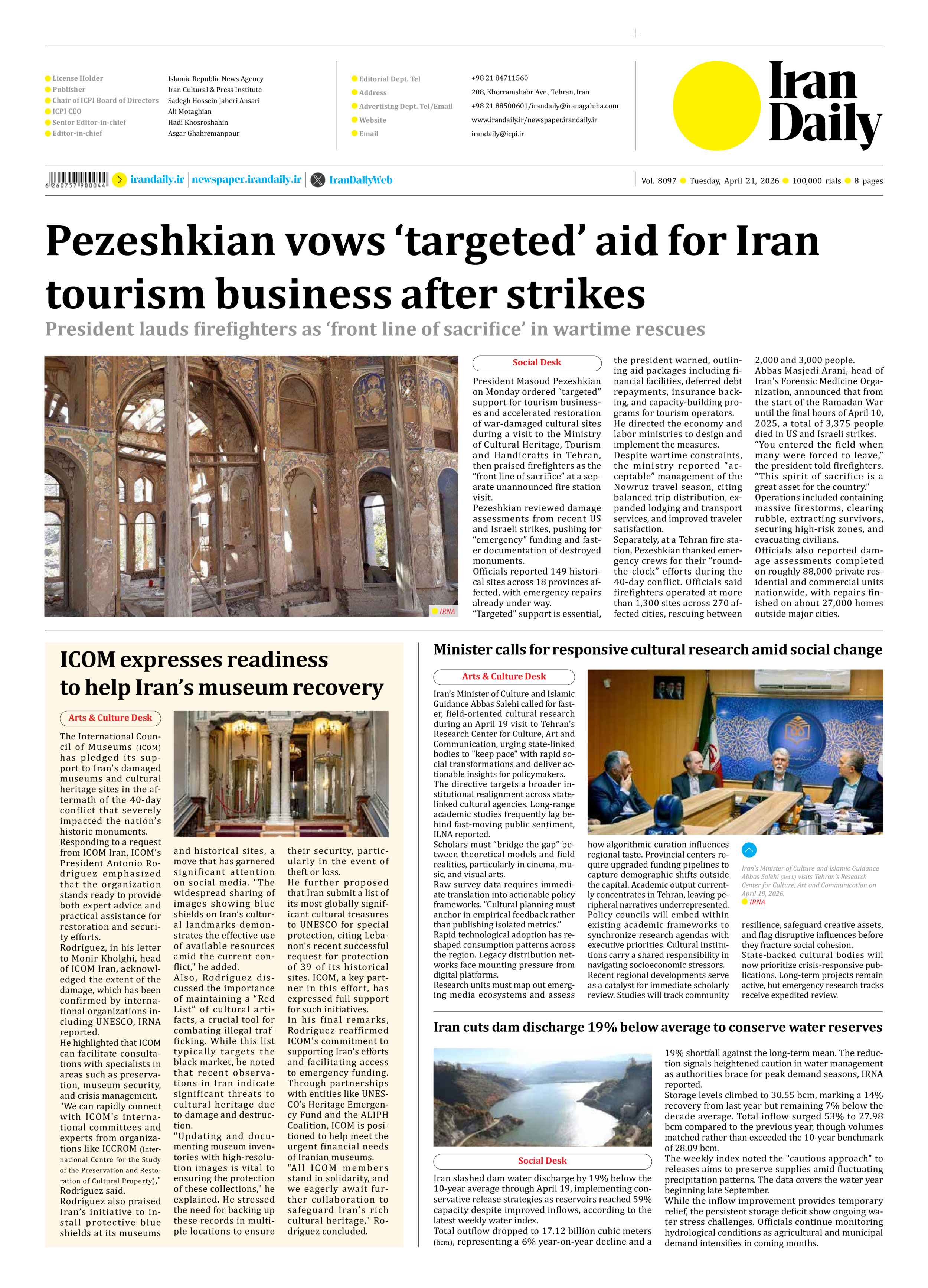
Iran’s Minister of Culture and Islamic Guidance Abbas Salehi called for faster, field-oriented cultural research during an April 19 visit to Tehran’s Research Center for Culture, Art and Communication, urging state-linked bodies to "keep pace" with rapid social transformations and deliver actionable insights for policymakers.
The directive targets a broader institutional realignment across state-linked cultural agencies. Long-range academic studies frequently lag behind fast-moving public sentiment, ILNA reported.
Scholars must “bridge the gap” between theoretical models and field realities, particularly in cinema, music, and visual arts.
Raw survey data requires immediate translation into actionable policy frameworks. “Cultural planning must anchor in empirical feedback rather than publishing isolated metrics.”
Rapid technological adoption has reshaped consumption patterns across the region. Legacy distribution networks face mounting pressure from digital platforms.
Research units must map out emerging media ecosystems and assess how algorithmic curation influences regional taste. Provincial centers require upgraded funding pipelines to capture demographic shifts outside the capital. Academic output currently concentrates in Tehran, leaving peripheral narratives underrepresented.
Policy councils will embed within existing academic frameworks to synchronize research agendas with executive priorities. Cultural institutions carry a shared responsibility in navigating socioeconomic stressors.
Recent regional developments serve as a catalyst for immediate scholarly review. Studies will track community resilience, safeguard creative assets, and flag disruptive influences before they fracture social cohesion.
State-backed cultural bodies will now prioritize crisis-responsive publications. Long-term projects remain active, but emergency research tracks receive expedited review.