







Gov’t plans to ease forex rules for exporters via essential imports
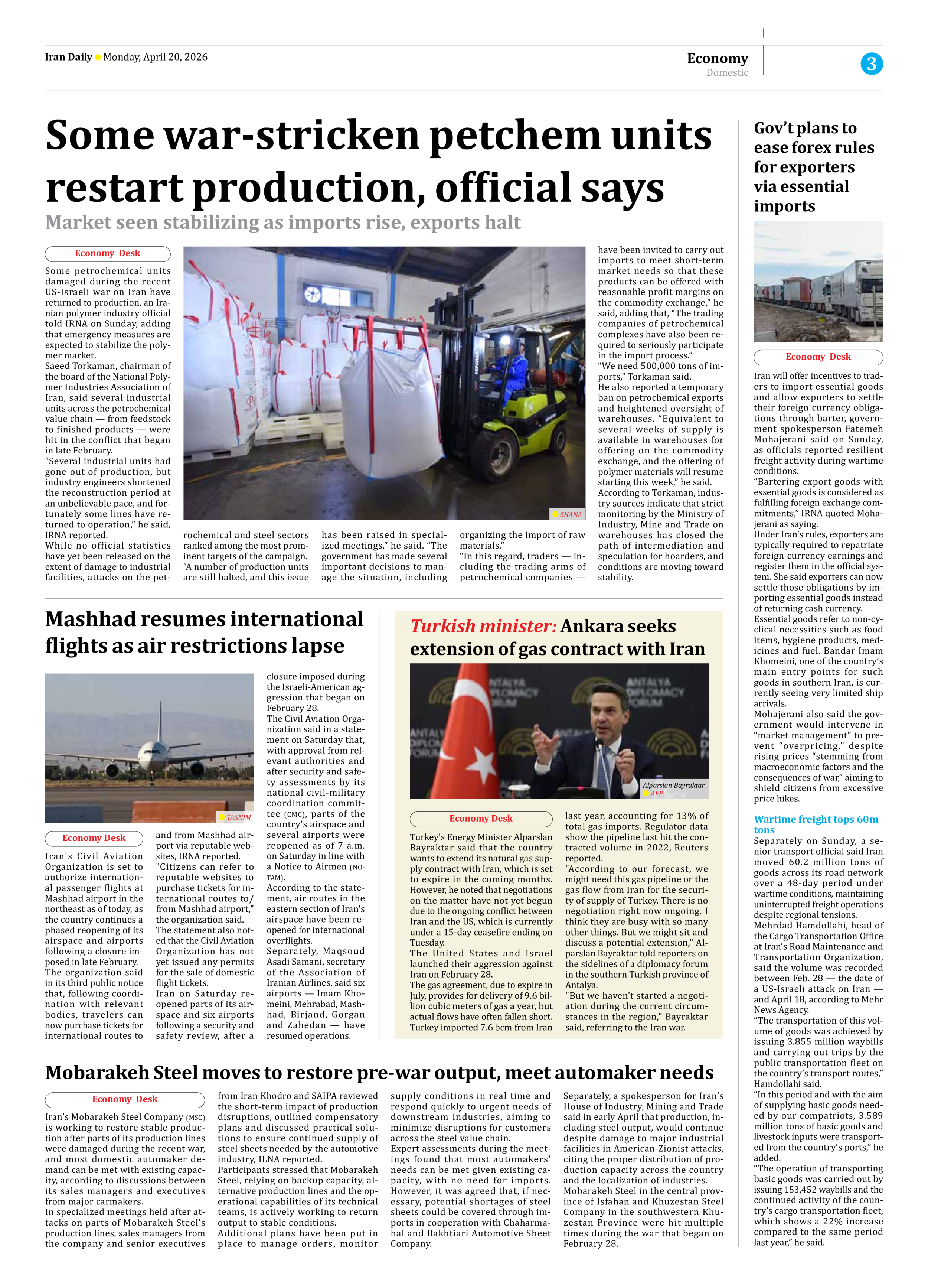
Iran will offer incentives to traders to import essential goods and allow exporters to settle their foreign currency obligations through barter, government spokesperson Fatemeh Mohajerani said on Sunday, as officials reported resilient freight activity during wartime conditions.
“Bartering export goods with essential goods is considered as fulfilling foreign exchange commitments,” IRNA quoted Mohajerani as saying.
Under Iran’s rules, exporters are typically required to repatriate foreign currency earnings and register them in the official system. She said exporters can now settle those obligations by importing essential goods instead of returning cash currency.
Essential goods refer to non-cyclical necessities such as food items, hygiene products, medicines and fuel. Bandar Imam Khomeini, one of the country’s main entry points for such goods in southern Iran, is currently seeing very limited ship arrivals.
Mohajerani also said the government would intervene in “market management” to prevent “overpricing,” despite rising prices “stemming from macroeconomic factors and the consequences of war,” aiming to shield citizens from excessive price hikes.
Wartime freight tops 60m tons
Separately on Sunday, a senior transport official said Iran moved 60.2 million tons of goods across its road network over a 48-day period under wartime conditions, maintaining uninterrupted freight operations despite regional tensions.
Mehrdad Hamdollahi, head of the Cargo Transportation Office at Iran’s Road Maintenance and Transportation Organization, said the volume was recorded between Feb. 28 — the date of a US-Israeli attack on Iran — and April 18, according to Mehr News Agency.
“The transportation of this volume of goods was achieved by issuing 3.855 million waybills and carrying out trips by the public transportation fleet on the country’s transport routes,” Hamdollahi said.
“In this period and with the aim of supplying basic goods needed by our compatriots, 3.589 million tons of basic goods and livestock inputs were transported from the country’s ports,” he added.
“The operation of transporting basic goods was carried out by issuing 153,452 waybills and the continued activity of the country’s cargo transportation fleet, which shows a 22% increase compared to the same period last year,” he said.