





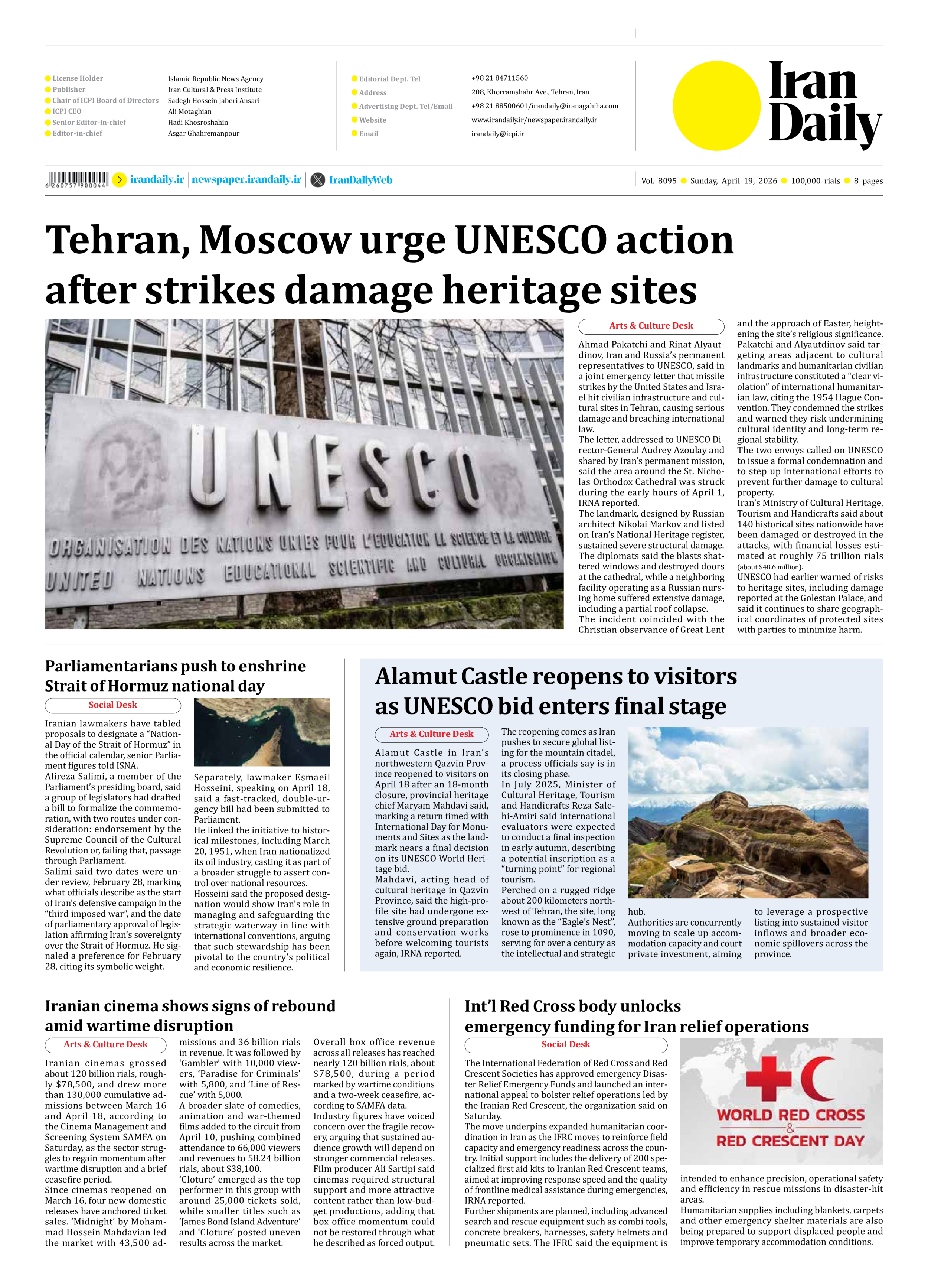


Tehran, Moscow urge UNESCO action after strikes damage heritage sites
Ahmad Pakatchi and Rinat Alyautdinov, Iran and Russia’s permanent representatives to UNESCO, said in a joint emergency letter that missile strikes by the United States and Israel hit civilian infrastructure and cultural sites in Tehran, causing serious damage and breaching international law.
The letter, addressed to UNESCO Director-General Audrey Azoulay and shared by Iran’s permanent mission, said the area around the St. Nicholas Orthodox Cathedral was struck during the early hours of April 1, IRNA reported.
The landmark, designed by Russian architect Nikolai Markov and listed on Iran’s National Heritage register, sustained severe structural damage.
The diplomats said the blasts shattered windows and destroyed doors at the cathedral, while a neighboring facility operating as a Russian nursing home suffered extensive damage, including a partial roof collapse.
The incident coincided with the Christian observance of Great Lent and the approach of Easter, heightening the site’s religious significance.
Pakatchi and Alyautdinov said targeting areas adjacent to cultural landmarks and humanitarian civilian infrastructure constituted a “clear violation” of international humanitarian law, citing the 1954 Hague Convention. They condemned the strikes and warned they risk undermining cultural identity and long-term regional stability.
The two envoys called on UNESCO to issue a formal condemnation and to step up international efforts to prevent further damage to cultural property.
Iran’s Ministry of Cultural Heritage, Tourism and Handicrafts said about 140 historical sites nationwide have been damaged or destroyed in the attacks, with financial losses estimated at roughly 75 trillion rials (about $48.6 million).
UNESCO had earlier warned of risks to heritage sites, including damage reported at the Golestan Palace, and said it continues to share geographical coordinates of protected sites with parties to minimize harm.