







Iran logs over 29m Nowruz trips as travel aids social recovery
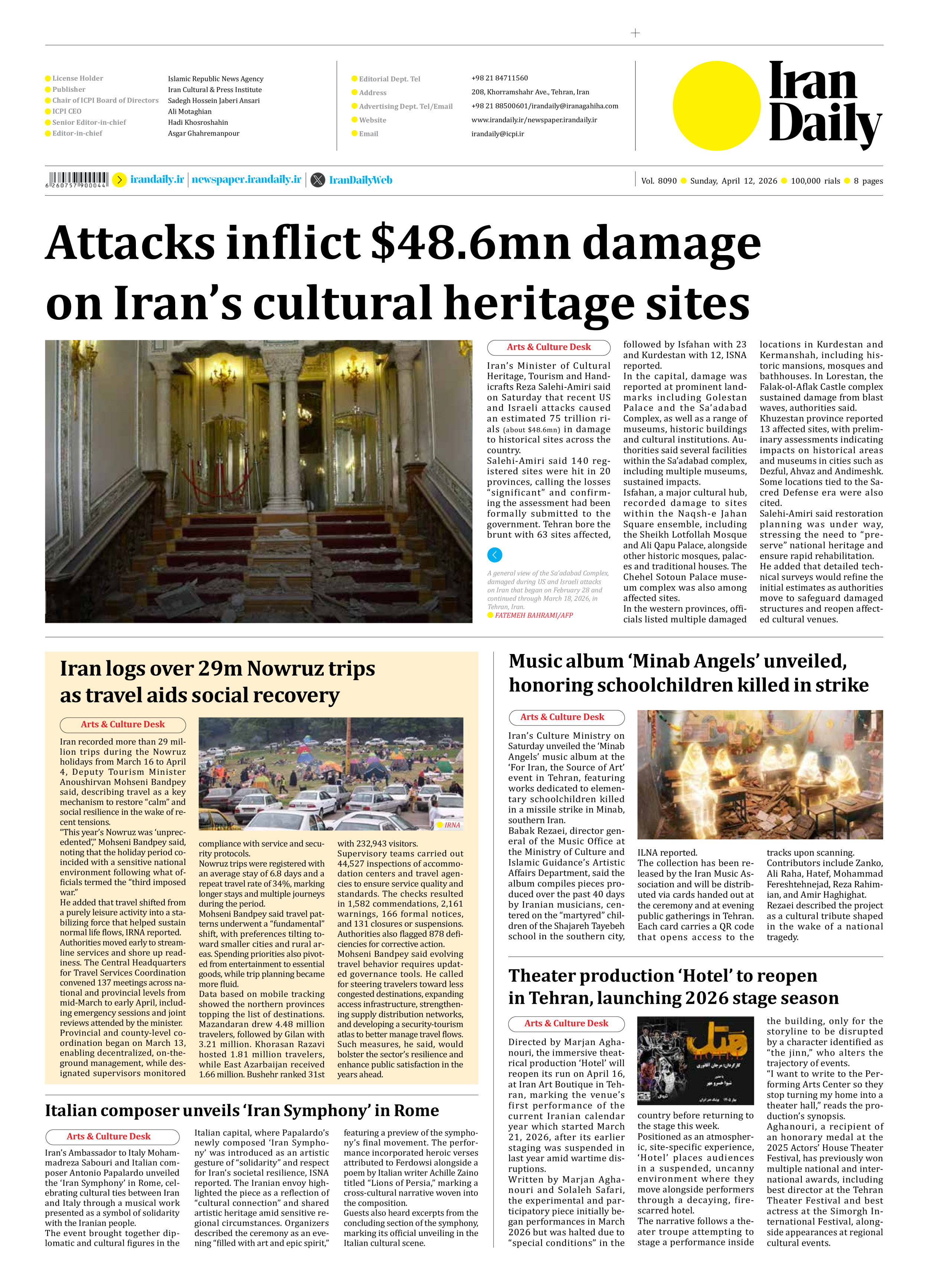
Iran recorded more than 29 million trips during the Nowruz holidays from March 16 to April 4, Deputy Tourism Minister Anoushirvan Mohseni Bandpey said, describing travel as a key mechanism to restore “calm” and social resilience in the wake of recent tensions.
“This year’s Nowruz was ‘unprecedented’,” Mohseni Bandpey said, noting that the holiday period coincided with a sensitive national environment following what officials termed the “third imposed war.”
He added that travel shifted from a purely leisure activity into a stabilizing force that helped sustain normal life flows, IRNA reported.
Authorities moved early to streamline services and shore up readiness. The Central Headquarters for Travel Services Coordination convened 137 meetings across national and provincial levels from mid-March to early April, including emergency sessions and joint reviews attended by the minister.
Provincial and county-level coordination began on March 13, enabling decentralized, on-the-ground management, while designated supervisors monitored compliance with service and security protocols.
Nowruz trips were registered with an average stay of 6.8 days and a repeat travel rate of 34%, marking longer stays and multiple journeys during the period.
Mohseni Bandpey said travel patterns underwent a “fundamental” shift, with preferences tilting toward smaller cities and rural areas. Spending priorities also pivoted from entertainment to essential goods, while trip planning became more fluid.
Data based on mobile tracking showed the northern provinces topping the list of destinations. Mazandaran drew 4.48 million travelers, followed by Gilan with 3.21 million. Khorasan Razavi hosted 1.81 million travelers, while East Azarbaijan received 1.66 million. Bushehr ranked 31st with 232,943 visitors.
Supervisory teams carried out 44,527 inspections of accommodation centers and travel agencies to ensure service quality and standards. The checks resulted in 1,582 commendations, 2,161 warnings, 166 formal notices, and 131 closures or suspensions. Authorities also flagged 878 deficiencies for corrective action.
Mohseni Bandpey said evolving travel behavior requires updated governance tools. He called for steering travelers toward less congested destinations, expanding access infrastructure, strengthening supply distribution networks, and developing a security-tourism atlas to better manage travel flows. Such measures, he said, would bolster the sector’s resilience and enhance public satisfaction in the years ahead.