







Iranian oil prices fetch premium for first time since 2022
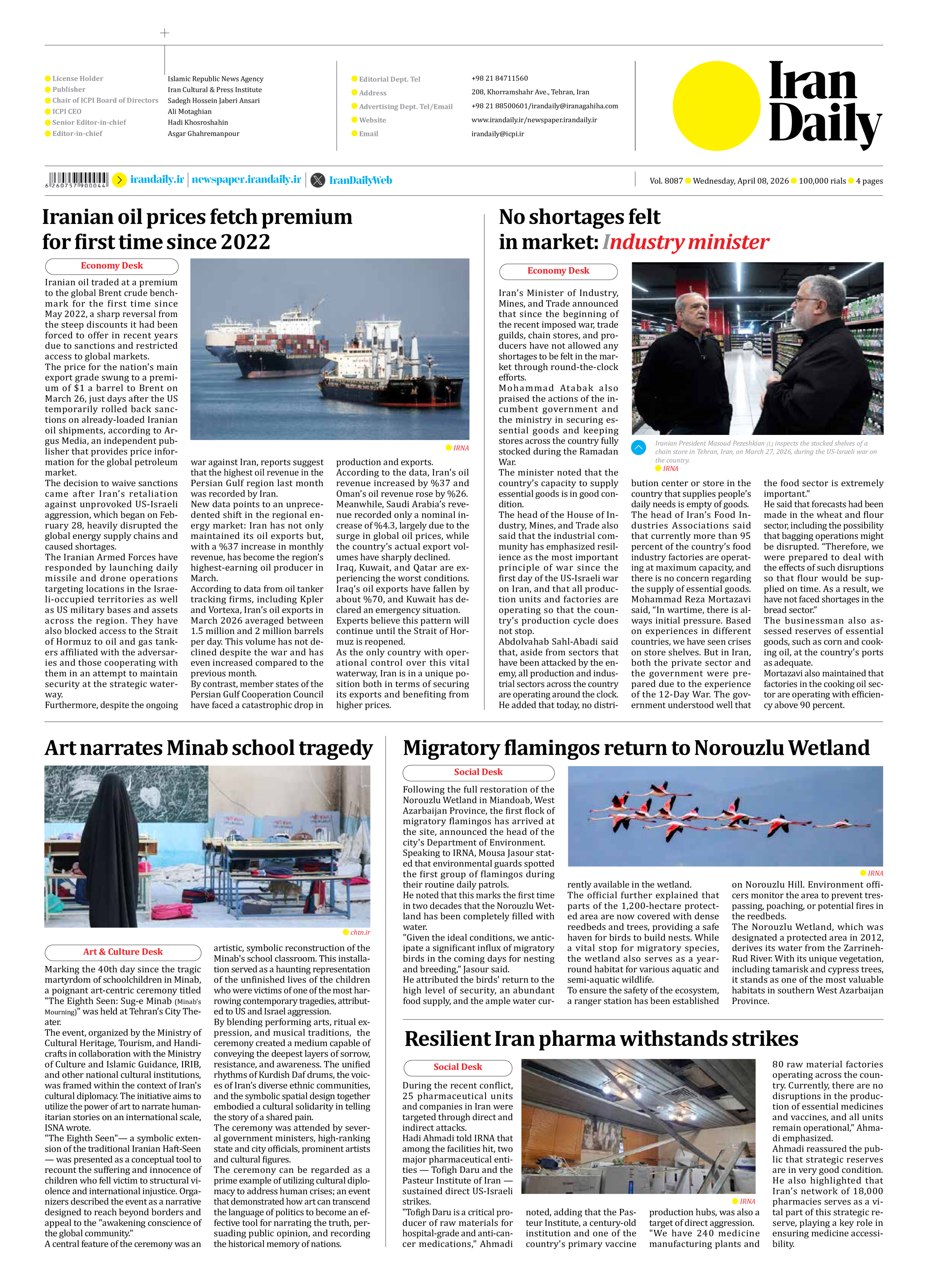
Iranian oil traded at a premium to the global Brent crude benchmark for the first time since May 2022, a sharp reversal from the steep discounts it had been forced to offer in recent years due to sanctions and restricted access to global markets.
The price for the nation’s main export grade swung to a premium of $1 a barrel to Brent on March 26, just days after the US temporarily rolled back sanctions on already-loaded Iranian oil shipments, according to Argus Media, an independent publisher that provides price information for the global petroleum market.
The decision to waive sanctions came after Iran’s retaliation against unprovoked US-Israeli aggression, which began on February 28, heavily disrupted the global energy supply chains and caused shortages.
The Iranian Armed Forces have responded by launching daily missile and drone operations targeting locations in the Israeli-occupied territories as well as US military bases and assets across the region. They have also blocked access to the Strait of Hormuz to oil and gas tankers affiliated with the adversaries and those cooperating with them in an attempt to maintain security at the strategic waterway.
Furthermore, despite the ongoing war against Iran, reports suggest that the highest oil revenue in the Persian Gulf region last month was recorded by Iran.
New data points to an unprecedented shift in the regional energy market: Iran has not only maintained its oil exports but, with a %37 increase in monthly revenue, has become the region’s highest-earning oil producer in March.
According to data from oil tanker tracking firms, including Kpler and Vortexa, Iran’s oil exports in March 2026 averaged between 1.5 million and 2 million barrels per day. This volume has not declined despite the war and has even increased compared to the previous month.
By contrast, member states of the Persian Gulf Cooperation Council have faced a catastrophic drop in production and exports.
According to the data, Iran’s oil revenue increased by %37 and Oman’s oil revenue rose by %26.
Meanwhile, Saudi Arabia’s revenue recorded only a nominal increase of %4.3, largely due to the surge in global oil prices, while the country’s actual export volumes have sharply declined.
Iraq, Kuwait, and Qatar are experiencing the worst conditions. Iraq’s oil exports have fallen by about %70, and Kuwait has declared an emergency situation.
Experts believe this pattern will continue until the Strait of Hormuz is reopened.
As the only country with operational control over this vital waterway, Iran is in a unique position both in terms of securing its exports and benefiting from higher prices.