







FM warns UN of catastrophic risk from strikes on peaceful nuclear sites
IAEA chief’s data disclosure could fuel attacks on nuclear facilities: Araghchi
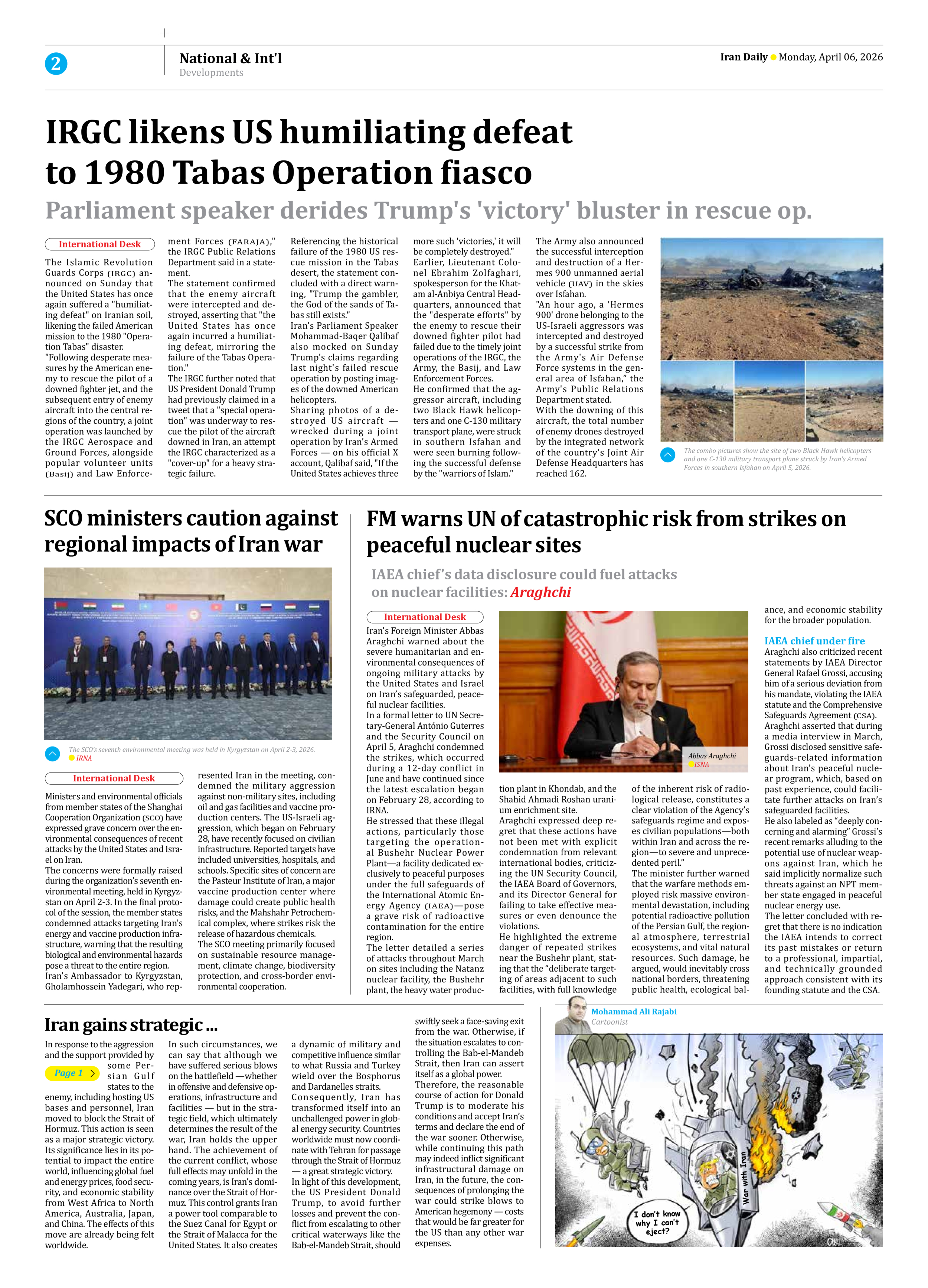
Iran’s Foreign Minister Abbas Araghchi warned about the severe humanitarian and environmental consequences of ongoing military attacks by the United States and Israel on Iran’s safeguarded, peaceful nuclear facilities.
In a formal letter to UN Secretary-General António Guterres and the Security Council on April 5, Araghchi condemned the strikes, which occurred during a 12-day conflict in June and have continued since the latest escalation began on February 28, according to IRNA.
He stressed that these illegal actions, particularly those targeting the operational Bushehr Nuclear Power Plant—a facility dedicated exclusively to peaceful purposes under the full safeguards of the International Atomic Energy Agency (IAEA)—pose a grave risk of radioactive contamination for the entire region.
The letter detailed a series of attacks throughout March on sites including the Natanz nuclear facility, the Bushehr plant, the heavy water production plant in Khondab, and the Shahid Ahmadi Roshan uranium enrichment site.
Araghchi expressed deep regret that these actions have not been met with explicit condemnation from relevant international bodies, criticizing the UN Security Council, the IAEA Board of Governors, and its Director General for failing to take effective measures or even denounce the violations.
He highlighted the extreme danger of repeated strikes near the Bushehr plant, stating that the “deliberate targeting of areas adjacent to such facilities, with full knowledge of the inherent risk of radiological release, constitutes a clear violation of the Agency’s safeguards regime and exposes civilian populations—both within Iran and across the region—to severe and unprecedented peril.”
The minister further warned that the warfare methods employed risk massive environmental devastation, including potential radioactive pollution of the Persian Gulf, the regional atmosphere, terrestrial ecosystems, and vital natural resources. Such damage, he argued, would inevitably cross national borders, threatening public health, ecological balance, and economic stability for the broader population.
IAEA chief under fire
Araghchi also criticized recent statements by IAEA Director General Rafael Grossi, accusing him of a serious deviation from his mandate, violating the IAEA statute and the Comprehensive Safeguards Agreement (CSA).
Araghchi asserted that during a media interview in March, Grossi disclosed sensitive safeguards-related information about Iran’s peaceful nuclear program, which, based on past experience, could facilitate further attacks on Iran’s safeguarded facilities.
He also labeled as “deeply concerning and alarming” Grossi’s recent remarks alluding to the potential use of nuclear weapons against Iran, which he said implicitly normalize such threats against an NPT member state engaged in peaceful nuclear energy use.
The letter concluded with regret that there is no indication the IAEA intends to correct its past mistakes or return to a professional, impartial, and technically grounded approach consistent with its founding statute and the CSA.