







ICOM Iran seeks emergency funds, presses global action to protect cultural assets
Monir Kholqi, head of Iran’s National Committee of Museums (ICOM), said the country has activated emergency funding mechanisms and urged international bodies to act to protect cultural assets following US-Israeli attacks that began on February 28.
Kholqi said a “red alert” was declared for historical sites within hours, with urgent notices sent to UNESCO’s national commission, ICOM headquarters and regional councils warning against military activity near museums and heritage landmaks, IRNA reported. She described a coordinated legal, technical and diplomatic response at national and international levels.
Citing the 1954 Hague Convention, she called on global institutions to use legal and diplomatic tools to halt threats against what she described as a “core” of human civilization.
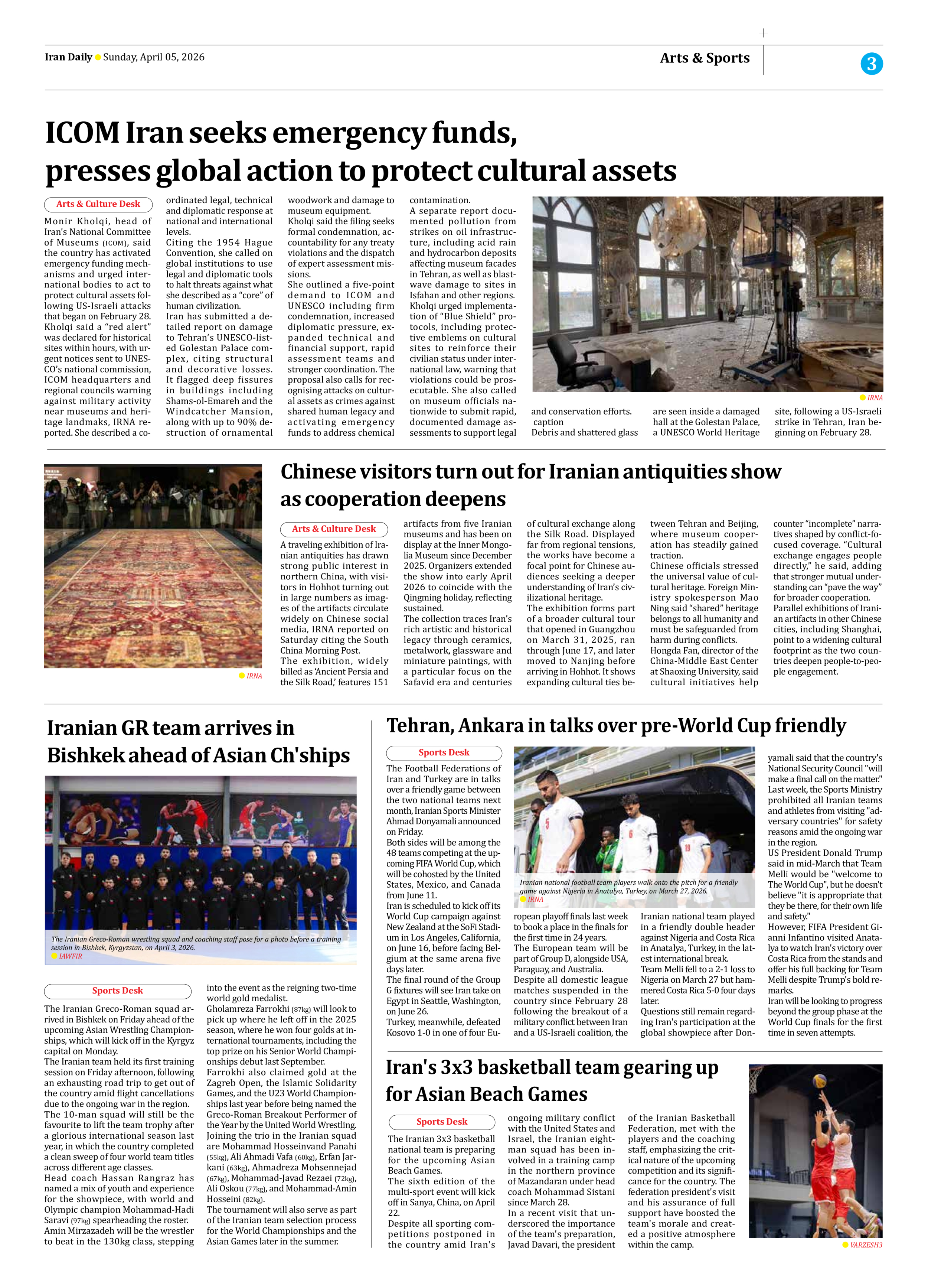
Iran has submitted a detailed report on damage to Tehran’s UNESCO-listed Golestan Palace complex, citing structural and decorative losses. It flagged deep fissures in buildings including Shams-ol-Emareh and the Windcatcher Mansion, along with up to 90% destruction of ornamental woodwork and damage to museum equipment.
Kholqi said the filing seeks formal condemnation, accountability for any treaty violations and the dispatch of expert assessment missions.
She outlined a five-point demand to ICOM and UNESCO including firm condemnation, increased diplomatic pressure, expanded technical and financial support, rapid assessment teams and stronger coordination. The proposal also calls for recognising attacks on cultural assets as crimes against shared human legacy and activating emergency funds to address chemical contamination.
A separate report documented pollution from strikes on oil infrastructure, including acid rain and hydrocarbon deposits affecting museum facades in Tehran, as well as blast-wave damage to sites in Isfahan and other regions.
Kholqi urged implementation of “Blue Shield” protocols, including protective emblems on cultural sites to reinforce their civilian status under international law, warning that violations could be prosecutable. She also called on museum officials nationwide to submit rapid, documented damage assessments to support legal and conservation efforts.
caption
Debris and shattered glass are seen inside a damaged hall at the Golestan Palace, a UNESCO World Heritage site, following a US-Israeli strike in Tehran, Iran beginning on February 28.