





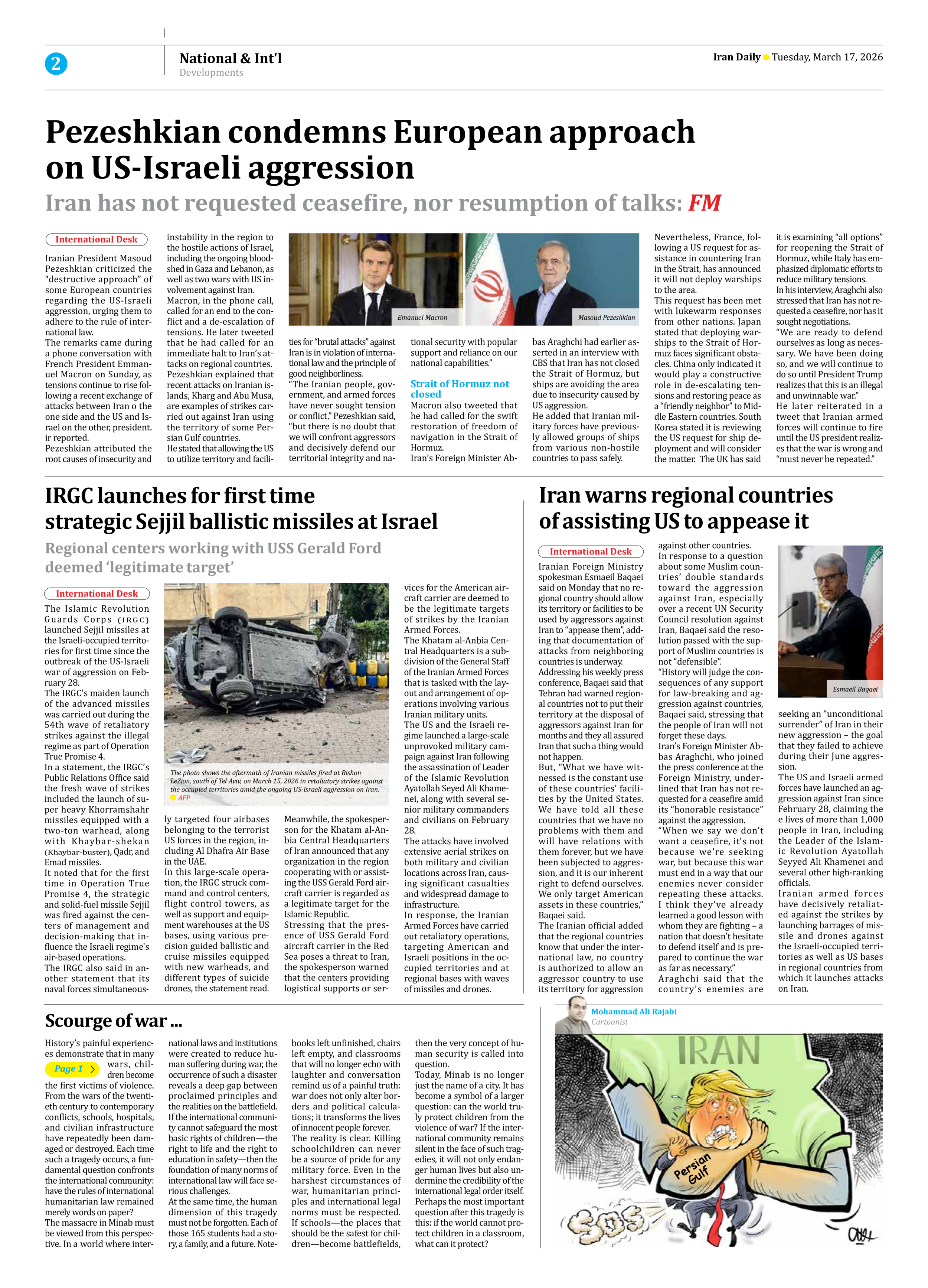


Scourge of war ...
Page 1
History’s painful experiences demonstrate that in many wars, children become the first victims of violence. From the wars of the twentieth century to contemporary conflicts, schools, hospitals, and civilian infrastructure have repeatedly been damaged or destroyed. Each time such a tragedy occurs, a fundamental question confronts the international community: have the rules of international humanitarian law remained merely words on paper?
The massacre in Minab must be viewed from this perspective. In a world where international laws and institutions were created to reduce human suffering during war, the occurrence of such a disaster reveals a deep gap between proclaimed principles and the realities on the battlefield. If the international community cannot safeguard the most basic rights of children—the right to life and the right to education in safety—then the foundation of many norms of international law will face serious challenges.
At the same time, the human dimension of this tragedy must not be forgotten. Each of those 165 students had a story, a family, and a future. Notebooks left unfinished, chairs left empty, and classrooms that will no longer echo with laughter and conversation remind us of a painful truth: war does not only alter borders and political calculations; it transforms the lives of innocent people forever.
The reality is clear. Killing schoolchildren can never be a source of pride for any military force. Even in the harshest circumstances of war, humanitarian principles and international legal norms must be respected. If schools—the places that should be the safest for children—become battlefields, then the very concept of human security is called into question.
Today, Minab is no longer just the name of a city. It has become a symbol of a larger question: can the world truly protect children from the violence of war? If the international community remains silent in the face of such tragedies, it will not only endanger human lives but also undermine the credibility of the international legal order itself.
Perhaps the most important question after this tragedy is this: if the world cannot protect children in a classroom, what can it protect?