





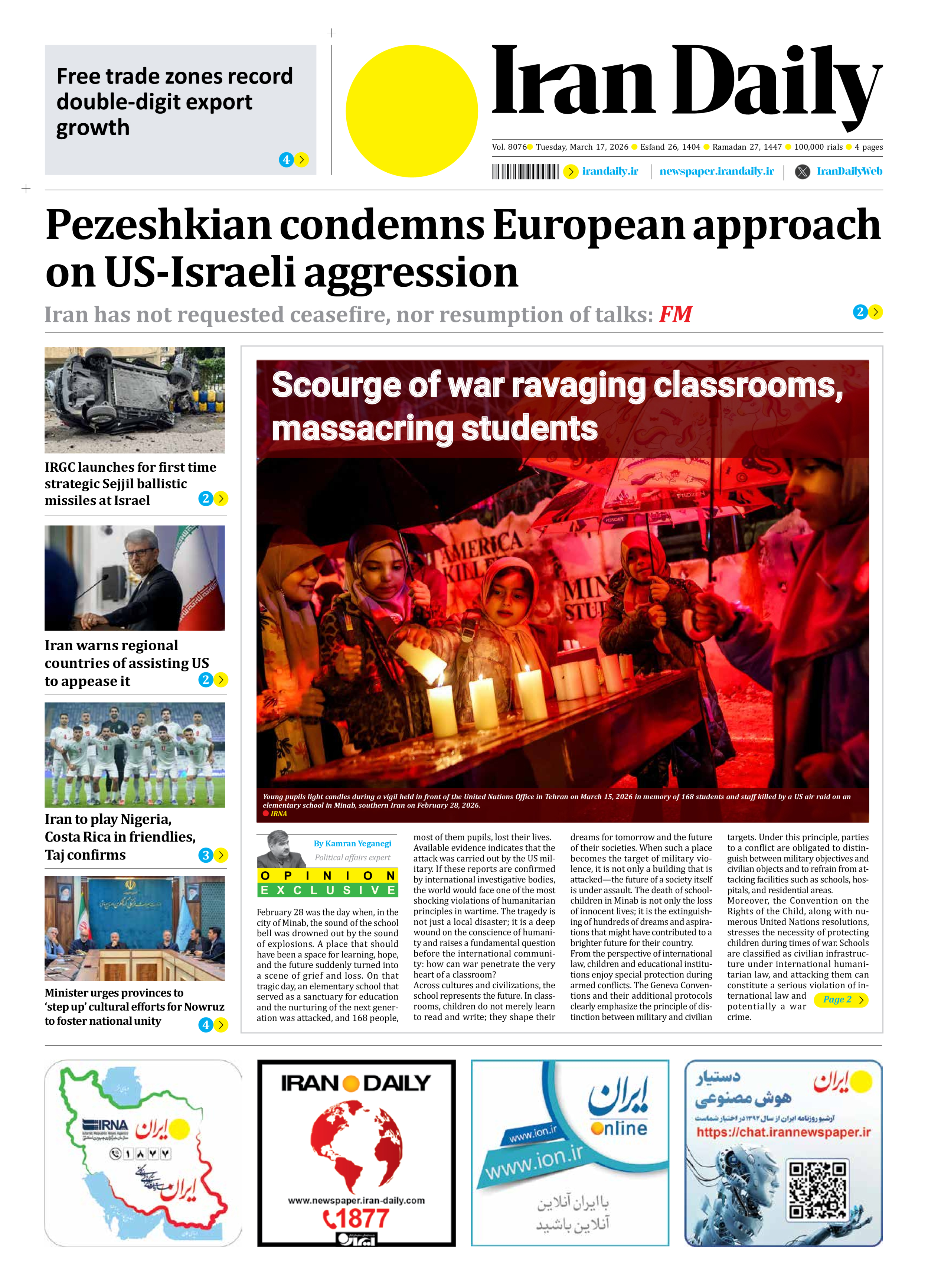


Scourge of war ravaging classrooms, massacring students
By Kamran Yeganegi
Political affairs expert
February 28 was the day when, in the city of Minab, the sound of the school bell was drowned out by the sound of explosions. A place that should have been a space for learning, hope, and the future suddenly turned into a scene of grief and loss. On that tragic day, an elementary school that served as a sanctuary for education and the nurturing of the next generation was attacked, and 168 people, most of them pupils, lost their lives.
Available evidence indicates that the attack was carried out by the US military. If these reports are confirmed by international investigative bodies, the world would face one of the most shocking violations of humanitarian principles in wartime. The tragedy is not just a local disaster; it is a deep wound on the conscience of humanity and raises a fundamental question before the international community: how can war penetrate the very heart of a classroom?
Across cultures and civilizations, the school represents the future. In classrooms, children do not merely learn to read and write; they shape their dreams for tomorrow and the future of their societies. When such a place becomes the target of military violence, it is not only a building that is attacked—the future of a society itself is under assault. The death of schoolchildren in Minab is not only the loss of innocent lives; it is the extinguishing of hundreds of dreams and aspirations that might have contributed to a brighter future for their country.
From the perspective of international law, children and educational institutions enjoy special protection during armed conflicts. The Geneva Conventions and their additional protocols clearly emphasize the principle of distinction between military and civilian targets. Under this principle, parties to a conflict are obligated to distinguish between military objectives and civilian objects and to refrain from attacking facilities such as schools, hospitals, and residential areas.
Moreover, the Convention on the Rights of the Child, along with numerous United Nations resolutions, stresses the necessity of protecting children during times of war. Schools are classified as civilian infrastructure under international humanitarian law, and attacking them can constitute a serious violation of international law and potentially a war crime.
Page 2