







Iran moves 50,000 artifacts to secure vaults as threats grow to national treasures
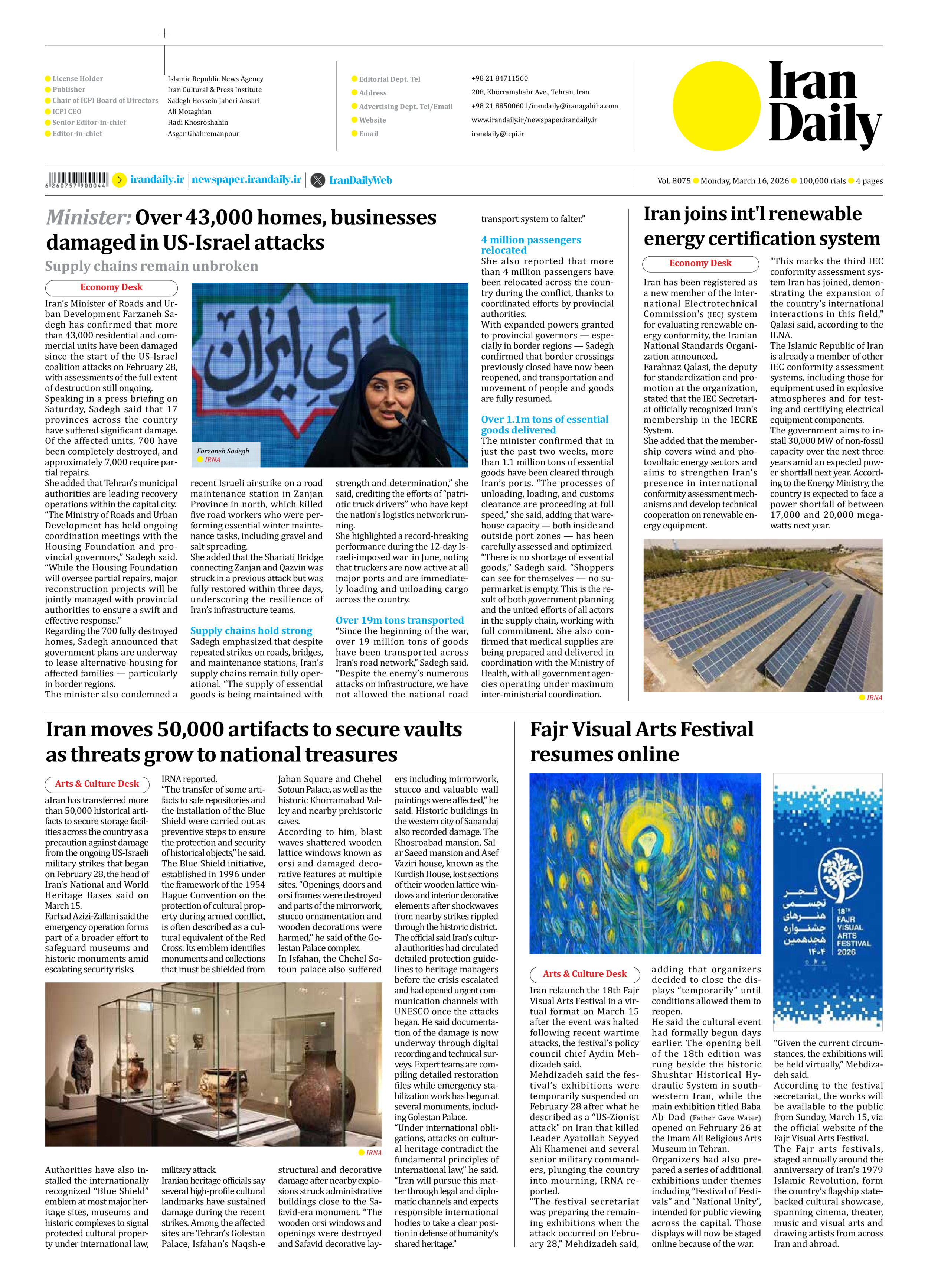
aIran has transferred more than 50,000 historical artifacts to secure storage facilities across the country as a precaution against damage from the ongoing US-Israeli military strikes that began on February 28, the head of Iran’s National and World Heritage Bases said on March 15.
Farhad Azizi-Zallani said the emergency operation forms part of a broader effort to safeguard museums and historic monuments amid escalating security risks.
Authorities have also installed the internationally recognized “Blue Shield” emblem at most major heritage sites, museums and historic complexes to signal protected cultural property under international law, IRNA reported.
“The transfer of some artifacts to safe repositories and the installation of the Blue Shield were carried out as preventive steps to ensure the protection and security of historical objects,” he said.
The Blue Shield initiative, established in 1996 under the framework of the 1954 Hague Convention on the protection of cultural property during armed conflict, is often described as a cultural equivalent of the Red Cross. Its emblem identifies monuments and collections that must be shielded from military attack.
Iranian heritage officials say several high-profile cultural landmarks have sustained damage during the recent strikes. Among the affected sites are Tehran’s Golestan Palace, Isfahan’s Naqsh-e Jahan Square and Chehel Sotoun Palace, as well as the historic Khorramabad Valley and nearby prehistoric caves.
According to him, blast waves shattered wooden lattice windows known as orsi and damaged decorative features at multiple sites. “Openings, doors and orsi frames were destroyed and parts of the mirrorwork, stucco ornamentation and wooden decorations were harmed,” he said of the Golestan Palace complex.
In Isfahan, the Chehel Sotoun palace also suffered structural and decorative damage after nearby explosions struck administrative buildings close to the Safavid-era monument. “The wooden orsi windows and openings were destroyed and Safavid decorative layers including mirrorwork, stucco and valuable wall paintings were affected,” he said. Historic buildings in the western city of Sanandaj also recorded damage. The Khosroabad mansion, Salar Saeed mansion and Asef Vaziri house, known as the Kurdish House, lost sections of their wooden lattice windows and interior decorative elements after shockwaves from nearby strikes rippled through the historic district.
The official said Iran’s cultural authorities had circulated detailed protection guidelines to heritage managers before the crisis escalated and had opened urgent communication channels with UNESCO once the attacks began. He said documentation of the damage is now underway through digital recording and technical surveys. Expert teams are compiling detailed restoration files while emergency stabilization work has begun at several monuments, including Golestan Palace.
“Under international obligations, attacks on cultural heritage contradict the fundamental principles of international law,” he said. “Iran will pursue this matter through legal and diplomatic channels and expects responsible international bodies to take a clear position in defense of humanity’s shared heritage.”