







Record-breaking ceremonies celebrate Persian food traditions
The holy city of Qom, in north-central Iran, witnessed the preparation of the world’s largest ritual and civilizational Halva on Thursday night, a massive undertaking weighing over two tons. The event, held on the eve of the 23rd of the holy month of Ramadan, was organized by the "Tanoorkhaneh Nan-e Iran" (The Iranian Bread House).
The ceremony attracted a large crowd where more than 15,000 pilgrims and those observing the fast (fasting faithful) were served this traditional Iranian delicacy, chtn.ir wrote.
While Iran boasts an impressive 131 distinct varieties of ritual Halva, this specific event was dedicated to showcasing one of the most unique and historically significant types of these traditional sweets.
Characterized by its aromatic blend of saffron, rosewater, and cardamom, Persian Halva is far more than a simple dessert. It stands as a cornerstone of Iranian hospitality and spiritual life, traditionally shared during religious observances as a symbol of community and devotion.
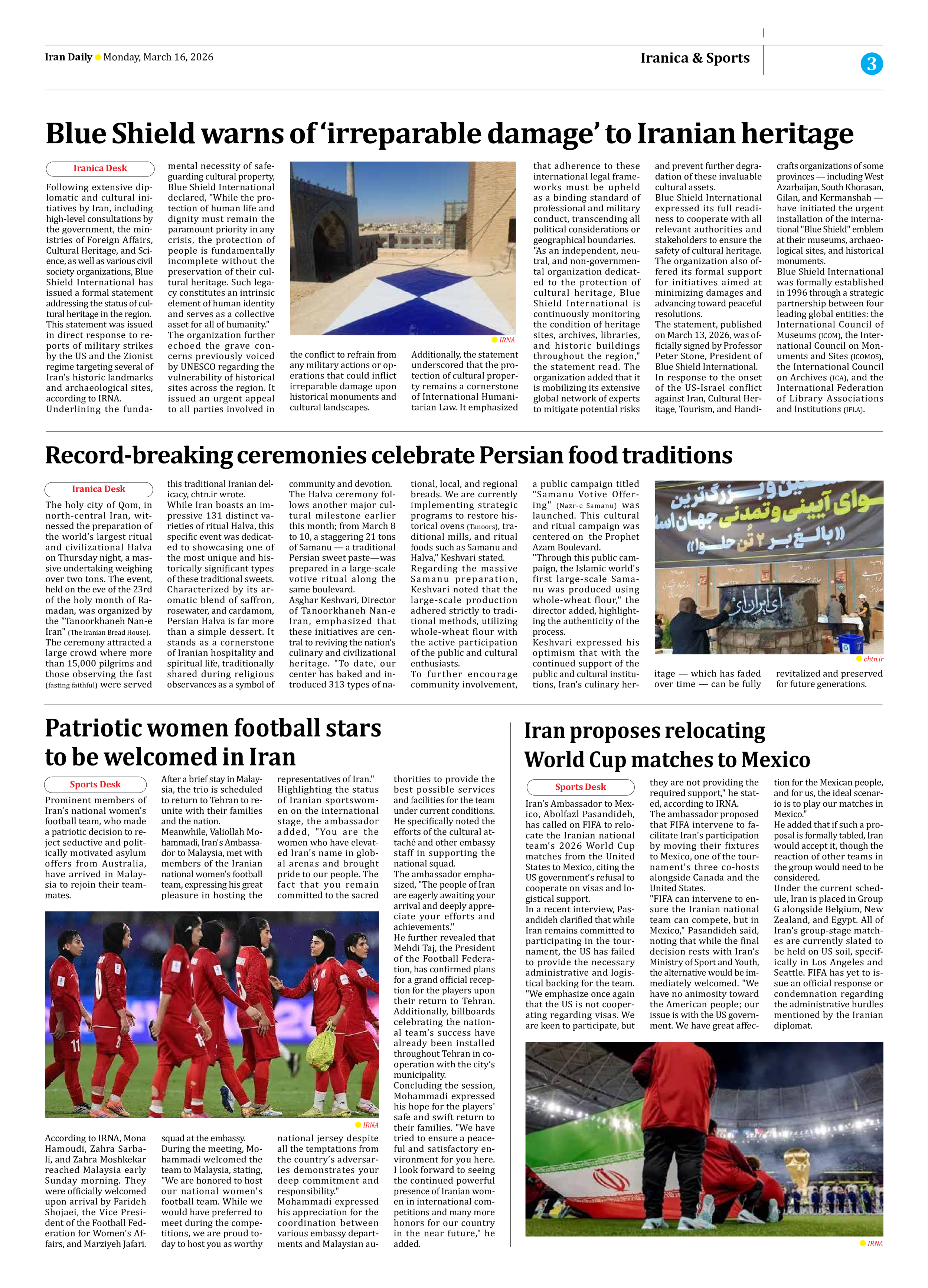
The Halva ceremony follows another major cultural milestone earlier this month; from March 8 to 10, a staggering 21 tons of Samanu — a traditional Persian sweet paste—was prepared in a large-scale votive ritual along the same boulevard.
Asghar Keshvari, Director of Tanoorkhaneh Nan-e Iran, emphasized that these initiatives are central to reviving the nation’s culinary and civilizational heritage. "To date, our center has baked and introduced 313 types of national, local, and regional breads. We are currently implementing strategic programs to restore historical ovens (Tanoors), traditional mills, and ritual foods such as Samanu and Halva," Keshvari stated.
Regarding the massive Samanu preparation, Keshvari noted that the large-scale production adhered strictly to traditional methods, utilizing whole-wheat flour with the active participation of the public and cultural enthusiasts.
To further encourage community involvement, a public campaign titled "Samanu Votive Offering" (Nazr-e Samanu) was launched. This cultural and ritual campaign was centered on the Prophet Azam Boulevard.
"Through this public campaign, the Islamic world's first large-scale Samanu was produced using whole-wheat flour," the director added, highlighting the authenticity of the process.
Keshvari expressed his optimism that with the continued support of the public and cultural institutions, Iran’s culinary heritage — which has faded over time — can be fully revitalized and preserved for future generations.