







56 historical sites across Iran severely damaged
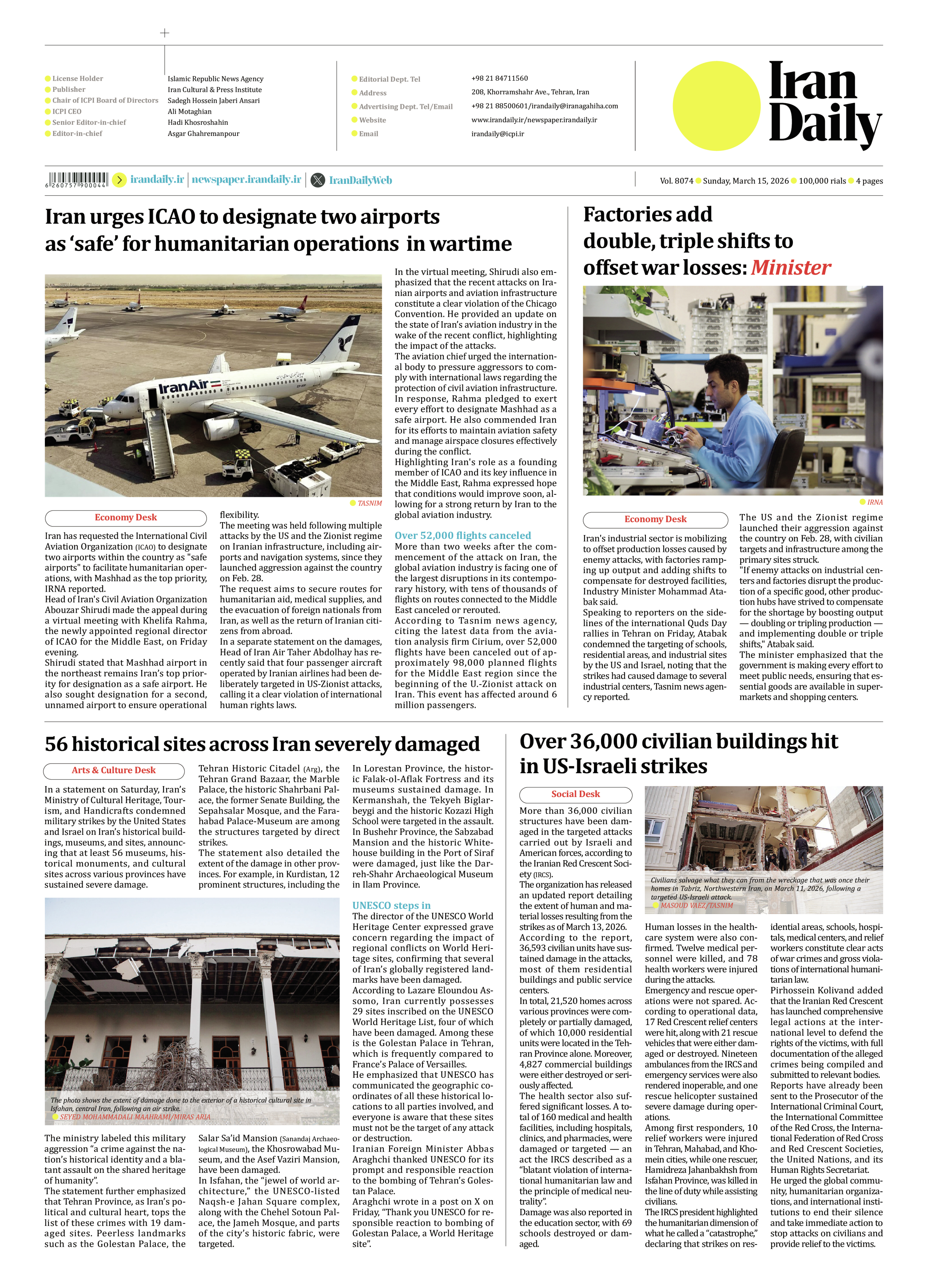
In a statement on Saturday, Iran’s Ministry of Cultural Heritage, Tourism, and Handicrafts condemned military strikes by the United States and Israel on Iran’s historical buildings, museums, and sites, announcing that at least 56 museums, historical monuments, and cultural sites across various provinces have sustained severe damage.
The ministry labeled this military aggression “a crime against the nation’s historical identity and a blatant assault on the shared heritage of humanity”.
The statement further emphasized that Tehran Province, as Iran’s political and cultural heart, tops the list of these crimes with 19 damaged sites. Peerless landmarks such as the Golestan Palace, the Tehran Historic Citadel (Arg), the Tehran Grand Bazaar, the Marble Palace, the historic Shahrbani Palace, the former Senate Building, the Sepahsalar Mosque, and the Farahabad Palace-Museum are among the structures targeted by direct strikes.
The statement also detailed the extent of the damage in other provinces. For example, in Kurdistan, 12 prominent structures, including the Salar Sa’id Mansion (Sanandaj Archaeological Museum), the Khosrowabad Museum, and the Asef Vaziri Mansion, have been damaged.
In Isfahan, the “jewel of world architecture,” the UNESCO-listed Naqsh-e Jahan Square complex, along with the Chehel Sotoun Palace, the Jameh Mosque, and parts of the city’s historic fabric, were targeted.
In Lorestan Province, the historic Falak-ol-Aflak Fortress and its museums sustained damage. In Kermanshah, the Tekyeh Biglarbeygi and the historic Kozazi High School were targeted in the assault. In Bushehr Province, the Sabzabad Mansion and the historic Whitehouse building in the Port of Siraf were damaged, just like the Darreh-Shahr Archaeological Museum in Ilam Province.
UNESCO steps in
The director of the UNESCO World Heritage Center expressed grave concern regarding the impact of regional conflicts on World Heritage sites, confirming that several of Iran’s globally registered landmarks have been damaged.
According to Lazare Eloundou Assomo, Iran currently possesses 29 sites inscribed on the UNESCO World Heritage List, four of which have been damaged. Among these is the Golestan Palace in Tehran, which is frequently compared to France’s Palace of Versailles.
He emphasized that UNESCO has communicated the geographic coordinates of all these historical locations to all parties involved, and everyone is aware that these sites must not be the target of any attack or destruction.
Iranian Foreign Minister Abbas Araghchi thanked UNESCO for its prompt and responsible reaction to the bombing of Tehran’s Golestan Palace.
Araghchi wrote in a post on X on Friday, “Thank you UNESCO for responsible reaction to bombing of Golestan Palace, a World Heritage site”.