







Isfahan’s historic heart damaged by nearby airstrikes
Wave of attacks harms cultural landmarks nationwide
Explosions triggered by recent US and Israeli strikes have damaged several historic monuments across Iran, with the most extensive impact reported in the historic city of Isfahan, where blast waves struck parts of the Safavid-era Chehel Sotoun Palace and surrounding heritage complexes.
The attacks, which began on February 28, have raised alarm among cultural authorities who say the shockwaves have endangered key elements of Iran’s architectural heritage, including Safavid mirrorwork, historic wall paintings and delicate wooden lattice windows known as orsi, IRNA reported.
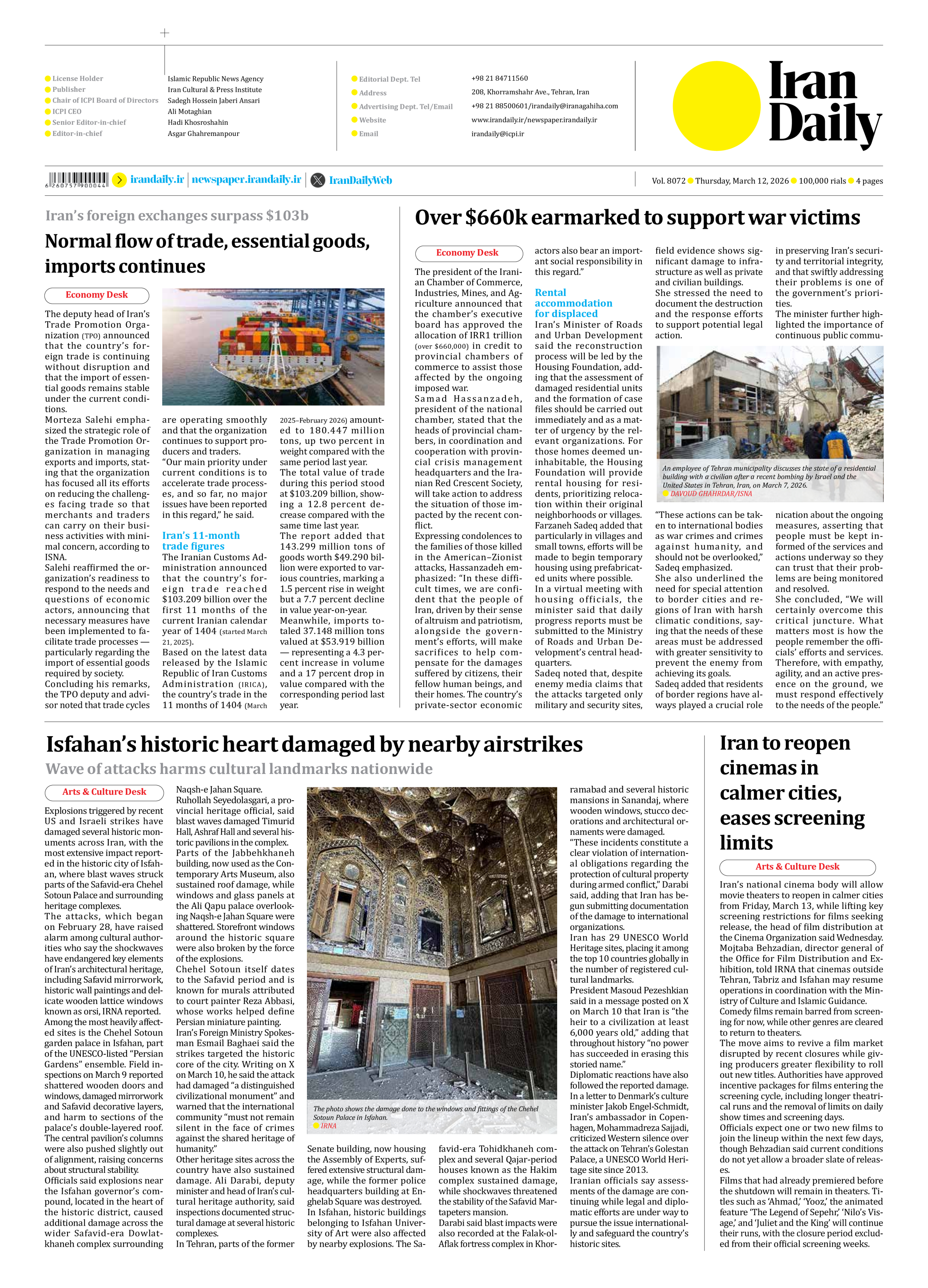
Among the most heavily affected sites is the Chehel Sotoun garden palace in Isfahan, part of the UNESCO-listed “Persian Gardens” ensemble. Field inspections on March 9 reported shattered wooden doors and windows, damaged mirrorwork and Safavid decorative layers, and harm to sections of the palace’s double-layered roof. The central pavilion’s columns were also pushed slightly out of alignment, raising concerns about structural stability.
Officials said explosions near the Isfahan governor’s compound, located in the heart of the historic district, caused additional damage across the wider Safavid-era Dowlatkhaneh complex surrounding Naqsh-e Jahan Square.
Ruhollah Seyedolasgari, a provincial heritage official, said blast waves damaged Timurid Hall, Ashraf Hall and several historic pavilions in the complex.
Parts of the Jabbehkhaneh building, now used as the Contemporary Arts Museum, also sustained roof damage, while windows and glass panels at the Ali Qapu palace overlooking Naqsh-e Jahan Square were shattered. Storefront windows around the historic square were also broken by the force of the explosions.
Chehel Sotoun itself dates to the Safavid period and is known for murals attributed to court painter Reza Abbasi, whose works helped define Persian miniature painting.
Iran’s Foreign Ministry Spokesman Esmail Baghaei said the strikes targeted the historic core of the city. Writing on X on March 10, he said the attack had damaged “a distinguished civilizational monument” and warned that the international community “must not remain silent in the face of crimes against the shared heritage of humanity.”
Other heritage sites across the country have also sustained damage. Ali Darabi, deputy minister and head of Iran’s cultural heritage authority, said inspections documented structural damage at several historic complexes.
In Tehran, parts of the former Senate building, now housing the Assembly of Experts, suffered extensive structural damage, while the former police headquarters building at Enghelab Square was destroyed.
In Isfahan, historic buildings belonging to Isfahan University of Art were also affected by nearby explosions. The Safavid-era Tohidkhaneh complex and several Qajar-period houses known as the Hakim complex sustained damage, while shockwaves threatened the stability of the Safavid Martapeters mansion.
Darabi said blast impacts were also recorded at the Falak-ol-Aflak fortress complex in Khorramabad and several historic mansions in Sanandaj, where wooden windows, stucco decorations and architectural ornaments were damaged.
“These incidents constitute a clear violation of international obligations regarding the protection of cultural property during armed conflict,” Darabi said, adding that Iran has begun submitting documentation of the damage to international organizations.
Iran has 29 UNESCO World Heritage sites, placing it among the top 10 countries globally in the number of registered cultural landmarks.
President Masoud Pezeshkian said in a message posted on X on March 10 that Iran is “the heir to a civilization at least 6,000 years old,” adding that throughout history “no power has succeeded in erasing this storied name.”
Diplomatic reactions have also followed the reported damage. In a letter to Denmark’s culture minister Jakob Engel-Schmidt, Iran’s ambassador in Copenhagen, Mohammadreza Sajjadi, criticized Western silence over the attack on Tehran’s Golestan Palace, a UNESCO World Heritage site since 2013.
Iranian officials say assessments of the damage are continuing while legal and diplomatic efforts are under way to pursue the issue internationally and safeguard the country’s historic sites.