







Hidden bottleneck of ...
Page 1
Collision of doctrine
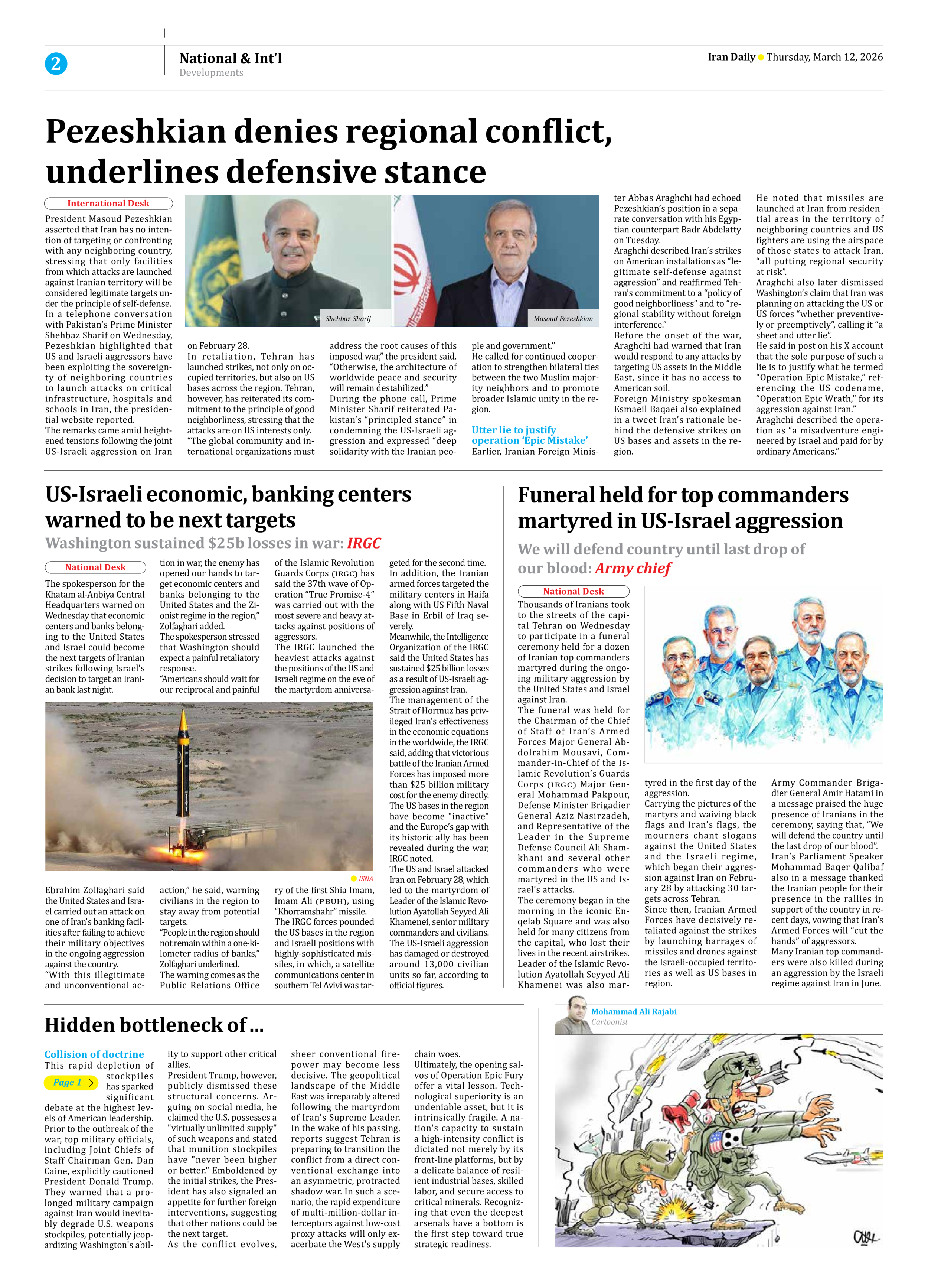
This rapid depletion of stockpiles has sparked significant debate at the highest levels of American leadership. Prior to the outbreak of the war, top military officials, including Joint Chiefs of Staff Chairman Gen. Dan Caine, explicitly cautioned President Donald Trump. They warned that a prolonged military campaign against Iran would inevitably degrade U.S. weapons stockpiles, potentially jeopardizing Washington's ability to support other critical allies.
President Trump, however, publicly dismissed these structural concerns. Arguing on social media, he claimed the U.S. possesses a "virtually unlimited supply" of such weapons and stated that munition stockpiles have "never been higher or better." Emboldened by the initial strikes, the President has also signaled an appetite for further foreign interventions, suggesting that other nations could be the next target.
As the conflict evolves, sheer conventional firepower may become less decisive. The geopolitical landscape of the Middle East was irreparably altered following the martyrdom of Iran's Supreme Leader. In the wake of his passing, reports suggest Tehran is preparing to transition the conflict from a direct conventional exchange into an asymmetric, protracted shadow war. In such a scenario, the rapid expenditure of multi-million-dollar interceptors against low-cost proxy attacks will only exacerbate the West's supply chain woes.
Ultimately, the opening salvos of Operation Epic Fury offer a vital lesson. Technological superiority is an undeniable asset, but it is intrinsically fragile. A nation's capacity to sustain a high-intensity conflict is dictated not merely by its front-line platforms, but by a delicate balance of resilient industrial bases, skilled labor, and secure access to critical minerals. Recognizing that even the deepest arsenals have a bottom is the first step toward true strategic readiness.