




Iran’s solar plan targets jobs for people with disabilities
By Sadeq Dehqan
Staff writer
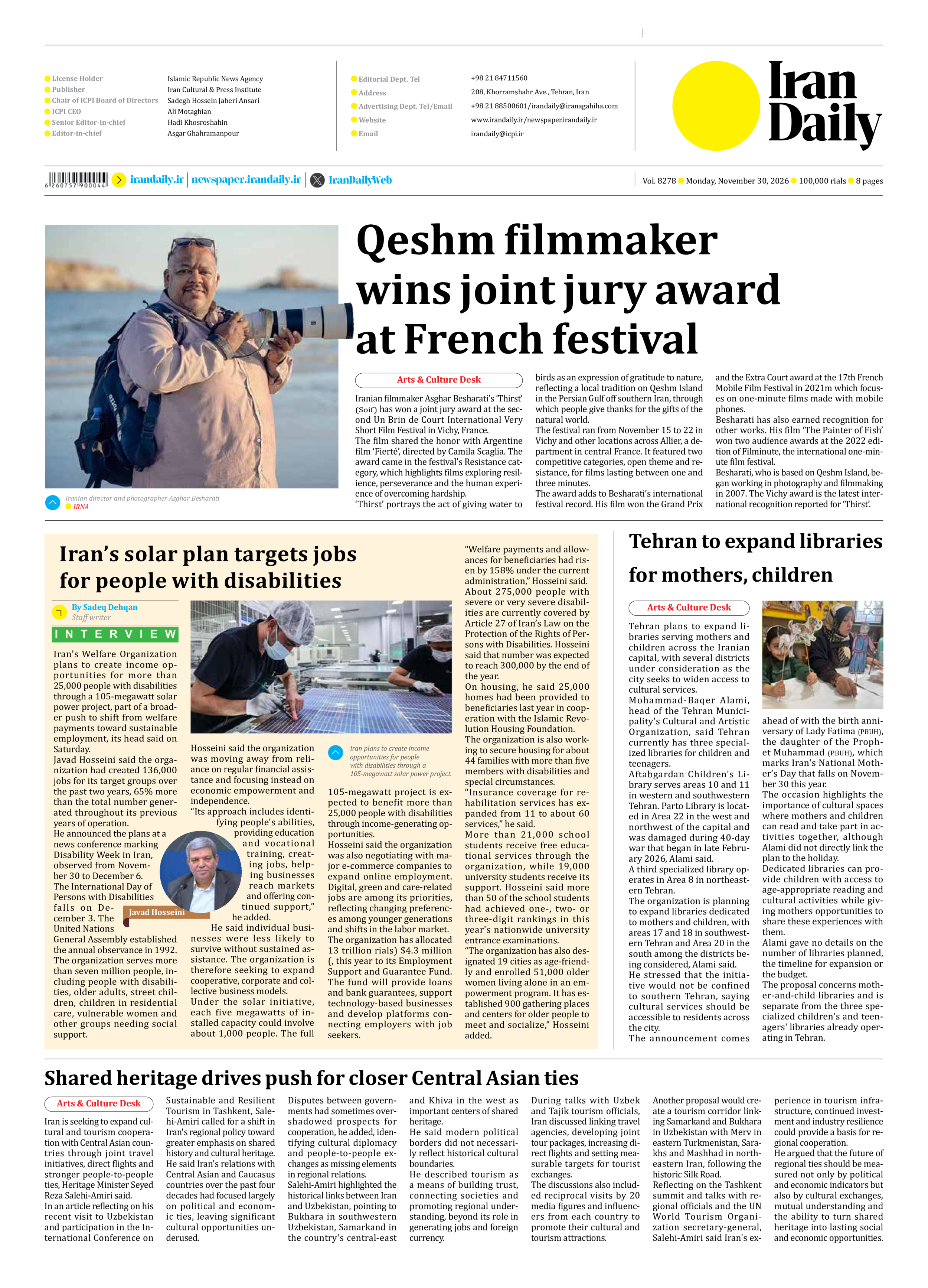
Iran’s Welfare Organization plans to create income opportunities for more than 25,000 people with disabilities through a 105-megawatt solar power project, part of a broader push to shift from welfare payments toward sustainable employment, its head said on Saturday.
Javad Hosseini said the organization had created 136,000 jobs for its target groups over the past two years, 65% more than the total number generated throughout its previous years of operation.
He announced the plans at a news conference marking Disability Week in Iran, observed from November 30 to December 6.
The International Day of Persons with Disabilities falls on December 3. The United Nations General Assembly established the annual observance in 1992.
The organization serves more than seven million people, including people with disabilities, older adults, street children, children in residential care, vulnerable women and other groups needing social support.
Hosseini said the organization was moving away from reliance on regular financial assistance and focusing instead on economic empowerment and independence.
“Its approach includes identifying people's abilities, providing education and vocational training, creating jobs, helping businesses reach markets and offering continued support,” he added.
He said individual businesses were less likely to survive without sustained assistance. The organization is therefore seeking to expand cooperative, corporate and collective business models.
Under the solar initiative, each five megawatts of installed capacity could involve about 1,000 people. The full 105-megawatt project is expected to benefit more than 25,000 people with disabilities through income-generating opportunities.
Hosseini said the organization was also negotiating with major e-commerce companies to expand online employment. Digital, green and care-related jobs are among its priorities, reflecting changing preferences among younger generations and shifts in the labor market.
The organization has allocated 13 trillion rials) $4.3 million (, this year to its Employment Support and Guarantee Fund. The fund will provide loans and bank guarantees, support technology-based businesses and develop platforms connecting employers with job seekers.
“Welfare payments and allowances for beneficiaries had risen by 158% under the current administration,” Hosseini said.
About 275,000 people with severe or very severe disabilities are currently covered by Article 27 of Iran’s Law on the Protection of the Rights of Persons with Disabilities. Hosseini said that number was expected to reach 300,000 by the end of the year.
On housing, he said 25,000 homes had been provided to beneficiaries last year in cooperation with the Islamic Revolution Housing Foundation.
The organization is also working to secure housing for about 44 families with more than five members with disabilities and special circumstances.
“Insurance coverage for rehabilitation services has expanded from 11 to about 60 services,” he said.
More than 21,000 school students receive free educational services through the organization, while 19,000 university students receive its support. Hosseini said more than 50 of the school students had achieved one-, two- or three-digit rankings in this year's nationwide university entrance examinations.
“The organization has also designated 19 cities as age-friendly and enrolled 51,000 older women living alone in an empowerment program. It has established 900 gathering places and centers for older people to meet and socialize,” Hosseini added.