




Qaleh Bala advances in bid for UN Tourism recognition
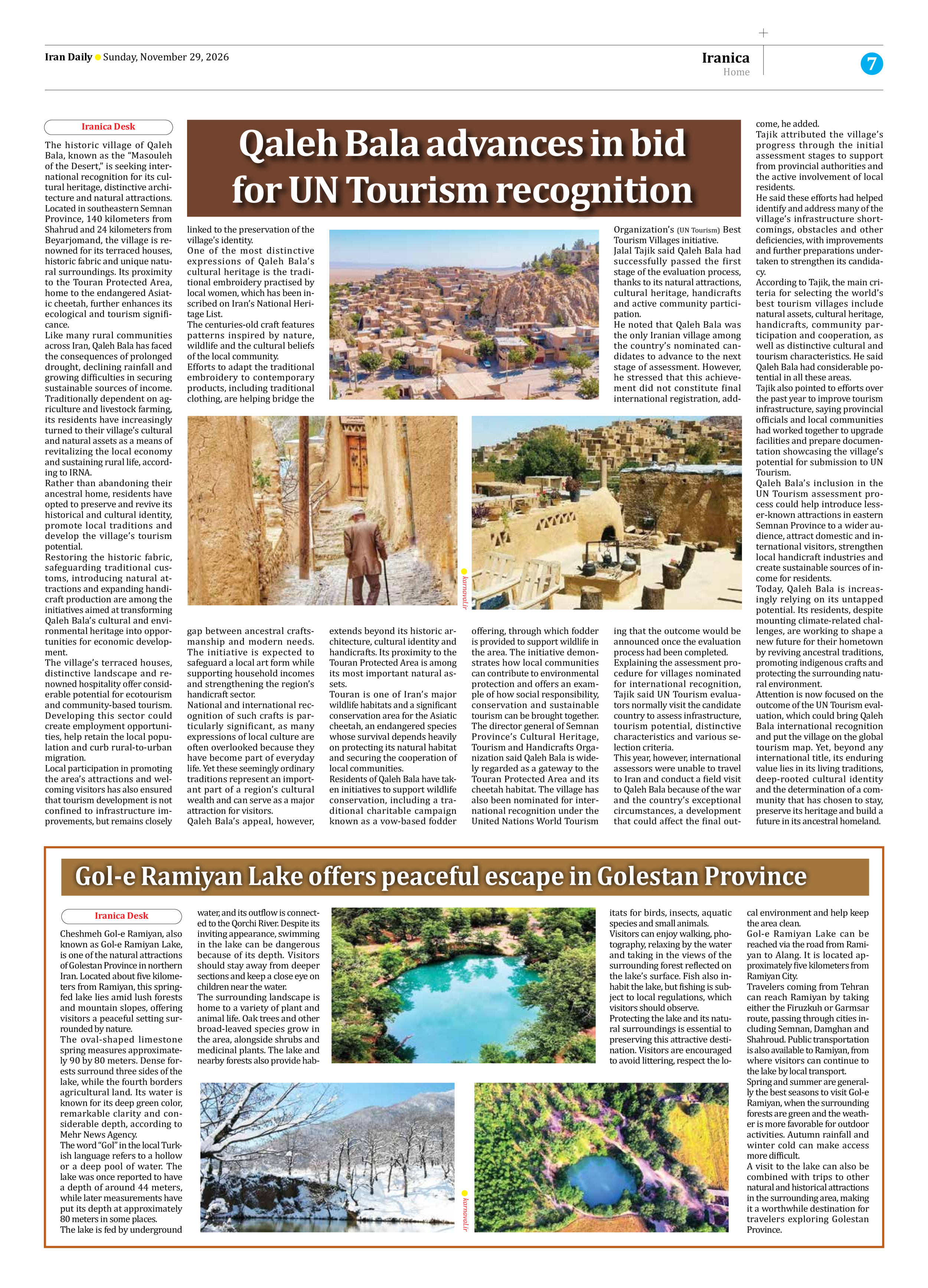
The historic village of Qaleh Bala, known as the “Masouleh of the Desert,” is seeking international recognition for its cultural heritage, distinctive architecture and natural attractions. Located in southeastern Semnan Province, 140 kilometers from Shahrud and 24 kilometers from Beyarjomand, the village is renowned for its terraced houses, historic fabric and unique natural surroundings. Its proximity to the Touran Protected Area, home to the endangered Asiatic cheetah, further enhances its ecological and tourism significance.
Like many rural communities across Iran, Qaleh Bala has faced the consequences of prolonged drought, declining rainfall and growing difficulties in securing sustainable sources of income. Traditionally dependent on agriculture and livestock farming, its residents have increasingly turned to their village’s cultural and natural assets as a means of revitalizing the local economy and sustaining rural life, according to IRNA.
Rather than abandoning their ancestral home, residents have opted to preserve and revive its historical and cultural identity, promote local traditions and develop the village’s tourism potential.
Restoring the historic fabric, safeguarding traditional customs, introducing natural attractions and expanding handicraft production are among the initiatives aimed at transforming Qaleh Bala’s cultural and environmental heritage into opportunities for economic development.
The village’s terraced houses, distinctive landscape and renowned hospitality offer considerable potential for ecotourism and community-based tourism. Developing this sector could create employment opportunities, help retain the local population and curb rural-to-urban migration.
Local participation in promoting the area’s attractions and welcoming visitors has also ensured that tourism development is not confined to infrastructure improvements, but remains closely linked to the preservation of the village’s identity.
One of the most distinctive expressions of Qaleh Bala’s cultural heritage is the traditional embroidery practised by local women, which has been inscribed on Iran’s National Heritage List.
The centuries-old craft features patterns inspired by nature, wildlife and the cultural beliefs of the local community.
Efforts to adapt the traditional embroidery to contemporary products, including traditional clothing, are helping bridge the gap between ancestral craftsmanship and modern needs. The initiative is expected to safeguard a local art form while supporting household incomes and strengthening the region’s handicraft sector.
National and international recognition of such crafts is particularly significant, as many expressions of local culture are often overlooked because they have become part of everyday life. Yet these seemingly ordinary traditions represent an important part of a region’s cultural wealth and can serve as a major attraction for visitors.
Qaleh Bala’s appeal, however, extends beyond its historic architecture, cultural identity and handicrafts. Its proximity to the Touran Protected Area is among its most important natural assets.
Touran is one of Iran’s major wildlife habitats and a significant conservation area for the Asiatic cheetah, an endangered species whose survival depends heavily on protecting its natural habitat and securing the cooperation of local communities.
Residents of Qaleh Bala have taken initiatives to support wildlife conservation, including a traditional charitable campaign known as a vow-based fodder offering, through which fodder is provided to support wildlife in the area. The initiative demonstrates how local communities can contribute to environmental protection and offers an example of how social responsibility, conservation and sustainable tourism can be brought together.
The director general of Semnan Province’s Cultural Heritage, Tourism and Handicrafts Organization said Qaleh Bala is widely regarded as a gateway to the Touran Protected Area and its cheetah habitat. The village has also been nominated for international recognition under the United Nations World Tourism Organization’s (UN Tourism) Best Tourism Villages initiative.
Jalal Tajik said Qaleh Bala had successfully passed the first stage of the evaluation process, thanks to its natural attractions, cultural heritage, handicrafts and active community participation.
He noted that Qaleh Bala was the only Iranian village among the country’s nominated candidates to advance to the next stage of assessment. However, he stressed that this achievement did not constitute final international registration, adding that the outcome would be announced once the evaluation process had been completed.
Explaining the assessment procedure for villages nominated for international recognition, Tajik said UN Tourism evaluators normally visit the candidate country to assess infrastructure, tourism potential, distinctive characteristics and various selection criteria.
This year, however, international assessors were unable to travel to Iran and conduct a field visit to Qaleh Bala because of the war and the country’s exceptional circumstances, a development that could affect the final outcome, he added.
Tajik attributed the village’s progress through the initial assessment stages to support from provincial authorities and the active involvement of local residents.
He said these efforts had helped identify and address many of the village’s infrastructure shortcomings, obstacles and other deficiencies, with improvements and further preparations undertaken to strengthen its candidacy.
According to Tajik, the main criteria for selecting the world’s best tourism villages include natural assets, cultural heritage, handicrafts, community participation and cooperation, as well as distinctive cultural and tourism characteristics. He said Qaleh Bala had considerable potential in all these areas.
Tajik also pointed to efforts over the past year to improve tourism infrastructure, saying provincial officials and local communities had worked together to upgrade facilities and prepare documentation showcasing the village’s potential for submission to UN Tourism.
Qaleh Bala’s inclusion in the UN Tourism assessment process could help introduce lesser-known attractions in eastern Semnan Province to a wider audience, attract domestic and international visitors, strengthen local handicraft industries and create sustainable sources of income for residents.
Today, Qaleh Bala is increasingly relying on its untapped potential. Its residents, despite mounting climate-related challenges, are working to shape a new future for their hometown by reviving ancestral traditions, promoting indigenous crafts and protecting the surrounding natural environment.
Attention is now focused on the outcome of the UN Tourism evaluation, which could bring Qaleh Bala international recognition and put the village on the global tourism map. Yet, beyond any international title, its enduring value lies in its living traditions, deep-rooted cultural identity and the determination of a community that has chosen to stay, preserve its heritage and build a future in its ancestral homeland.