




Pezeshkian highlights livelihoods, development priorities in Mashhad
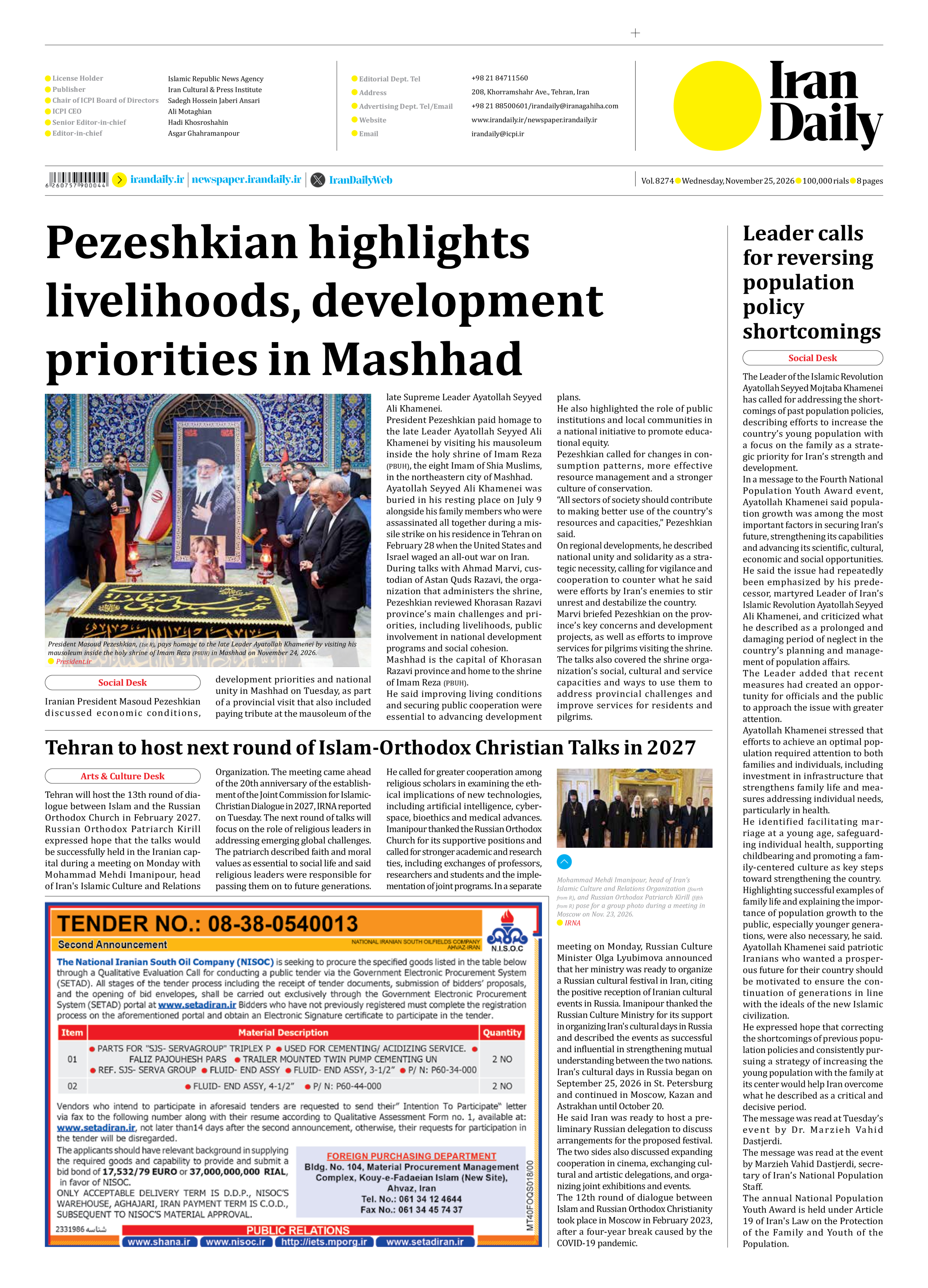
Iranian President Masoud Pezeshkian discussed economic conditions, development priorities and national unity in Mashhad on Tuesday, as part of a provincial visit that also included paying tribute at the mausoleum of the late Supreme Leader Ayatollah Seyyed Ali Khamenei.
President Pezeshkian paid homage to the late Leader Ayatollah Seyyed Ali Khamenei by visiting his mausoleum inside the holy shrine of Imam Reza (PBUH), the eight Imam of Shia Muslims, in the northeastern city of Mashhad.
Ayatollah Seyyed Ali Khamenei was buried in his resting place on July 9 alongside his family members who were assassinated all together during a missile strike on his residence in Tehran on February 28 when the United States and Israel waged an all-out war on Iran.
During talks with Ahmad Marvi, custodian of Astan Quds Razavi, the organization that administers the shrine, Pezeshkian reviewed Khorasan Razavi province’s main challenges and priorities, including livelihoods, public involvement in national development programs and social cohesion.
Mashhad is the capital of Khorasan Razavi province and home to the shrine of Imam Reza (PBUH).
He said improving living conditions and securing public cooperation were essential to advancing development plans.
He also highlighted the role of public institutions and local communities in a national initiative to promote educational equity.
Pezeshkian called for changes in consumption patterns, more effective resource management and a stronger culture of conservation.
“All sectors of society should contribute to making better use of the country's resources and capacities,” Pezeshkian said.
On regional developments, he described national unity and solidarity as a strategic necessity, calling for vigilance and cooperation to counter what he said were efforts by Iran’s enemies to stir unrest and destabilize the country.
Marvi briefed Pezeshkian on the province’s key concerns and development projects, as well as efforts to improve services for pilgrims visiting the shrine.
The talks also covered the shrine organization’s social, cultural and service capacities and ways to use them to address provincial challenges and improve services for residents and pilgrims.