




Golabar emerges as new destination on Zanjan’s tourism map
Golabar village in the town of Ijrud, Zanjan Province, is emerging as a destination for heritage and nature tourism, combining archaeological sites and traditional culture with recreational facilities developed around the Golabar Dam.
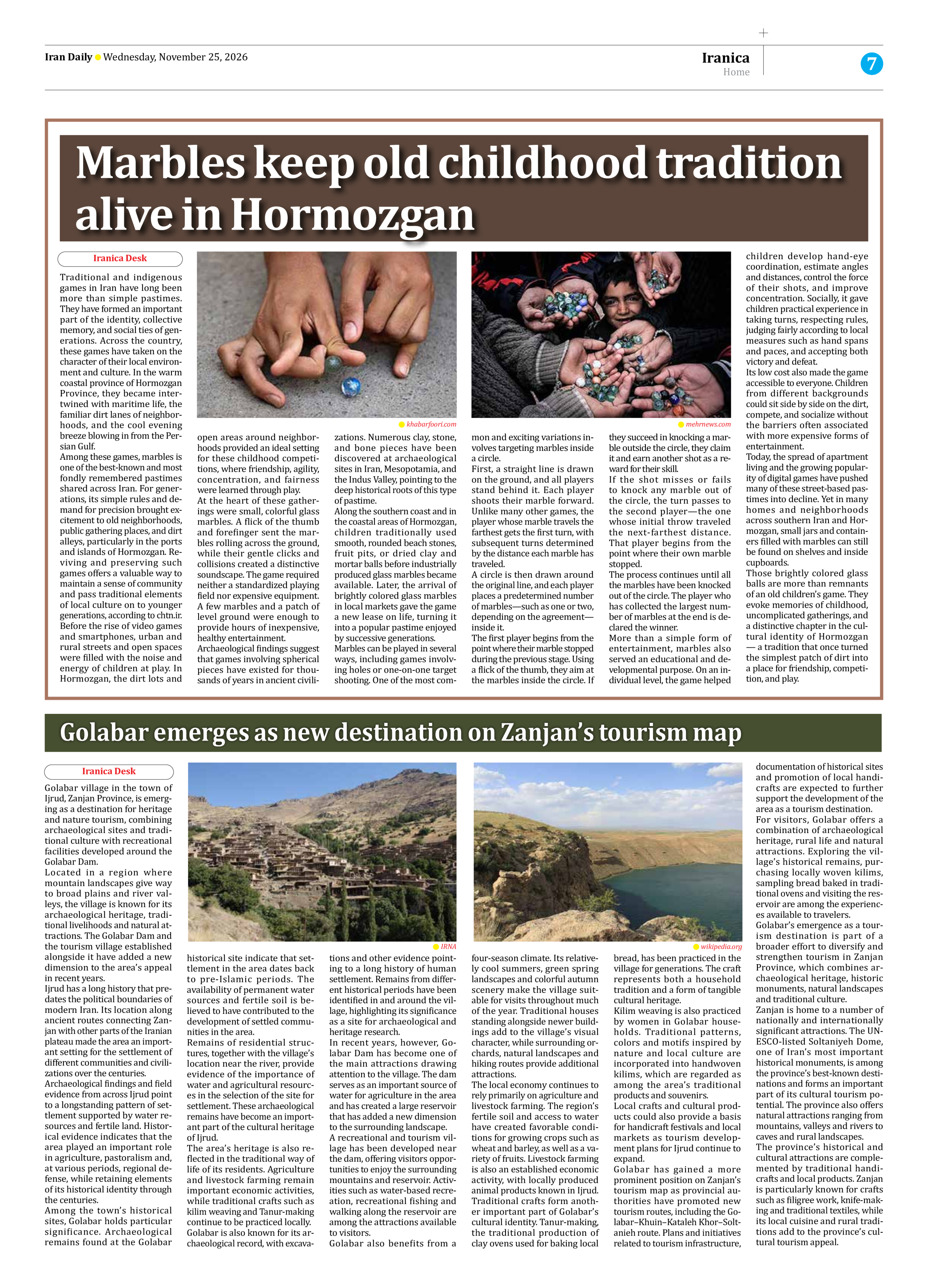
Located in a region where mountain landscapes give way to broad plains and river valleys, the village is known for its archaeological heritage, traditional livelihoods and natural attractions. The Golabar Dam and the tourism village established alongside it have added a new dimension to the area’s appeal in recent years.
Ijrud has a long history that predates the political boundaries of modern Iran. Its location along ancient routes connecting Zanjan with other parts of the Iranian plateau made the area an important setting for the settlement of different communities and civilizations over the centuries.
Archaeological findings and field evidence from across Ijrud point to a longstanding pattern of settlement supported by water resources and fertile land. Historical evidence indicates that the area played an important role in agriculture, pastoralism and, at various periods, regional defense, while retaining elements of its historical identity through the centuries.
Among the town’s historical sites, Golabar holds particular significance. Archaeological remains found at the Golabar historical site indicate that settlement in the area dates back to pre-Islamic periods. The availability of permanent water sources and fertile soil is believed to have contributed to the development of settled communities in the area.
Remains of residential structures, together with the village’s location near the river, provide evidence of the importance of water and agricultural resources in the selection of the site for settlement. These archaeological remains have become an important part of the cultural heritage of Ijrud.
The area’s heritage is also reflected in the traditional way of life of its residents. Agriculture and livestock farming remain important economic activities, while traditional crafts such as kilim weaving and Tanur-making continue to be practiced locally.
Golabar is also known for its archaeological record, with excavations and other evidence pointing to a long history of human settlement. Remains from different historical periods have been identified in and around the village, highlighting its significance as a site for archaeological and heritage research.
In recent years, however, Golabar Dam has become one of the main attractions drawing attention to the village. The dam serves as an important source of water for agriculture in the area and has created a large reservoir that has added a new dimension to the surrounding landscape.
A recreational and tourism village has been developed near the dam, offering visitors opportunities to enjoy the surrounding mountains and reservoir. Activities such as water-based recreation, recreational fishing and walking along the reservoir are among the attractions available to visitors.
Golabar also benefits from a four-season climate. Its relatively cool summers, green spring landscapes and colorful autumn scenery make the village suitable for visits throughout much of the year. Traditional houses standing alongside newer buildings add to the village’s visual character, while surrounding orchards, natural landscapes and hiking routes provide additional attractions.
The local economy continues to rely primarily on agriculture and livestock farming. The region’s fertile soil and access to water have created favorable conditions for growing crops such as wheat and barley, as well as a variety of fruits. Livestock farming is also an established economic activity, with locally produced animal products known in Ijrud.
Traditional crafts form another important part of Golabar’s cultural identity. Tanur-making, the traditional production of clay ovens used for baking local bread, has been practiced in the village for generations. The craft represents both a household tradition and a form of tangible cultural heritage.
Kilim weaving is also practiced by women in Golabar households. Traditional patterns, colors and motifs inspired by nature and local culture are incorporated into handwoven kilims, which are regarded as among the area’s traditional products and souvenirs.
Local crafts and cultural products could also provide a basis for handicraft festivals and local markets as tourism development plans for Ijrud continue to expand.
Golabar has gained a more prominent position on Zanjan’s tourism map as provincial authorities have promoted new tourism routes, including the Golabar–Khuin–Kataleh Khor–Soltanieh route. Plans and initiatives related to tourism infrastructure, documentation of historical sites and promotion of local handicrafts are expected to further support the development of the area as a tourism destination.
For visitors, Golabar offers a combination of archaeological heritage, rural life and natural attractions. Exploring the village’s historical remains, purchasing locally woven kilims, sampling bread baked in traditional ovens and visiting the reservoir are among the experiences available to travelers.
Golabar’s emergence as a tourism destination is part of a broader effort to diversify and strengthen tourism in Zanjan Province, which combines archaeological heritage, historic monuments, natural landscapes and traditional culture.
Zanjan is home to a number of nationally and internationally significant attractions. The UNESCO-listed Soltaniyeh Dome, one of Iran’s most important historical monuments, is among the province’s best-known destinations and forms an important part of its cultural tourism potential. The province also offers natural attractions ranging from mountains, valleys and rivers to caves and rural landscapes.
The province’s historical and cultural attractions are complemented by traditional handicrafts and local products. Zanjan is particularly known for crafts such as filigree work, knife-making and traditional textiles, while its local cuisine and rural traditions add to the province’s cultural tourism appeal.