




US-sanctioned exchange center simply a public transaction platform: CBI
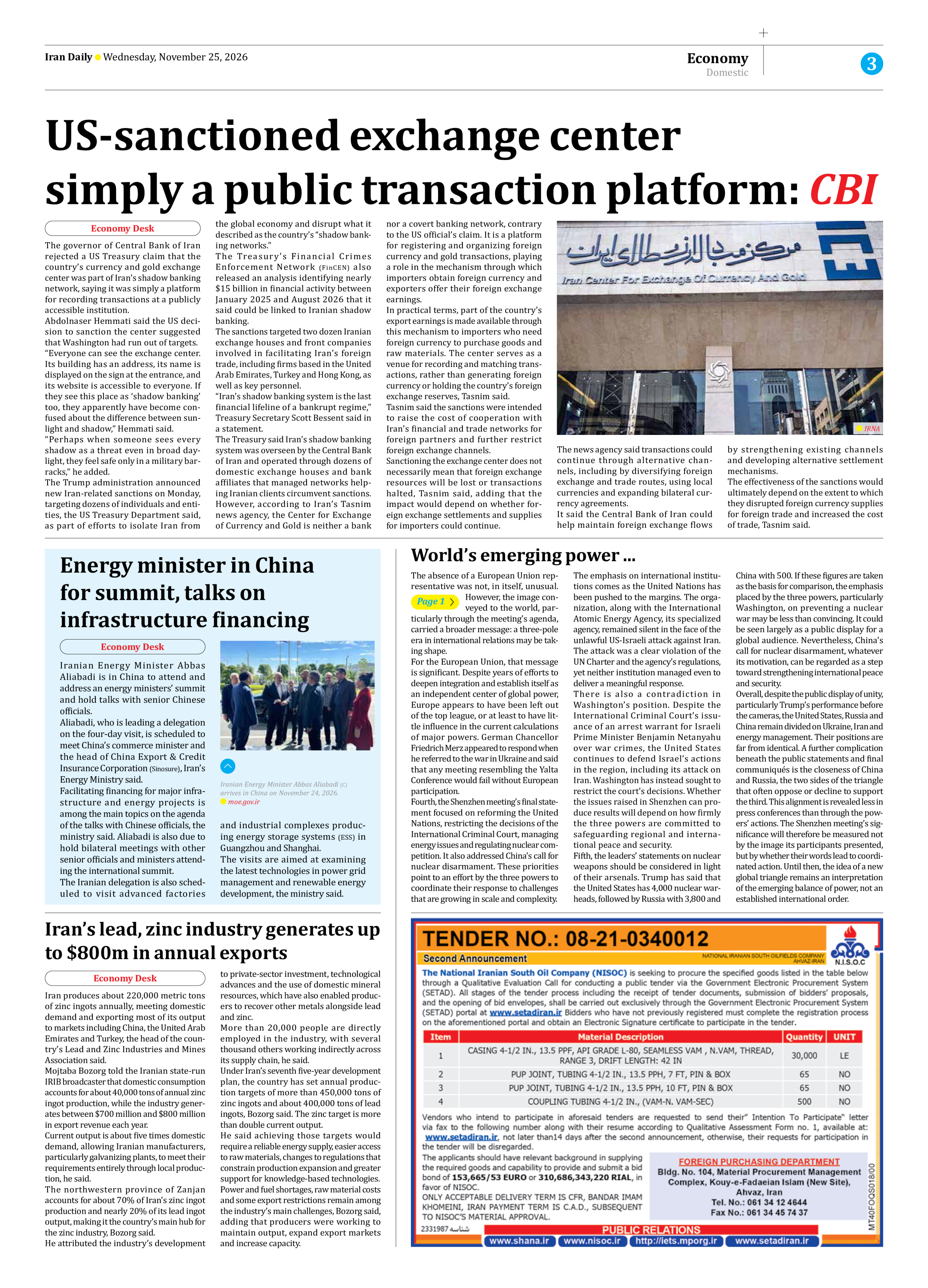
The governor of Central Bank of Iran rejected a US Treasury claim that the country’s currency and gold exchange center was part of Iran’s shadow banking network, saying it was simply a platform for recording transactions at a publicly accessible institution.
Abdolnaser Hemmati said the US decision to sanction the center suggested that Washington had run out of targets.
“Everyone can see the exchange center. Its building has an address, its name is displayed on the sign at the entrance, and its website is accessible to everyone. If they see this place as ‘shadow banking’ too, they apparently have become confused about the difference between sunlight and shadow,” Hemmati said.
“Perhaps when someone sees every shadow as a threat even in broad daylight, they feel safe only in a military barracks,” he added.
The Trump administration announced new Iran-related sanctions on Monday, targeting dozens of individuals and entities, the US Treasury Department said, as part of efforts to isolate Iran from the global economy and disrupt what it described as the country’s “shadow banking networks.”
The Treasury’s Financial Crimes Enforcement Network (FinCEN) also released an analysis identifying nearly $15 billion in financial activity between January 2025 and August 2026 that it said could be linked to Iranian shadow banking.
The sanctions targeted two dozen Iranian exchange houses and front companies involved in facilitating Iran’s foreign trade, including firms based in the United Arab Emirates, Turkey and Hong Kong, as well as key personnel.
“Iran’s shadow banking system is the last financial lifeline of a bankrupt regime,” Treasury Secretary Scott Bessent said in a statement.
The Treasury said Iran’s shadow banking system was overseen by the Central Bank of Iran and operated through dozens of domestic exchange houses and bank affiliates that managed networks helping Iranian clients circumvent sanctions.
However, according to Iran’s Tasnim news agency, the Center for Exchange of Currency and Gold is neither a bank nor a covert banking network, contrary to the US official’s claim. It is a platform for registering and organizing foreign currency and gold transactions, playing a role in the mechanism through which importers obtain foreign currency and exporters offer their foreign exchange earnings.
In practical terms, part of the country’s export earnings is made available through this mechanism to importers who need foreign currency to purchase goods and raw materials. The center serves as a venue for recording and matching transactions, rather than generating foreign currency or holding the country’s foreign exchange reserves, Tasnim said.
Tasnim said the sanctions were intended to raise the cost of cooperation with Iran’s financial and trade networks for foreign partners and further restrict foreign exchange channels.
Sanctioning the exchange center does not necessarily mean that foreign exchange resources will be lost or transactions halted, Tasnim said, adding that the impact would depend on whether foreign exchange settlements and supplies for importers could continue.
The news agency said transactions could continue through alternative channels, including by diversifying foreign exchange and trade routes, using local currencies and expanding bilateral currency agreements.
It said the Central Bank of Iran could help maintain foreign exchange flows by strengthening existing channels and developing alternative settlement mechanisms.
The effectiveness of the sanctions would ultimately depend on the extent to which they disrupted foreign currency supplies for foreign trade and increased the cost of trade, Tasnim said.