




Government approves measure to facilitate border imports of industrial raw materials
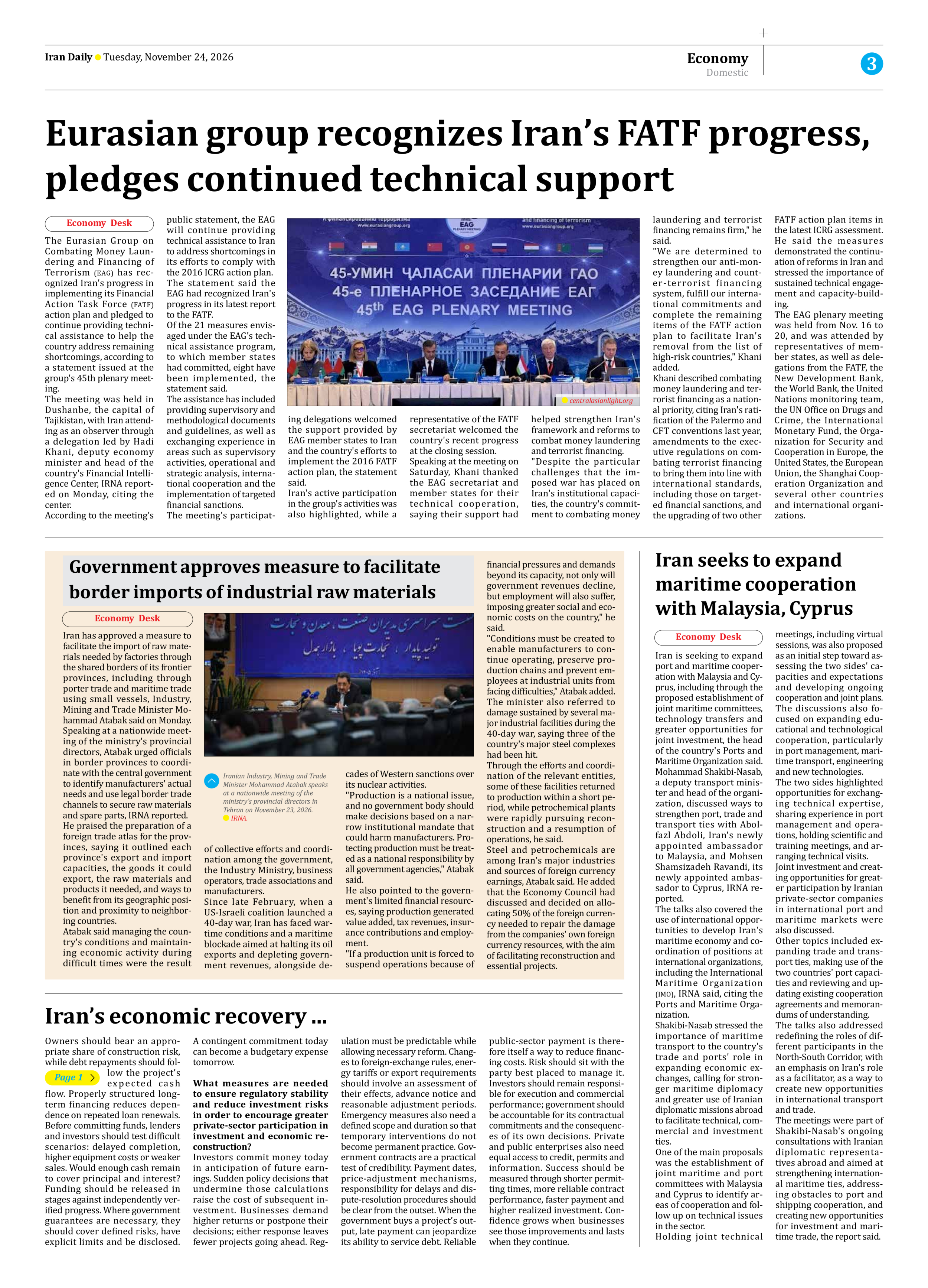
Iran has approved a measure to facilitate the import of raw materials needed by factories through the shared borders of its frontier provinces, including through porter trade and maritime trade using small vessels, Industry, Mining and Trade Minister Mohammad Atabak said on Monday.
Speaking at a nationwide meeting of the ministry's provincial directors, Atabak urged officials in border provinces to coordinate with the central government to identify manufacturers' actual needs and use legal border trade channels to secure raw materials and spare parts, IRNA reported.
He praised the preparation of a foreign trade atlas for the provinces, saying it outlined each province's export and import capacities, the goods it could export, the raw materials and products it needed, and ways to benefit from its geographic position and proximity to neighboring countries.
Atabak said managing the country's conditions and maintaining economic activity during difficult times were the result of collective efforts and coordination among the government, the Industry Ministry, business operators, trade associations and manufacturers.
Since late February, when a US-Israeli coalition launched a 40-day war, Iran has faced wartime conditions and a maritime blockade aimed at halting its oil exports and depleting government revenues, alongside decades of Western sanctions over its nuclear activities.
"Production is a national issue, and no government body should make decisions based on a narrow institutional mandate that could harm manufacturers. Protecting production must be treated as a national responsibility by all government agencies," Atabak said.
He also pointed to the government's limited financial resources, saying production generated value added, tax revenues, insurance contributions and employment.
"If a production unit is forced to suspend operations because of financial pressures and demands beyond its capacity, not only will government revenues decline, but employment will also suffer, imposing greater social and economic costs on the country," he said.
"Conditions must be created to enable manufacturers to continue operating, preserve production chains and prevent employees at industrial units from facing difficulties," Atabak added.
The minister also referred to damage sustained by several major industrial facilities during the 40-day war, saying three of the country's major steel complexes had been hit.
Through the efforts and coordination of the relevant entities, some of these facilities returned to production within a short period, while petrochemical plants were rapidly pursuing reconstruction and a resumption of operations, he said.
Steel and petrochemicals are among Iran's major industries and sources of foreign currency earnings, Atabak said. He added that the Economy Council had discussed and decided on allocating 50% of the foreign currency needed to repair the damage from the companies' own foreign currency resources, with the aim of facilitating reconstruction and essential projects.