




Peace cannot come through surrender: Deputy FM
Iran on Monday vowed not to give in for peace, saying it would defend itself against attacks but would not seek war.
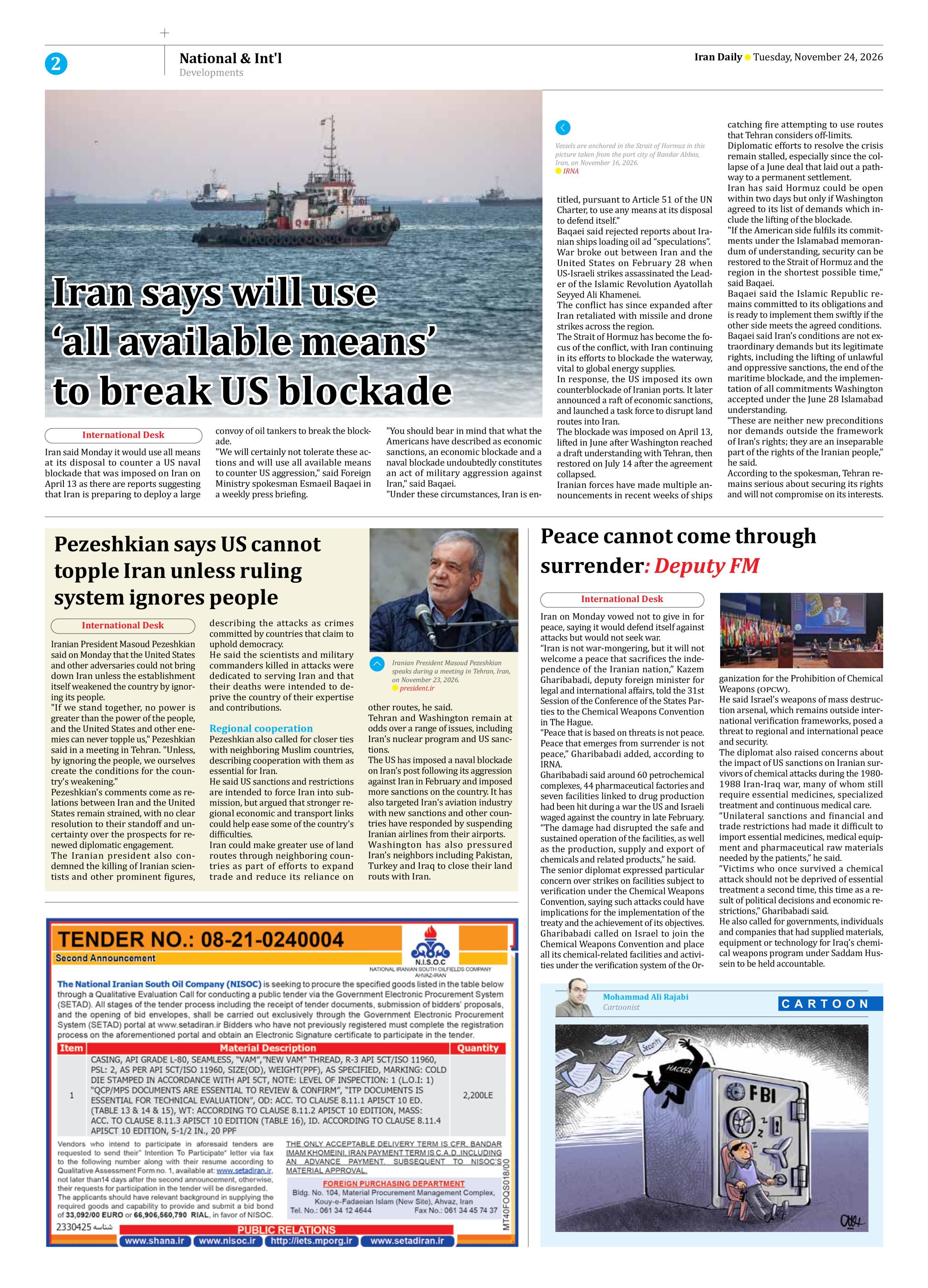
“Iran is not war-mongering, but it will not welcome a peace that sacrifices the independence of the Iranian nation,” Kazem Gharibabadi, deputy foreign minister for legal and international affairs, told the 31st Session of the Conference of the States Parties to the Chemical Weapons Convention in The Hague.
“Peace that is based on threats is not peace. Peace that emerges from surrender is not peace,” Gharibabadi added, according to IRNA.
Gharibabadi said around 60 petrochemical complexes, 44 pharmaceutical factories and seven facilities linked to drug production had been hit during a war the US and Israeli waged against the country in late February.
“The damage had disrupted the safe and sustained operation of the facilities, as well as the production, supply and export of chemicals and related products,” he said.
The senior diplomat expressed particular concern over strikes on facilities subject to verification under the Chemical Weapons Convention, saying such attacks could have implications for the implementation of the treaty and the achievement of its objectives.
Gharibabadi called on Israel to join the Chemical Weapons Convention and place all its chemical-related facilities and activities under the verification system of the Organization for the Prohibition of Chemical Weapons (OPCW).
He said Israel’s weapons of mass destruction arsenal, which remains outside international verification frameworks, posed a threat to regional and international peace and security.
The diplomat also raised concerns about the impact of US sanctions on Iranian survivors of chemical attacks during the 1980-1988 Iran-Iraq war, many of whom still require essential medicines, specialized treatment and continuous medical care.
“Unilateral sanctions and financial and trade restrictions had made it difficult to import essential medicines, medical equipment and pharmaceutical raw materials needed by the patients,” he said.
“Victims who once survived a chemical attack should not be deprived of essential treatment a second time, this time as a result of political decisions and economic restrictions,” Gharibabadi said.
He also called for governments, individuals and companies that had supplied materials, equipment or technology for Iraq’s chemical weapons program under Saddam Hussein to be held accountable.