


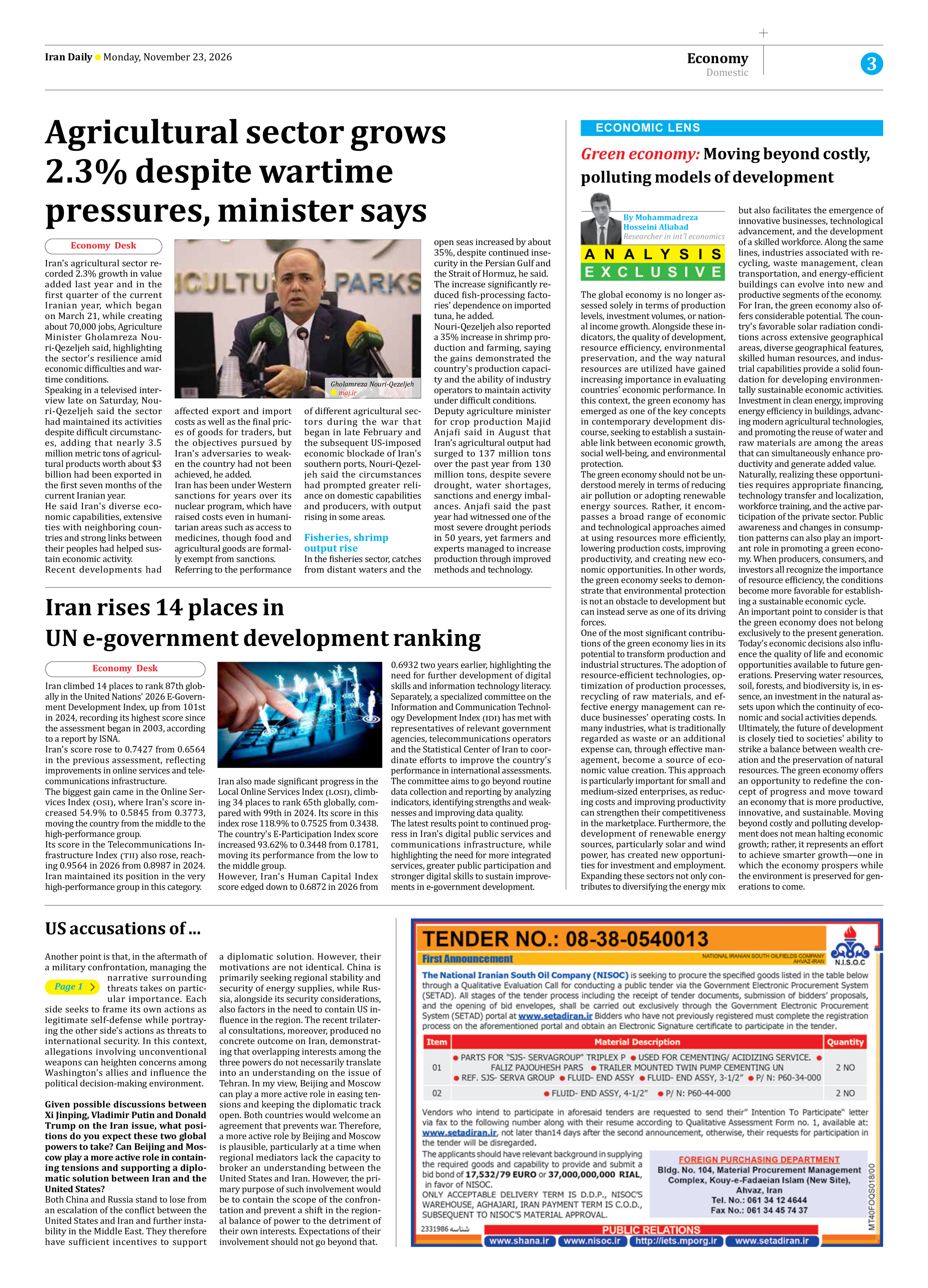


Agricultural sector grows 2.3% despite wartime pressures, minister says
Iran's agricultural sector recorded 2.3% growth in value added last year and in the first quarter of the current Iranian year, which began on March 21, while creating about 70,000 jobs, Agriculture Minister Gholamreza Nouri-Qezeljeh said, highlighting the sector's resilience amid economic difficulties and wartime conditions.
Speaking in a televised interview late on Saturday, Nouri-Qezeljeh said the sector had maintained its activities despite difficult circumstances, adding that nearly 3.5 million metric tons of agricultural products worth about $3 billion had been exported in the first seven months of the current Iranian year.
He said Iran's diverse economic capabilities, extensive ties with neighboring countries and strong links between their peoples had helped sustain economic activity.
Recent developments had affected export and import costs as well as the final prices of goods for traders, but the objectives pursued by Iran's adversaries to weaken the country had not been achieved, he added.
Iran has been under Western sanctions for years over its nuclear program, which have raised costs even in humanitarian areas such as access to medicines, though food and agricultural goods are formally exempt from sanctions.
Referring to the performance of different agricultural sectors during the war that began in late February and the subsequent US-imposed economic blockade of Iran's southern ports, Nouri-Qezeljeh said the circumstances had prompted greater reliance on domestic capabilities and producers, with output rising in some areas.
Fisheries, shrimp output rise
In the fisheries sector, catches from distant waters and the open seas increased by about 35%, despite continued insecurity in the Persian Gulf and the Strait of Hormuz, he said.
The increase significantly reduced fish-processing factories' dependence on imported tuna, he added.
Nouri-Qezeljeh also reported a 35% increase in shrimp production and farming, saying the gains demonstrated the country's production capacity and the ability of industry operators to maintain activity under difficult conditions.
Deputy agriculture minister for crop production Majid Anjafi said in August that Iran’s agricultural output had surged to 137 million tons over the past year from 130 million tons, despite severe drought, water shortages, sanctions and energy imbalances. Anjafi said the past year had witnessed one of the most severe drought periods in 50 years, yet farmers and experts managed to increase production through improved methods and technology.