




Kurdish weddings bring families, communities together
In Kurdish culture, a wedding is more than a ceremony marking the beginning of a couple’s married life. It is a social occasion that brings together families, relatives, and even neighbors in an atmosphere of joy, music, and communal participation. What distinguishes Kurdish weddings from many other wedding traditions is the collection of local customs and distinctive practices that accompany the celebrations, from the earliest stages of marriage arrangements to the final moments of the festivities.
Each custom has its own significance, from the informal visit by the groom’s family to the bride’s family, to the display of the bride’s trousseau, the songs sung on the henna night, colorful Kurdish attire, and the traditional group dance known as Govend. These traditions, however, vary across Kurdish regions, from Sanandaj and Mahabad to Baneh, Marivan, and Kermanshah.
In some Kurdish families, an informal visit known as Sarzanî takes place before the formal marriage proposal. During this visit, the groom’s mother or sister goes to the prospective bride’s home, usually under the pretext of a friendly or family visit. The purpose is to become better acquainted with the family, the young woman’s behavior, and her living circumstances.
If the visit is received positively, the groom’s family proceeds with the formal proposal. On this occasion, the groom’s father, uncle, or another senior family member, accompanied by other relatives, visits the bride’s home. They usually bring sweets, chocolates, flowers, and sometimes gold jewelry.
Following initial discussions and an agreement between the families, a ceremony known as Qoldan is held. At this stage, a ring is exchanged between the two families, and the agreement to marry takes on a more formal character through the hosting of guests and the serving of refreshments. The ceremony marks the beginning of a new stage in the relationship between the two families.
In some Kurdish families, a trusted intermediary plays an important role in discussing the bride’s dowry and resolving disagreements. Rather than having the two families negotiate every financial detail directly, a distant relative or another respected person trusted by both families may take responsibility for conveying proposals and facilitating discussions. This approach can help prevent direct confrontation and avoid hurt feelings if one family does not accept a particular proposal.
The role of intermediaries and respected elders is not limited to the marriage proposal. During wedding preparations, disagreements may also arise over the number of guests, expenses, or the timing of the ceremonies. In such situations, respected elders from both families try to resolve differences through discussion and compromise.
In some parts of Kurdestan Province, one interesting custom is the display of the bride’s trousseau before the main wedding celebration. In the past, the trousseau often included kilims, Jajims, locally woven textiles, copper utensils, kitchenware, Kurdish clothing, shawls, and traditional fabrics. These items would be arranged in the groom’s home or another location for female relatives and neighbors to come and view.
Handwoven textiles and traditional household items hold a special place in this custom, as they reflect the craftsmanship and taste of the bride’s family. In this way, the trousseau serves not only a practical purpose but also represents the connection between family life and Kurdish traditional arts.
The henna night (Hanabandan) is one of the most memorable parts of a Kurdish wedding. In some regions, women from the groom’s family bring henna to the bride’s home, along with sweets, a mirror, and candles. Women from both families gather together and celebrate the occasion by singing traditional songs. Henna is applied to the bride’s hands, and in some families, a separate henna ceremony is also held for the groom.
One of the most distinctive features of the henna night is its mixture of joy and sadness. Alongside singing, dancing, and celebration, the bride’s mother and other close relatives may also shed tears.
Some traditional songs performed on this night refer to the bride’s departure from her parental home and her transition into a new stage of life. For this reason, the henna night is not simply a joyful celebration; it is also a ritual that reflects family emotions and deep personal attachments.
Govend is one of the most distinctive expressions of joy and solidarity at Kurdish weddings. This traditional group dance is accompanied by local music, particularly the sounds of the dohol (drum) and zurna (a double-reed wind instrument). Its rhythms and styles vary across different parts of Kurdestan Province.
Live music is one of the defining features of Kurdish weddings. In many celebrations, the sound of the Dohol and Zurna sets the atmosphere, while traditional rhythms bring guests together in the spirit of Govend.
Even at many modern weddings, where contemporary music and orchestral bands are featured, traditional Kurdish music continues to hold its place. Some celebrations dedicate part of the program to traditional Kurdish songs and another part to Persian pop or modern Kurdish music.
In many Kurdish towns and villages, the groom’s family travels together to the bride’s home as part of a wedding procession. Decorated cars, honking horns, and the participation of relatives are familiar features of this tradition. In some rural areas, the procession may also involve horses or people walking together, sometimes accompanied by dancing along the way.
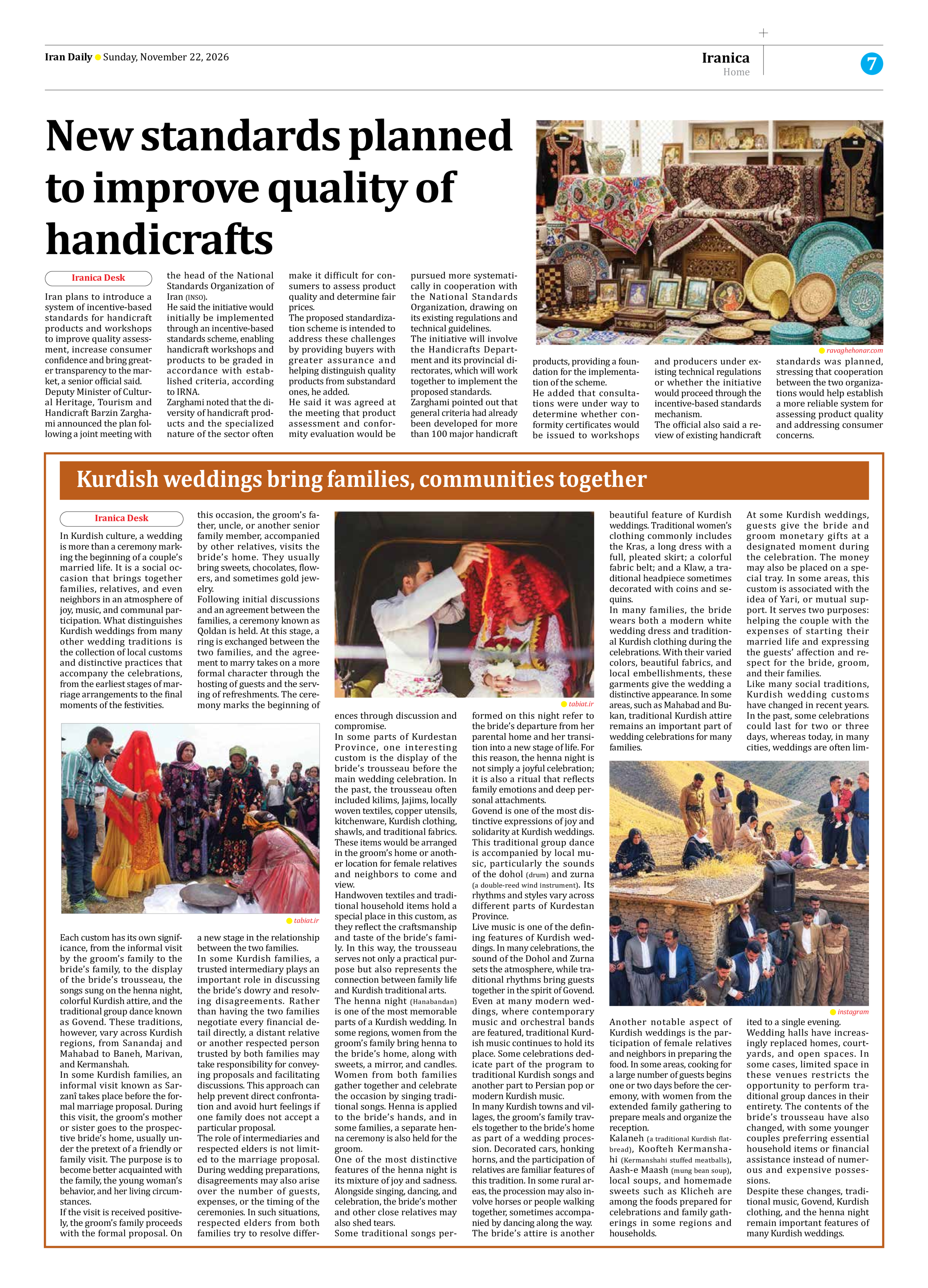
The bride’s attire is another beautiful feature of Kurdish weddings. Traditional women’s clothing commonly includes the Kras, a long dress with a full, pleated skirt; a colorful fabric belt; and a Klaw, a traditional headpiece sometimes decorated with coins and sequins.
In many families, the bride wears both a modern white wedding dress and traditional Kurdish clothing during the celebrations. With their varied colors, beautiful fabrics, and local embellishments, these garments give the wedding a distinctive appearance. In some areas, such as Mahabad and Bukan, traditional Kurdish attire remains an important part of wedding celebrations for many families.
Another notable aspect of Kurdish weddings is the participation of female relatives and neighbors in preparing the food. In some areas, cooking for a large number of guests begins one or two days before the ceremony, with women from the extended family gathering to prepare meals and organize the reception.
Kalaneh (a traditional Kurdish flatbread), Koofteh Kermanshahi (Kermanshahi stuffed meatballs), Aash-e Maash (mung bean soup), local soups, and homemade sweets such as Klicheh are among the foods prepared for celebrations and family gatherings in some regions and households.
At some Kurdish weddings, guests give the bride and groom monetary gifts at a designated moment during the celebration. The money may also be placed on a special tray. In some areas, this custom is associated with the idea of Yari, or mutual support. It serves two purposes: helping the couple with the expenses of starting their married life and expressing the guests’ affection and respect for the bride, groom, and their families.
Like many social traditions, Kurdish wedding customs have changed in recent years. In the past, some celebrations could last for two or three days, whereas today, in many cities, weddings are often limited to a single evening.
Wedding halls have increasingly replaced homes, courtyards, and open spaces. In some cases, limited space in these venues restricts the opportunity to perform traditional group dances in their entirety. The contents of the bride’s trousseau have also changed, with some younger couples preferring essential household items or financial assistance instead of numerous and expensive possessions.
Despite these changes, traditional music, Govend, Kurdish clothing, and the henna night remain important features of many Kurdish weddings.