




Tehran home to more than 200 private museums
Tehran is home to more than 200 private museums, in addition to dozens of museums run by the municipality and other institutions, the head of Tehran’s Tourism Headquarters has announced, stressing the need to embrace modern technologies to make museum collections more accessible and attract visitors.
Speaking at a press conference ahead of the 8th National Museum Conference to be held Nov. 18-19 in Tehran, Amir Qasemi said experience had shown that museums which made more effective use of emerging technologies had succeeded in attracting larger audiences, according to ISNA.
He described the conference, which focuses on scientific and research-based approaches to heritage and tourism, as an opportunity to organize and highlight the potential of museums and other cultural institutions across the country.
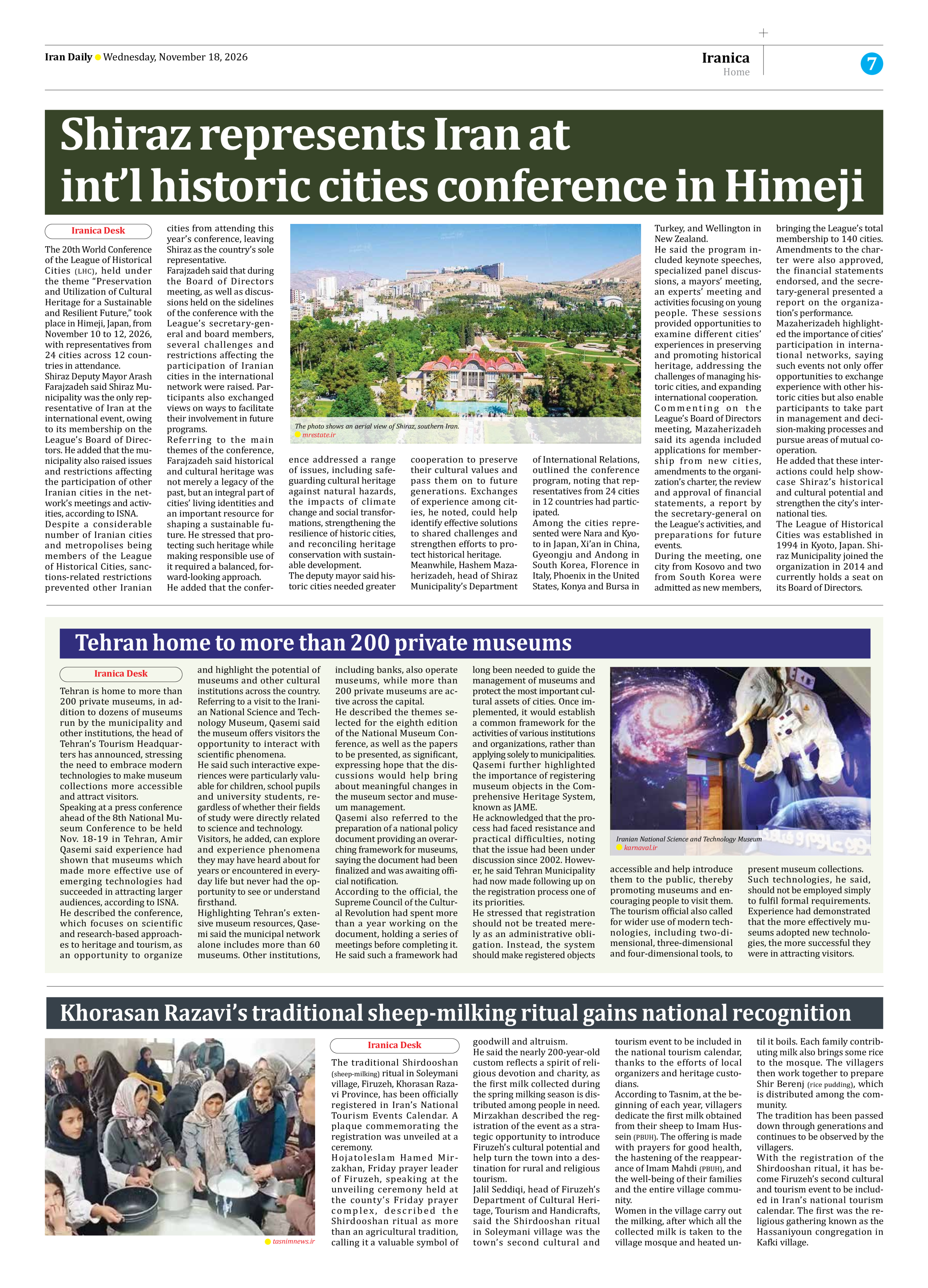
Referring to a visit to the Iranian National Science and Technology Museum, Qasemi said the museum offers visitors the opportunity to interact with scientific phenomena.
He said such interactive experiences were particularly valuable for children, school pupils and university students, regardless of whether their fields of study were directly related to science and technology.
Visitors, he added, can explore and experience phenomena they may have heard about for years or encountered in everyday life but never had the opportunity to see or understand firsthand.
Highlighting Tehran’s extensive museum resources, Qasemi said the municipal network alone includes more than 60 museums. Other institutions, including banks, also operate museums, while more than 200 private museums are active across the capital.
He described the themes selected for the eighth edition of the National Museum Conference, as well as the papers to be presented, as significant, expressing hope that the discussions would help bring about meaningful changes in the museum sector and museum management.
Qasemi also referred to the preparation of a national policy document providing an overarching framework for museums, saying the document had been finalized and was awaiting official notification.
According to the official, the Supreme Council of the Cultural Revolution had spent more than a year working on the document, holding a series of meetings before completing it.
He said such a framework had long been needed to guide the management of museums and protect the most important cultural assets of cities. Once implemented, it would establish a common framework for the activities of various institutions and organizations, rather than applying solely to municipalities.
Qasemi further highlighted the importance of registering museum objects in the Comprehensive Heritage System, known as JAME.
He acknowledged that the process had faced resistance and practical difficulties, noting that the issue had been under discussion since 2002. However, he said Tehran Municipality had now made following up on the registration process one of its priorities.
He stressed that registration should not be treated merely as an administrative obligation. Instead, the system should make registered objects accessible and help introduce them to the public, thereby promoting museums and encouraging people to visit them.
The tourism official also called for wider use of modern technologies, including two-dimensional, three-dimensional and four-dimensional tools, to present museum collections.
Such technologies, he said, should not be employed simply to fulfil formal requirements. Experience had demonstrated that the more effectively museums adopted new technologies, the more successful they were in attracting visitors.