




Over $32m approved for restoration of Iran’s war-damaged heritage
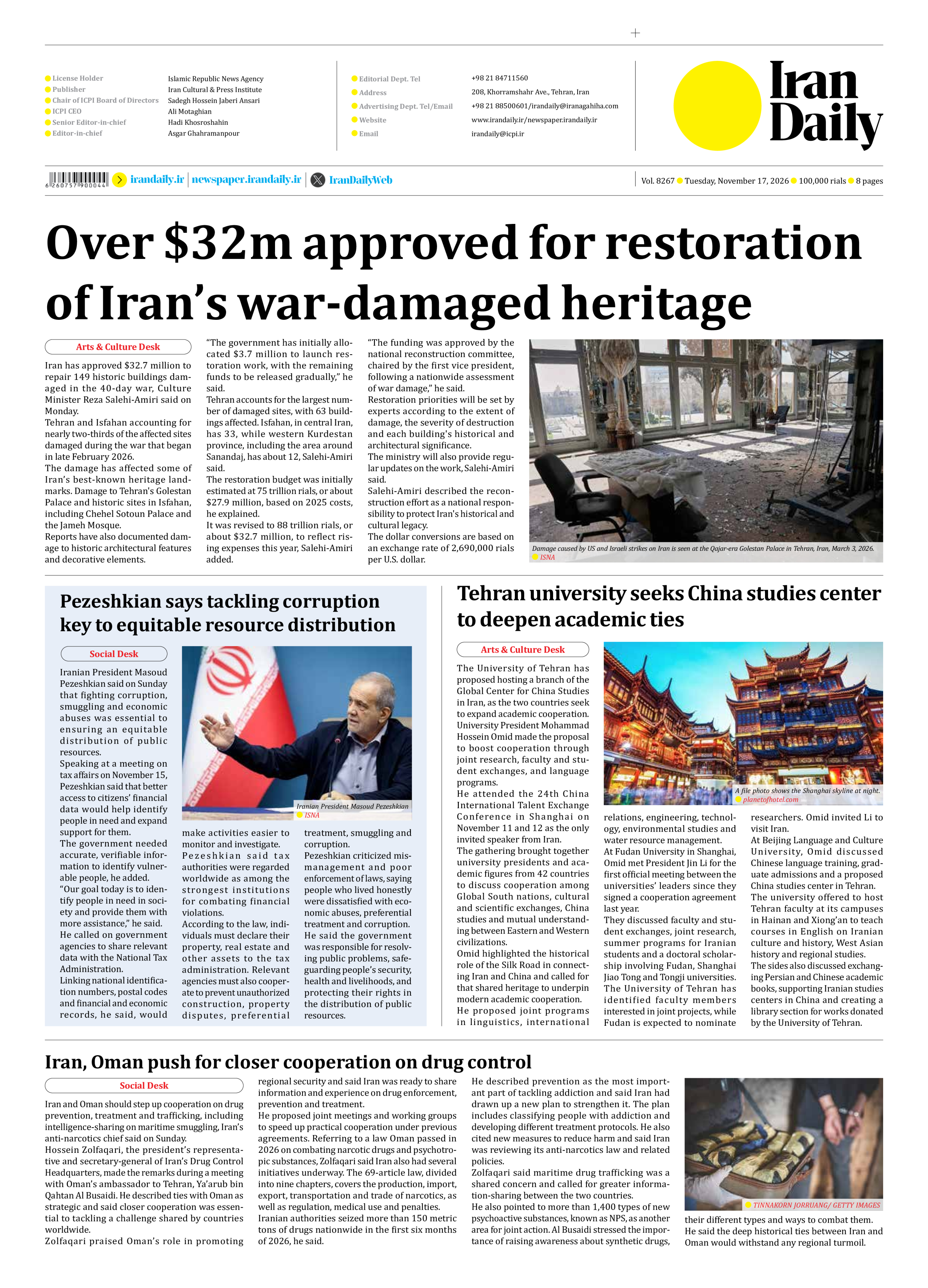
Iran has approved $32.7 million to repair 149 historic buildings damaged in the 40-day war, Culture Minister Reza Salehi-Amiri said on Monday.
Tehran and Isfahan accounting for nearly two-thirds of the affected sites damaged during the war that began in late February 2026.
The damage has affected some of Iran’s best-known heritage landmarks. Damage to Tehran's Golestan Palace and historic sites in Isfahan, including Chehel Sotoun Palace and the Jameh Mosque.
Reports have also documented damage to historic architectural features and decorative elements.
“The government has initially allocated $3.7 million to launch restoration work, with the remaining funds to be released gradually,” he said.
Tehran accounts for the largest number of damaged sites, with 63 buildings affected. Isfahan, in central Iran, has 33, while western Kurdestan province, including the area around Sanandaj, has about 12, Salehi-Amiri said.
The restoration budget was initially estimated at 75 trillion rials, or about $27.9 million, based on 2025 costs, he explained.
It was revised to 88 trillion rials, or about $32.7 million, to reflect rising expenses this year, Salehi-Amiri added.
“The funding was approved by the national reconstruction committee, chaired by the first vice president, following a nationwide assessment of war damage,” he said.
Restoration priorities will be set by experts according to the extent of damage, the severity of destruction and each building's historical and architectural significance.
The ministry will also provide regular updates on the work, Salehi-Amiri said.
Salehi-Amiri described the reconstruction effort as a national responsibility to protect Iran's historical and cultural legacy.
The dollar conversions are based on an exchange rate of 2,690,000 rials per U.S. dollar.