


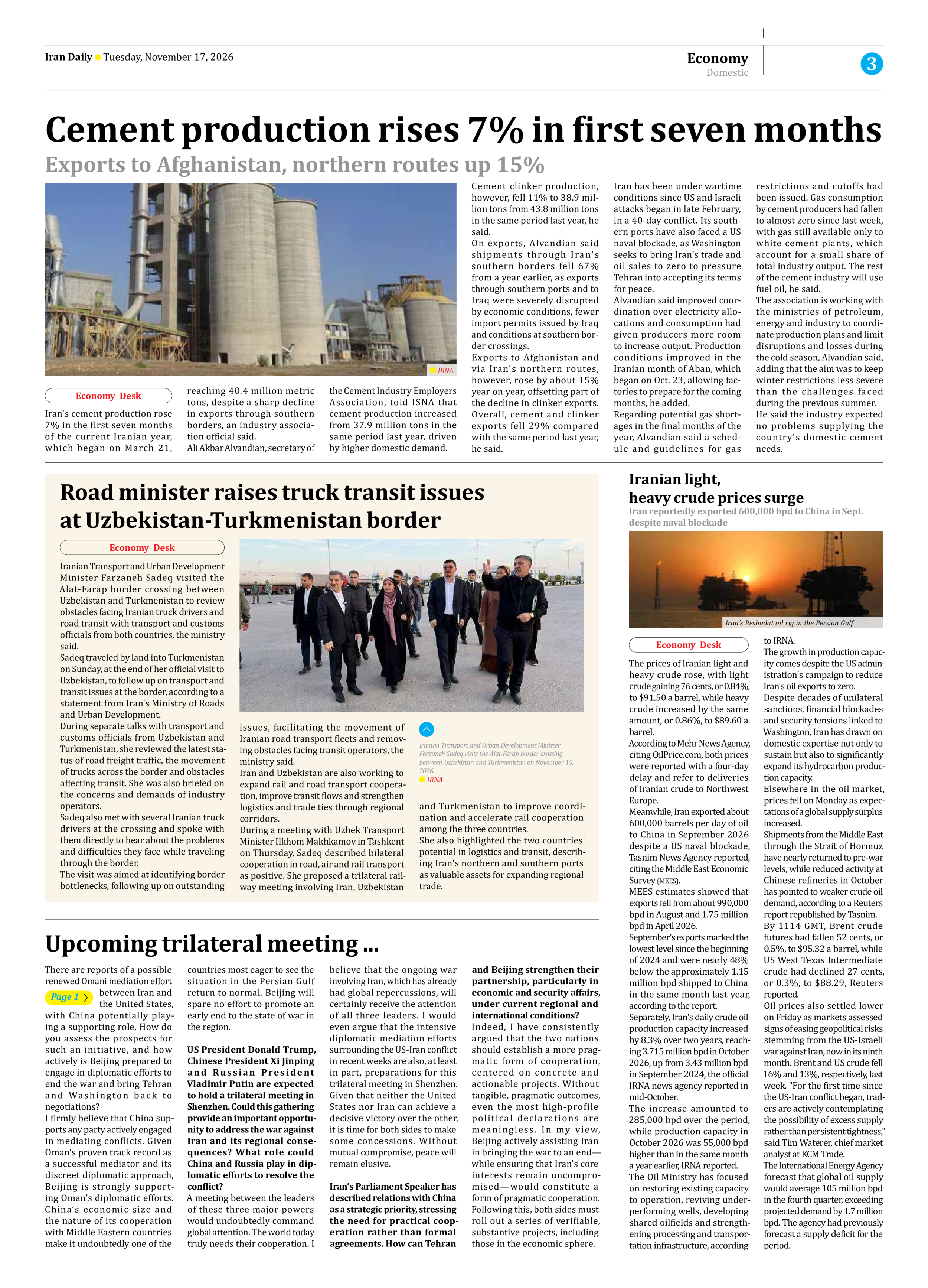


Iranian light, heavy crude prices surge
Iran reportedly exported 600,000 bpd to China in Sept. despite naval blockade
The prices of Iranian light and heavy crude rose, with light crude gaining 76 cents, or 0.84%, to $91.50 a barrel, while heavy crude increased by the same amount, or 0.86%, to $89.60 a barrel.
According to Mehr News Agency, citing OilPrice.com, both prices were reported with a four-day delay and refer to deliveries of Iranian crude to Northwest Europe.
Meanwhile, Iran exported about 600,000 barrels per day of oil to China in September 2026 despite a US naval blockade, Tasnim News Agency reported, citing the Middle East Economic Survey (MEES).
MEES estimates showed that exports fell from about 990,000 bpd in August and 1.75 million bpd in April 2026.
September's exports marked the lowest level since the beginning of 2024 and were nearly 48% below the approximately 1.15 million bpd shipped to China in the same month last year, according to the report.
Separately, Iran's daily crude oil production capacity increased by 8.3% over two years, reaching 3.715 million bpd in October 2026, up from 3.43 million bpd in September 2024, the official IRNA news agency reported in mid-October.
The increase amounted to 285,000 bpd over the period, while production capacity in October 2026 was 55,000 bpd higher than in the same month a year earlier, IRNA reported.
The Oil Ministry has focused on restoring existing capacity to operation, reviving underperforming wells, developing shared oilfields and strengthening processing and transportation infrastructure, according to IRNA.
The growth in production capacity comes despite the US administration's campaign to reduce Iran's oil exports to zero.
Despite decades of unilateral sanctions, financial blockades and security tensions linked to Washington, Iran has drawn on domestic expertise not only to sustain but also to significantly expand its hydrocarbon production capacity.
Elsewhere in the oil market, prices fell on Monday as expectations of a global supply surplus increased.
Shipments from the Middle East through the Strait of Hormuz have nearly returned to pre-war levels, while reduced activity at Chinese refineries in October has pointed to weaker crude oil demand, according to a Reuters report republished by Tasnim.
By 1114 GMT, Brent crude futures had fallen 52 cents, or 0.5%, to $95.32 a barrel, while US West Texas Intermediate crude had declined 27 cents, or 0.3%, to $88.29, Reuters reported.
Oil prices also settled lower on Friday as markets assessed signs of easing geopolitical risks stemming from the US-Israeli war against Iran, now in its ninth month. Brent and US crude fell 16% and 13%, respectively, last week. "For the first time since the US-Iran conflict began, traders are actively contemplating the possibility of excess supply rather than persistent tightness," said Tim Waterer, chief market analyst at KCM Trade.
The International Energy Agency forecast that global oil supply would average 105 million bpd in the fourth quarter, exceeding projected demand by 1.7 million bpd. The agency had previously forecast a supply deficit for the period.