


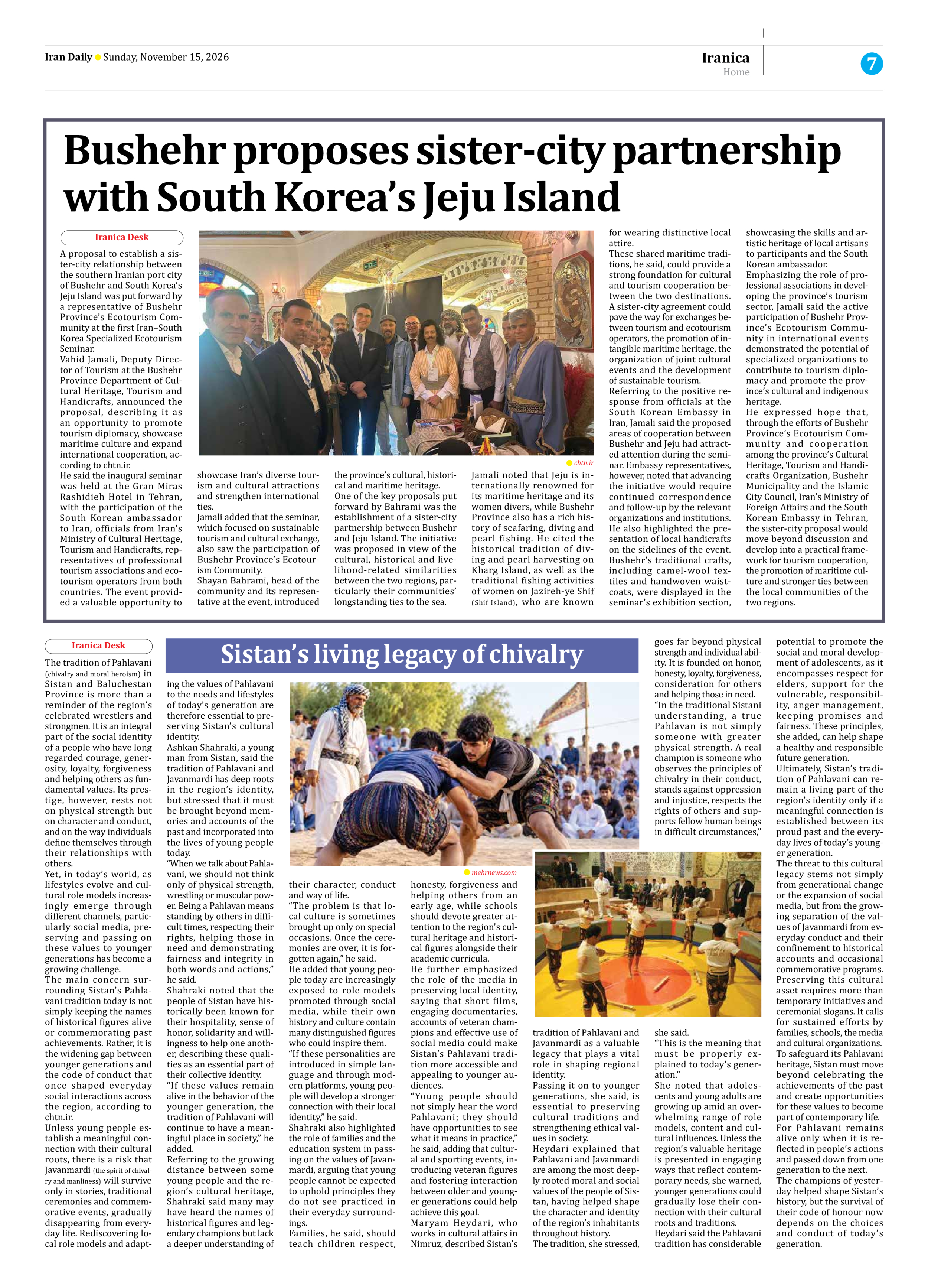


Sistan’s living legacy of chivalry
The tradition of Pahlavani (chivalry and moral heroism) in Sistan and Baluchestan Province is more than a reminder of the region’s celebrated wrestlers and strongmen. It is an integral part of the social identity of a people who have long regarded courage, generosity, loyalty, forgiveness and helping others as fundamental values. Its prestige, however, rests not on physical strength but on character and conduct, and on the way individuals define themselves through their relationships with others.
Yet, in today’s world, as lifestyles evolve and cultural role models increasingly emerge through different channels, particularly social media, preserving and passing on these values to younger generations has become a growing challenge.
The main concern surrounding Sistan’s Pahlavani tradition today is not simply keeping the names of historical figures alive or commemorating past achievements. Rather, it is the widening gap between younger generations and the code of conduct that once shaped everyday social interactions across the region, according to chtn.ir.
Unless young people establish a meaningful connection with their cultural roots, there is a risk that Javanmardi (the spirit of chivalry and manliness) will survive only in stories, traditional ceremonies and commemorative events, gradually disappearing from everyday life. Rediscovering local role models and adapting the values of Pahlavani to the needs and lifestyles of today’s generation are therefore essential to preserving Sistan’s cultural identity.
Ashkan Shahraki, a young man from Sistan, said the tradition of Pahlavani and Javanmardi has deep roots in the region’s identity, but stressed that it must be brought beyond memories and accounts of the past and incorporated into the lives of young people today.
“When we talk about Pahlavani, we should not think only of physical strength, wrestling or muscular power. Being a Pahlavan means standing by others in difficult times, respecting their rights, helping those in need and demonstrating fairness and integrity in both words and actions,” he said.
Shahraki noted that the people of Sistan have historically been known for their hospitality, sense of honor, solidarity and willingness to help one another, describing these qualities as an essential part of their collective identity.
“If these values remain alive in the behavior of the younger generation, the tradition of Pahlavani will continue to have a meaningful place in society,” he added.
Referring to the growing distance between some young people and the region’s cultural heritage, Shahraki said many may have heard the names of historical figures and legendary champions but lack a deeper understanding of their character, conduct and way of life.
“The problem is that local culture is sometimes brought up only on special occasions. Once the ceremonies are over, it is forgotten again,” he said.
He added that young people today are increasingly exposed to role models promoted through social media, while their own history and culture contain many distinguished figures who could inspire them.
“If these personalities are introduced in simple language and through modern platforms, young people will develop a stronger connection with their local identity,” he said.
Shahraki also highlighted the role of families and the education system in passing on the values of Javanmardi, arguing that young people cannot be expected to uphold principles they do not see practiced in their everyday surroundings.
Families, he said, should teach children respect, honesty, forgiveness and helping others from an early age, while schools should devote greater attention to the region’s cultural heritage and historical figures alongside their academic curricula.
He further emphasized the role of the media in preserving local identity, saying that short films, engaging documentaries, accounts of veteran champions and effective use of social media could make Sistan’s Pahlavani tradition more accessible and appealing to younger audiences.
“Young people should not simply hear the word Pahlavani; they should have opportunities to see what it means in practice,” he said, adding that cultural and sporting events, introducing veteran figures and fostering interaction between older and younger generations could help achieve this goal.
Maryam Heydari, who works in cultural affairs in Nimruz, described Sistan’s tradition of Pahlavani and Javanmardi as a valuable legacy that plays a vital role in shaping regional identity.
Passing it on to younger generations, she said, is essential to preserving cultural traditions and strengthening ethical values in society.
Heydari explained that Pahlavani and Javanmardi are among the most deeply rooted moral and social values of the people of Sistan, having helped shape the character and identity of the region’s inhabitants throughout history.
The tradition, she stressed, goes far beyond physical strength and individual ability. It is founded on honor, honesty, loyalty, forgiveness, consideration for others and helping those in need.
“In the traditional Sistani understanding, a true Pahlavan is not simply someone with greater physical strength. A real champion is someone who observes the principles of chivalry in their conduct, stands against oppression and injustice, respects the rights of others and supports fellow human beings in difficult circumstances,” she said.
“This is the meaning that must be properly explained to today’s generation.”
She noted that adolescents and young adults are growing up amid an overwhelming range of role models, content and cultural influences. Unless the region’s valuable heritage is presented in engaging ways that reflect contemporary needs, she warned, younger generations could gradually lose their connection with their cultural roots and traditions.
Heydari said the Pahlavani tradition has considerable potential to promote the social and moral development of adolescents, as it encompasses respect for elders, support for the vulnerable, responsibility, anger management, keeping promises and fairness. These principles, she added, can help shape a healthy and responsible future generation.
Ultimately, Sistan’s tradition of Pahlavani can remain a living part of the region’s identity only if a meaningful connection is established between its proud past and the everyday lives of today’s younger generation.
The threat to this cultural legacy stems not simply from generational change or the expansion of social media, but from the growing separation of the values of Javanmardi from everyday conduct and their confinement to historical accounts and occasional commemorative programs.
Preserving this cultural asset requires more than temporary initiatives and ceremonial slogans. It calls for sustained efforts by families, schools, the media and cultural organizations.
To safeguard its Pahlavani heritage, Sistan must move beyond celebrating the achievements of the past and create opportunities for these values to become part of contemporary life.
For Pahlavani remains alive only when it is reflected in people’s actions and passed down from one generation to the next.
The champions of yesterday helped shape Sistan’s history, but the survival of their code of honour now depends on the choices and conduct of today’s generation.