


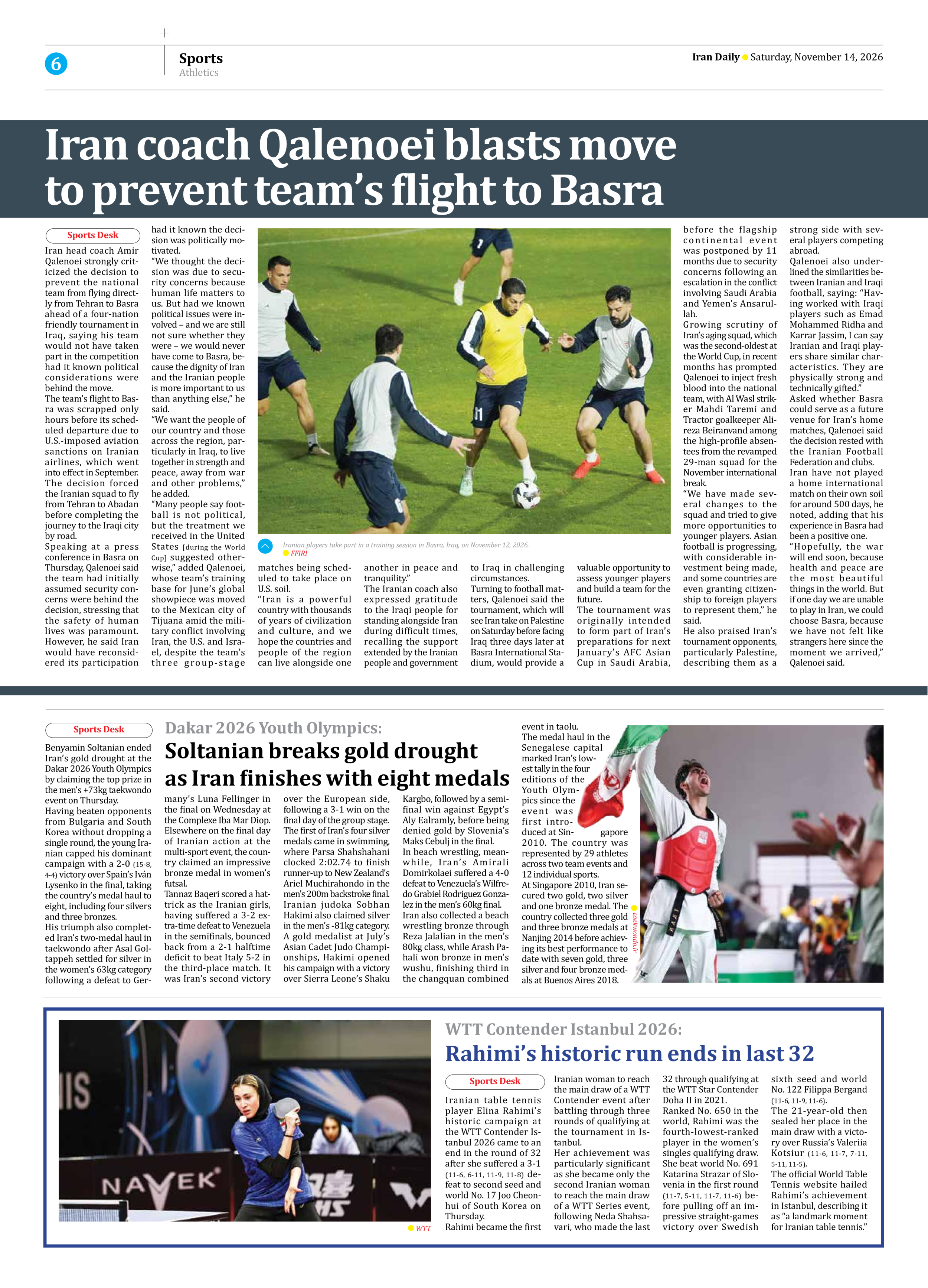


Iran coach Qalenoei blasts move to prevent team’s flight to Basra
Iran head coach Amir Qalenoei strongly criticized the decision to prevent the national team from flying directly from Tehran to Basra ahead of a four-nation friendly tournament in Iraq, saying his team would not have taken part in the competition had it known political considerations were behind the move.
The team’s flight to Basra was scrapped only hours before its scheduled departure due to U.S.-imposed aviation sanctions on Iranian airlines, which went into effect in September.
The decision forced the Iranian squad to fly from Tehran to Abadan before completing the journey to the Iraqi city by road.
Speaking at a press conference in Basra on Thursday, Qalenoei said the team had initially assumed security concerns were behind the decision, stressing that the safety of human lives was paramount. However, he said Iran would have reconsidered its participation had it known the decision was politically motivated.
“We thought the decision was due to security concerns because human life matters to us. But had we known political issues were involved – and we are still not sure whether they were – we would never have come to Basra, because the dignity of Iran and the Iranian people is more important to us than anything else,” he said.
“We want the people of our country and those across the region, particularly in Iraq, to live together in strength and peace, away from war and other problems,” he added.
“Many people say football is not political, but the treatment we received in the United States [during the World Cup] suggested otherwise,” added Qalenoei, whose team’s training base for June’s global showpiece was moved to the Mexican city of Tijuana amid the military conflict involving Iran, the U.S. and Israel, despite the team’s three group-stage matches being scheduled to take place on U.S. soil.
“Iran is a powerful country with thousands of years of civilization and culture, and we hope the countries and people of the region can live alongside one another in peace and tranquility.”
The Iranian coach also expressed gratitude to the Iraqi people for standing alongside Iran during difficult times, recalling the support extended by the Iranian people and government to Iraq in challenging circumstances.
Turning to football matters, Qalenoei said the tournament, which will see Iran take on Palestine on Saturday before facing Iraq three days later at Basra International Stadium, would provide a valuable opportunity to assess younger players and build a team for the future.
The tournament was originally intended to form part of Iran’s preparations for next January’s AFC Asian Cup in Saudi Arabia, before the flagship continental event was postponed by 11 months due to security concerns following an escalation in the conflict involving Saudi Arabia and Yemen’s Ansarullah.
Growing scrutiny of Iran’s aging squad, which was the second-oldest at the World Cup, in recent months has prompted Qalenoei to inject fresh blood into the national team, with Al Wasl striker Mahdi Taremi and Tractor goalkeeper Alireza Beiranvand among the high-profile absentees from the revamped 29-man squad for the November international break.
“We have made several changes to the squad and tried to give more opportunities to younger players. Asian football is progressing, with considerable investment being made, and some countries are even granting citizenship to foreign players to represent them,” he said.
He also praised Iran’s tournament opponents, particularly Palestine, describing them as a strong side with several players competing abroad.
Qalenoei also underlined the similarities between Iranian and Iraqi football, saying: “Having worked with Iraqi players such as Emad Mohammed Ridha and Karrar Jassim, I can say Iranian and Iraqi players share similar characteristics. They are physically strong and technically gifted.”
Asked whether Basra could serve as a future venue for Iran’s home matches, Qalenoei said the decision rested with the Iranian Football Federation and clubs.
Iran have not played a home international match on their own soil for around 500 days, he noted, adding that his experience in Basra had been a positive one.
“Hopefully, the war will end soon, because health and peace are the most beautiful things in the world. But if one day we are unable to play in Iran, we could choose Basra, because we have not felt like strangers here since the moment we arrived,” Qalenoei said.