




Central bank chief vows tougher action against money laundering in banks
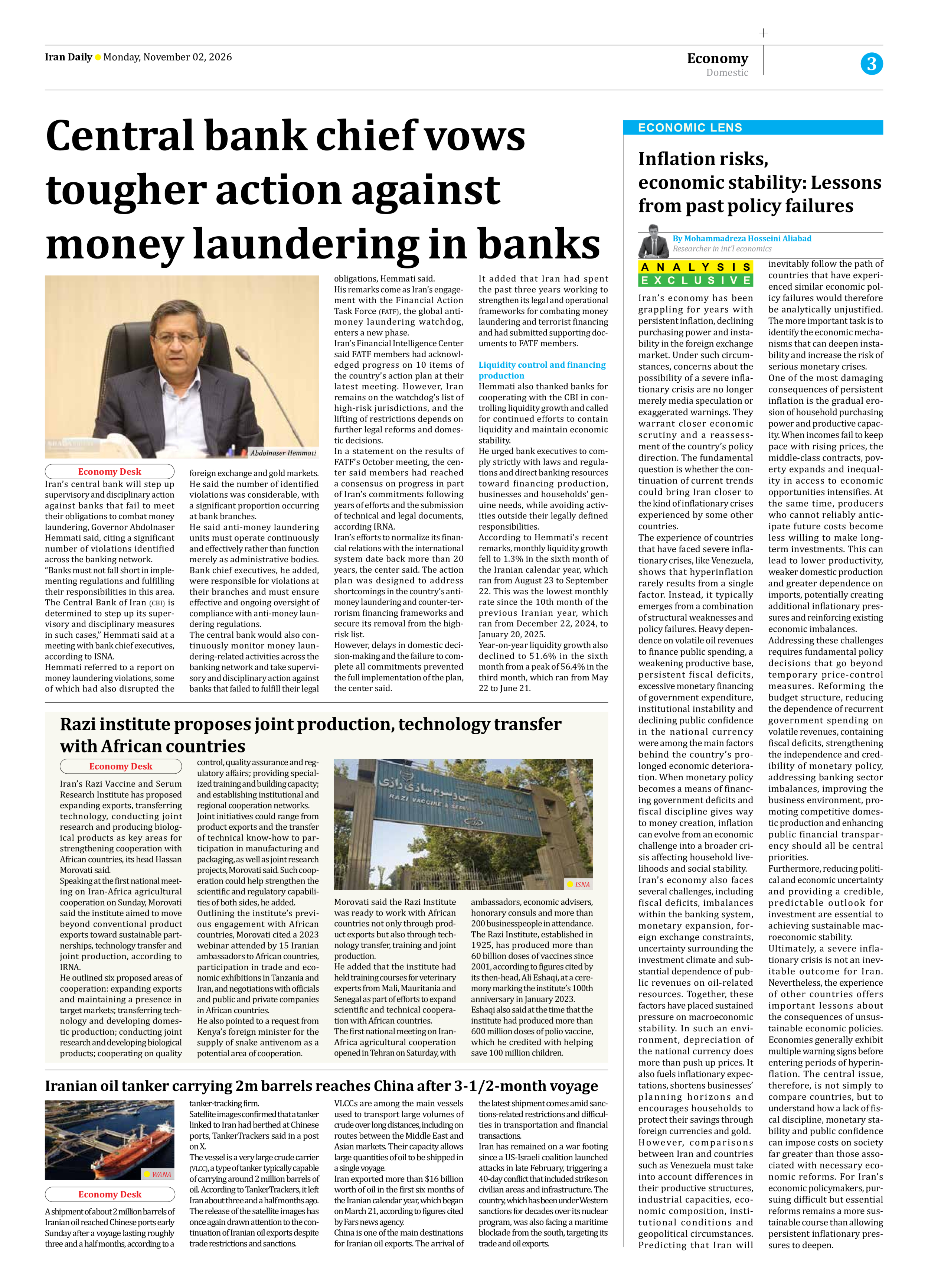
Iran’s central bank will step up supervisory and disciplinary action against banks that fail to meet their obligations to combat money laundering, Governor Abdolnaser Hemmati said, citing a significant number of violations identified across the banking network.
“Banks must not fall short in implementing regulations and fulfilling their responsibilities in this area. The Central Bank of Iran (CBI) is determined to step up its supervisory and disciplinary measures in such cases,” Hemmati said at a meeting with bank chief executives, according to ISNA.
Hemmati referred to a report on money laundering violations, some of which had also disrupted the foreign exchange and gold markets. He said the number of identified violations was considerable, with a significant proportion occurring at bank branches.
He said anti-money laundering units must operate continuously and effectively rather than function merely as administrative bodies. Bank chief executives, he added, were responsible for violations at their branches and must ensure effective and ongoing oversight of compliance with anti-money laundering regulations.
The central bank would also continuously monitor money laundering-related activities across the banking network and take supervisory and disciplinary action against banks that failed to fulfill their legal obligations, Hemmati said.
His remarks come as Iran’s engagement with the Financial Action Task Force (FATF), the global anti-money laundering watchdog, enters a new phase.
Iran’s Financial Intelligence Center said FATF members had acknowledged progress on 10 items of the country’s action plan at their latest meeting. However, Iran remains on the watchdog’s list of high-risk jurisdictions, and the lifting of restrictions depends on further legal reforms and domestic decisions.
In a statement on the results of FATF’s October meeting, the center said members had reached a consensus on progress in part of Iran’s commitments following years of efforts and the submission of technical and legal documents, according IRNA.
Iran’s efforts to normalize its financial relations with the international system date back more than 20 years, the center said. The action plan was designed to address shortcomings in the country’s anti-money laundering and counter-terrorism financing frameworks and secure its removal from the high-risk list.
However, delays in domestic decision-making and the failure to complete all commitments prevented the full implementation of the plan, the center said.
It added that Iran had spent the past three years working to strengthen its legal and operational frameworks for combating money laundering and terrorist financing and had submitted supporting documents to FATF members.
Liquidity control and financing production
Hemmati also thanked banks for cooperating with the CBI in controlling liquidity growth and called for continued efforts to contain liquidity and maintain economic stability.
He urged bank executives to comply strictly with laws and regulations and direct banking resources toward financing production, businesses and households’ genuine needs, while avoiding activities outside their legally defined responsibilities.
According to Hemmati’s recent remarks, monthly liquidity growth fell to 1.3% in the sixth month of the Iranian calendar year, which ran from August 23 to September 22. This was the lowest monthly rate since the 10th month of the previous Iranian year, which ran from December 22, 2024, to January 20, 2025.
Year-on-year liquidity growth also declined to 51.6% in the sixth month from a peak of 56.4% in the third month, which ran from May 22 to June 21.