


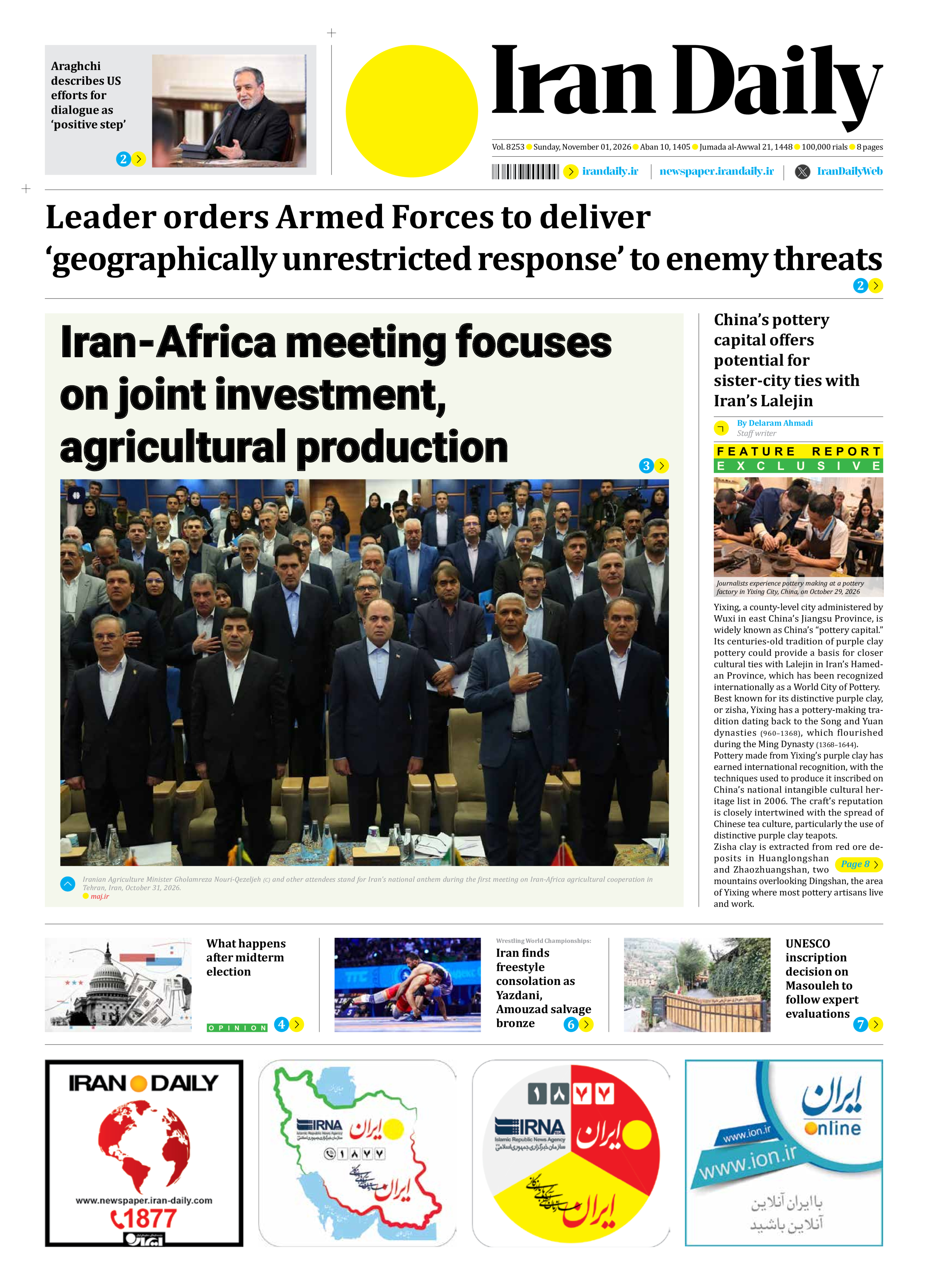


China’s pottery capital offers potential for sister-city ties with Iran’s Lalejin
By Delaram Ahmadi
Staff writer
Yixing, a county-level city administered by Wuxi in east China’s Jiangsu Province, is widely known as China’s “pottery capital.” Its centuries-old tradition of purple clay pottery could provide a basis for closer cultural ties with Lalejin in Iran’s Hamedan Province, which has been recognized internationally as a World City of Pottery.
Best known for its distinctive purple clay, or zisha, Yixing has a pottery-making tradition dating back to the Song and Yuan dynasties (960–1368), which flourished during the Ming Dynasty (1368–1644).
Pottery made from Yixing’s purple clay has earned international recognition, with the techniques used to produce it inscribed on China’s national intangible cultural heritage list in 2006. The craft’s reputation is closely intertwined with the spread of Chinese tea culture, particularly the use of distinctive purple clay teapots.
Zisha clay is extracted from red ore deposits in Huanglongshan and Zhaozhuangshan, two mountains overlooking Dingshan, the area of Yixing where most pottery artisans live and work.
Page 8